These are the Days of Elijah! BUT THESE ARE ALSO THE DAYS OF ELISHA – SALVATION COMES FROM GOD! The SPIRIT OF GOD is moving across the Earth. At the same time paganism and idolatry are running rampant. Just like in the 9th Century BC in Israel. For WHERE SIN DOTH ABOUND GRACE DOTH MUCH MORE ABOUND>
Our entire Earth is filled with division, conflict and separation. Do you know the CAUSE?
Sin and Its Role in Bringing Division
The Bible teaches that sin is a root cause of division, both in relationships with God and among people. When humans sin, they break the harmony established by God, leading to separation and conflict.
1. Sin Separates from God
Isaiah 59:2 says, “Your iniquities have separated you from your God; and your sins have hidden His face from you, so that He will not hear.” Sin damages the relationship between humanity and God, creating a barrier that can also affect human relationships Bible Tools.
Do you understand that is why JESUS/Yahushua had to come? Because the world and everyone in it was full of sin, GOD could not HEAR or SEE humanity anymore. So, what did God do to fix this situation? He took on human form. He became incarnate in the person of the CHRIST/SAVIOR/REDEEMER. WITHOUT GOD, humans are SLAVES TO SIN AND DEATH.
2. Sin Causes Division Among People
In the Old Testament, sin led to major divisions: the Tower of Babel (Genesis 11:7–9) and the split of Israel into two kingdoms (1 Kings 12:16–20) due to idolatry and disobedience Bible Hub. In the New Testament, Paul warns in 1 Corinthians 1:10–13 that divisions among believers—such as “I follow Paul” or “I follow Apollos”—are contrary to unity in Christ OpenBible.info.
3. Division as a Consequence of the Flesh
Galatians 5:19–21 lists “divisions” among the works of the flesh, alongside envy, strife, and jealousy. These attitudes are contrary to the fruit of the Spirit, which includes love, peace, and self-control GotQuestions.org.
4. Jesus’ Mission Brings Division
Matthew 10:34–36 shows that Jesus came to “turn a man against his father, a daughter against her mother, a daughter-in-law against her mother-in-law,” because His message challenges existing loyalties and calls people to follow Him Bible Hub.
5. God’s Use of Division
While division is often a result of human sin, God can also use it for His purposes—separating the righteous from the unrighteous (Matthew 25:31–46) Bible Hub. However, the Bible consistently calls believers to avoid divisive behavior and to maintain unity in truth.
6. Biblical Response to Division
Paul urges believers to “watch out for those who cause divisions” (Romans 16:17) and to “have nothing more to do with” a divisive person after repeated warnings (Titus 3:10) OpenBible.info+1. Unity is not at the expense of truth, but is built on shared faith in Christ. Meaning that there can be no unity with unbelievers/pagans.
In summary: Sin brings division by breaking God’s original harmony, fostering conflict among people, and challenging loyalties. The Bible calls believers to reject divisive behavior, maintain unity in Christ, and seek reconciliation, while recognizing that God may use division for His purposes.
When every man follows his own desires and rejects the GOD of TRUTH, there is CHAOS! That is what the enemy of your soul desires.
THIS POST IS A HEADS UP! TAKE A LOOK AROUND YOU. DO YOU RECOGNIZE WHAT IS HAPPENING? THE END IS VERY NEAR. THE ENEMY OF YOUR SOUL SEEKS TO DEVOUR YOU. IT IS TIME TO REPENT (WHICH MEANS TURN AROUND) STOP ALL YOUR EVIL DOINGS AND CEASE ALL THE VAIN IMAGINATIONS!! SEEK TRUTH! CALL UPON GOD BEFORE IT IS TOO LATE!
Elijah’s Journey to the Day He Was Taken Up –
Elijah and Elisha traveled together Gilgal – Bethel – Jericho – Jordan – Elisha traveled solo to Mt. Carmel – Samaria
The story of Elijah’s ascension to heaven is recorded in 2 Kings 2:1–12. It begins at Gilgal, a place meaning “circle of stones,” and ends with Elijah being taken up in a whirlwind. Here’s the sequence of events and the likely locations:
1. Gilgal
Gilgal means “rolling” or “a rolling away,” symbolizing remembrance, consecration, and the removal of past reproach in the Bible.Literal MeaningThe name Gilgal comes from the Hebrew verb galal, which means “to roll” or “to roll away” Abarim Publications+1. Some interpretations also render it as “circle of stones” or “wheel,” reflecting the memorial stones set up by the Israelites Wikipedia+1. The term conveys both a physical and symbolic action of rolling away, often associated with removing shame, reproach, or past burdens jesusplusnothing.com. Biblical SignificanceGilgal is mentioned multiple times in the Bible, most prominently in the Book of Joshua. It was the first campsite of the Israelites after crossing the Jordan River into the Promised Land GotQuestions.org+2. Key events at Gilgal include:
Symbolic MeaningGilgal represents spiritual renewal and liberation. The act of rolling away the reproach of Egypt signifies leaving behind past failures, sins, or oppression, and stepping into a new life under God’s covenant jesusplusnothing.com. It is both a historical and theological symbol of God’s deliverance, consecration, and the beginning of a new chapter for Israel BibleAsk+1. SummaryIn essence, Gilgal means “rolling” or “a rolling away” and serves as a place of remembrance, consecration, and spiritual renewal. It commemorates God’s miraculous acts, the covenant with His people, and the transition from past oppression to a new life in the Promised Land GotQuestions.org+2. |
What is the importance of Gilgal in the Bible?Answer
There are at least two locations named Gilgal in the Bible. There was a Gilgal just west of the Jordan River near Jericho (Joshua 5:9, 13) and one nearer Bethel (2 Kings 2:1–2). Some scholars believe there was a third place named Gilgal near Mount Gerizim and Mount Ebal (Deuteronomy 11:29–30). The meaning of the name Gilgal is “rolling.” Gilgal is not mentioned in the New Testament, but the Old Testament depicts it as follows: Gilgal was a place of memorial. Gilgal is significant in the Bible as serving as a place of memorial for the Israelites, to remind them of what God had done. After miraculously crossing the Jordan River into the Promised Land, the Israelites set up twelve stones taken from the river, representing the twelve tribes, to serve as a reminder to the children of Israel (Joshua 4:19–20). The stones at Gilgal would remind the Israelites and their descendants of the power of God and how He had dried up the Jordan River so they could walk through it, just as He had done to the Red Sea (Joshua 4:21–24). The stones at Gilgal would serve a teaching purpose to the younger generation, so that they too could remember what the Lord had done for them (Joshua 4:21–22). Gilgal was a place of consecration and change. It was at Gilgal that the Israelites were circumcised and celebrated their first Passover in the Promised Land (Joshua 5:7–8, 10). The children of those who had wandered in the desert had not yet been circumcised, and it was time for them to take the sign of the covenant and be set apart as God’s people. This time of circumcision is what gave Gilgal its name, for the Lord said He had “rolled away the reproach of Egypt from you” (Joshua 5:9). The “reproach” was the Israelites’ uncircumcised condition; the “rolling away” of that reproach set them apart, once and for all, from the Egyptian people and way of life. After the Israelites celebrated the Passover and began to eat the produce of their new land, the manna that the Lord had provided the Israelites during their years of wandering stopped. This also happened while they were camped at Gilgal (Joshua 5:11–12). A place of worship. Years later, Gilgal was still a place of worship to offer sacrifices to the Lord, and it was the place where Saul was publicly crowned the first king of Israel (1 Samuel 10:8; 11:15). Unfortunately, as the Israelites slipped into idolatry, Gilgal became connected with the worship of false gods (Hosea 4:15; Amos 4:4). A place of judgment. It was at Gilgal that Samuel rebuked Saul and prophesied of his loss of the kingdom (1 Samuel 13:13–14). Saul had been instructed to stay at Gilgal and wait for Samuel before offering sacrifices to the Lord there (1 Samuel 10:8; 13:8). Rather than obey, Saul took the matter in his own hands and sacrificed to the Lord at Gilgal (1 Samuel 13:9–12). When Samuel arrived, he announced judgment on Saul for his disobedience, stating that Saul’s kingdom and position would not endure (1 Samuel 13:14). A place of prophets. Gilgal was one of three cities where Samuel regularly held court as the judge of Israel (1 Samuel 7:16). It seems that Elijah and Elisha spent some time at a place called Gilgal before Elijah’s departure to heaven (2 Kings 2:1–2). This is most likely not the same Gilgal as where Joshua had camped; rather, it is a place nearer Bethel in central Canaan. Sometime after Elijah was gone, Elisha returned to Gilgal where many other prophets resided (2 Kings 4:38). There, he found that Gilgal was in the midst of a famine and so made sure the prophets were fed. He also miraculously fed around a hundred other residents (2 Kings 4:38–44). Gilgal was a significant place in that it reminded the Israelites of their heritage, served as a place of worship, and was visited by kings and prophets. |
spacer
2. Bethel
- Located about 10 miles northeast of Gilgilia, in the hill country of Ephraim.
- Prophets there asked Elisha about Elijah’s departure, and Elisha affirmed his commitment to follow Elijah ibiblemaps.com+1.
Bethel means “House of God,” derived from the Hebrew words beth (house) and El (God).
Linguistic Origin
The name Bethel comes from the Hebrewבֵּית־אֵל (Bēṯ ʾĒl), literally translating to “House of God” or “House of El” (El being a name for God) Etymonline+2. The word beth means “house,” while El refers to God, making the name a direct reference to a sacred dwelling place Abarim Publications+1. In Hebrew, beth is also the second letter of the alphabet, which was later borrowed into Greek as beta Etymonline.
Biblical Significance
Bethel first appears in the Bible in Genesis 12:8, where Abraham built an altar to God after leaving Egypt etymologyworld.com. The site gained further prominence in Jacob’s story: while fleeing Esau, Jacob dreams of a ladder reaching to heaven and consecrates the location, renaming it Bethel to signify God’s presence (Genesis 28:10-22) Bible Hub+1. The city later became a significant religious center in Israel, associated with worship, prophecy, and pilgrimage Abarim Publications+1. Prophets like Amos delivered messages from Bethel, emphasizing its role as a spiritual and moral focal point etymologyworld.com.
Historical and Modern Context
Historically, Bethel was located on the border of the tribes of Benjamin and Ephraim, controlling a strategic route in central Israel Bible Hub. Archaeological evidence identifies it with the modern village of Beitin in the West Bank, northeast of Ramallah Wikipedia+1. The name has also been adopted for various towns and religious institutions worldwide, reflecting its enduring spiritual significance Wikipedia.
Symbolic Meaning
Beyond its literal translation, Bethel symbolizes the dwelling place of God among His people, representing a site where divine presence and human communication with God intersect etymologyworld.com. It serves as both a historical and spiritual marker in Jewish and Christian traditions, highlighting continuity between biblical narratives and contemporary religious practice
spacer
Symbolism and Significance of Bethel in Elijah’s Story
Bethel, meaning “house of God,” is a deeply symbolic location in the Old Testament, and its appearance in 2 Kings 2:2 carries both historical and theological weight.
Historical and Covenant Significance
Bethel was an early Israelite worship site, first mentioned in Genesis 12:8 when Abram pitched his tent there, and later in Jacob’s dream of the ladder to heaven (Genesis 28:16–17). Jacob declared, “Surely the LORD is in this place… this is none other than the house of God,” linking the site to God’s presence and covenant Bible Hub. Over centuries, Bethel became a place of both covenant renewal and apostasy—used as a judicial center under Samuel, fortified by Jeroboam I with a golden calf, and later condemned by prophets like Amos for idolatry Bible Hub.Symbolism in Elijah’s Journey
In 2 Kings 2:2, Elijah’s itinerary—Gilgal → Bethel → Jericho → Jordan—traces Israel’s salvation history in reverse Bible Hub+1. Bethel, as a site of early covenant and later idolatry, symbolizes the nation’s cyclical pattern of faithfulness and rebellion. By stopping there, Elijah confronts the reader with the tension between God’s presence and the people’s idolatry. It also serves as a transition point before the climactic crossing of the Jordan, which evokes the Exodus entry into the Promised Land Bible Hub.Spiritual Meaning
Bethel’s “house of God” name is covenantal language—God chooses to dwell with His people, foreshadowing both the tabernacle and the ultimate dwelling of God with humanity through Christ Bible Hub. In Elijah’s context, it becomes a place of spiritual reckoning: a reminder of God’s presence amid the nation’s moral decline. For Elisha, Bethel is the first test of loyalty—Elijah asks him to stay, but Elisha vows, “As the Lord lives… I will not leave you,” affirming his commitment to God’s servant bibleverseexplained.com.Summary of Symbolism
- Covenant memory: Early Israel’s encounter with God’s presence.
- Warning of idolatry: Site of Jeroboam’s golden calf, representing apostasy.
- Spiritual transition: Between Elijah’s ministry and the Exodus-like crossing of the Jordan.
- Test of faith: First checkpoint in Elisha’s vow to remain with Elijah.
In this way, Bethel in Elijah’s story is not just a geographical marker but a theological and symbolic anchor—connecting Israel’s past, present struggles, and the promise of God’s dwelling among His people.
spacer
3. Jericho
- On the Jordan River, about 15 miles east of Bethel.
- Another group of prophets asked Elisha the same question, and again Elisha said he would not leave Elijah ibiblemaps.com+1.
The name Jericho likely derives from Hebrew or Canaanite roots, meaning either “fragrant” or “moon,” reflecting its historical and religious significance.
Hebrew and Canaanite Origins
In Biblical Hebrew, Jericho is recorded as Yəriḥo (יְרִיחוֹ), and in Ugaritic as yrḫ. One widely accepted theory links the name to the Canaanite word rēḥ, meaning “fragrant,” which aligns with the city’s Biblical description as the “City of Palm Trees” and its abundance of palms, balsam, and rose gardens (BDB Theological Dictionary, NOBSE Study Bible) Abarim Publications+1. The Arabic name Arīḥā also preserves this meaning of “fragrant” Wikipedia.
Palm Tree –In occult, esoteric, and magical traditions, the palm tree is far more than a tropical icon — it is a sacred symbol of life, resilience, and spiritual connection across millennia.In esoteric and magical contexts, the palm tree is a multifaceted emblem — a reminder of enduring strength, a symbol of divine favor, and a conduit between the earthly and the spiritual. It can be invoked in rituals, used as a protective symbol, or meditated upon as a metaphor for personal growth and transformation. occult, esoteric and magic symbolism, and meaning of palm tree – Search Balsam, in its various forms—whether the aromatic resin from balsam trees, balsam fir, or other aromatic plants—has deep roots in both spiritual and occult traditions. Across cultures, it is valued for its healing, protective, and purifying properties, as well as its symbolic associations with divine connection, hope, and renewal.
Spiritual and Occult Symbolism
In many occult and esoteric traditions, balsam is seen as a bridge between the physical and spiritual worlds. Its soothing scent is believed to calm the mind, making it a popular choice in meditation and ritual spaces www.ourspiritanimal.com. Burning balsam in incense is thought to purify the environment, drive away negative energies, and attract positive vibrations www.ourspiritanimal.com. In some mystical systems, it is considered a spiritual cleanser, capable of harmonizing the body, mind, and spirit www.belleravenstar.com.The rose has long been more than a flower of beauty — in many traditions it has also been a symbol of secrecy, hidden knowledge, and mystical awakening. Many secret societies use the rose as a badge of hidden knowledge. Its thorns and petals together suggest beauty and danger, love and mystery — truths too sacred to be spoken aloud mysticryst.com. In grimoires and occult art, the rose appears as a protective and initiatory symbol, often linked to the heart and the mysteries of the cosmos. spacer
Another interpretation connects Jericho to the Hebrew yareakh, meaning “moon” or “month,” possibly referencing an ancient moon cult or lunar deity, Yarikh, for whom the city may have been an early center of worship Abarim Publications+3. This theory is supported by Jones’ Dictionary of Old Testament Proper Names and other Biblical studies, suggesting the city’s name could signify “City of the Moon” Abarim Publications+1.Linguistic Evolution
The name Jericho passed through several languages over time. In Ancient Greek, it appears as Ἰερῑχώ (Ierīkhṓ), in Latin as Ierīchō, and in Old English as Iericho, eventually becoming the modern English form wiktionary.org. These adaptations preserved the original phonetic structure while reflecting the linguistic conventions of each period.
Cultural and Biblical Significance
The dual etymology—fragrance and moon—may reflect the city’s historical importance both as a fertile oasis and as a religious center. Biblical texts reference Jericho as a fortified city with abundant natural resources, and its name may have symbolized both its physical characteristics and spiritual associations Abarim Publications+2. The city’s long history, dating back to Neolithic settlements, underscores the enduring significance of its name in both cultural and religious contexts Wikipedia+1.
In summary, Jericho’s name embodies both natural and celestial symbolism, with interpretations ranging from “Place of Fragrance” to “City of the Moon,” reflecting its rich historical, religious, and linguistic heritage.
Paganism in Ancient JerichoAncient Jericho, one of the world’s oldest continuously inhabited cities, was a center of pagan religious practice long before the Israelites arrived. Archaeological and textual evidence suggests that its inhabitants worshipped moon deities and engaged in fertility and occult rituals. Moon Worship Origins Fertility and Occult Practices Archaeological Evidence Cultural Context Summary Pagan Worship in Jericho at the Time of Elijah’s AscensionBy the time of Elijah’s ministry (9th century B.C.), Jericho had been conquered by the Israelites under Joshua (Joshua 6), but the city’s pagan traditions had not been eradicated. The Canaanite religious system included idolatry, fertility rites, and occult practices that were condemned in the Hebrew Scriptures (Leviticus 18:24–28; Deuteronomy 18:12; 20:16–18) Israel My Glory. These practices were part of the cultural and religious fabric of the region, and Jericho remained a place where such worship persisted. The presence of the “sons of the prophets” at Jericho in 2 Kings 2 shows that the city was still a center of prophetic activity, even though it was a former Canaanite city Bible Hub+1. This suggests that while Israelite prophets were active there, the local population likely continued to engage in pagan religious customs alongside or in contrast to the prophetic message. Elijah’s visit to Jericho occurred just before his ascension to heaven. The sons of the prophets there asked Elisha if he knew the Lord would take Elijah away that day Bible Hub+1. This awareness of Elijah’s departure indicates that the prophetic community was attuned to the spiritual realities of the time, even in a city with a long history of idolatry. Israel My Glory+2. |
spacer
4. The Jordan River
- The crossing is symbolic, recalling the Israelites’ passage into Canaan (Joshua 3).
- Elijah rolled up his mantle and struck the waters, parting them so they could cross on dry ground Bible Mapper+1.
- Elisha asked for a “double portion” of Elijah’s spirit, and Elijah said if he saw him taken up, it would be his; otherwise, it would not Bible History.The Jordan River – a boundary and the place of transition.
The name “Jordan” originates from the Hebrew יַרְדֵּן (Yarden), meaning “to descend” or “flow down,” referring to the Jordan River.
Origins and Meaning
The name “Jordan” comes from the Hebrew word יַרְדֵּן (Yarden), derived from the verb יָרַד (yarad), which means “to descend” or “flow down,” describing the river’s course from the Sea of Galilee to the Dead Sea Behind the Name+1. The river itself has deep biblical significance, being the site where John the Baptist baptized Jesus Christ, which contributed to the name’s adoption as a personal name in Europe Wikipedia+1.
Cultural Significance
Beyond its biblical and historical roots, “Jordan” has been used as both a given name and a surname. Initially more common for males, it later became popular for females as well, especially in the United States Wikipedia. The name carries connotations of spiritual significance, flowing water, and descent, reflecting its origin from the river that played a central role in biblical narratives Abarim Publications+1.
In summary, “Jordan” is a name deeply rooted in Hebrew language and biblical history, symbolizing the river’s descent and spiritual importance, and has evolved into a widely recognized personal and family name across many cultures and languages.Location of the City of Jordan in the Time of Elijah
In the days of Elijah, the “city of Jordan” was not a single urban center but a geographical and political region — the land of Gilead east of the Jordan River — which formed part of the territory of the tribes of Manasseh and Gad in the northern Kingdom of Israel Wikipedia. This area is now part of northern Jordan.
Biblical and Historical Context
- The Hebrew Bible (1 Kings 17:1) identifies Elijah as “Elijah the Tishbite, from Tishbe in Gilead” Holy Jordan.
- Gilead was a historical region east of the Jordan River, stretching from the river’s banks into the mountains Wikipedia.
- Tishbe, the town associated with Elijah’s birthplace, is traditionally linked to Tell Mar Elias in northern Jordan, near the town of Ajloun ancientjordan.com+1.
- Archaeological and religious tradition identifies Tell Mar Elias with the biblical Tishbe, making it one of the key sites connected to Elijah’s origins Aleteia.
The Jordan River itself flows through this region, and the “city of Jordan” in the biblical sense refers to the Jordan Valley and its surrounding highlands. ancientjordan.com+2.
spacer
5. The Ascent
- As they walked, a chariot of fire and horses of fire appeared, separating them.
- Elijah was taken up to heaven in a whirlwind, and Elisha wept, calling, “My father! My father! The chariots and horsemen of Israel!” ibiblemaps.com+1.
Map Summary
On a modern map of Israel, the route would be:
Gilgilia (Ephraim) → Bethel → Jericho → Jordan River crossing → Ascent to heaven.
The Jordan crossing is the key symbolic point, with the river parting to allow the prophets to cross on dry ground.
For a visual, the Bible Mapper Atlas provides a clickable map showing these locations and the sequence of events Bible Mapper+1. You can explore it to see the exact placement of Gilgilia, Bethel, Jericho, and the Jordan River.
Mt. Carmel
Mount Carmel derives from the Hebrew “Karmel,” meaning “vineyard,” “garden,” or “fruitful field,” symbolizing fertility and divine blessing.
Linguistic Origins
The name Carmel comes from the Hebrew word כרמל (Karmel), which is generally interpreted as “vineyard of God,” “garden,” or “fruitful field” Wikipedia+1. It is thought to be a compound of kerem (vineyard) and el (God), though alternative interpretations include “full kernel” or simply “vineyard” with a lamed suffix, though the latter is less widely accepted Wikipedia. In Semitic languages, kerem consistently denotes cultivated land, orchards, or vineyards, emphasizing fertility, abundance, and beauty Abarim Publications+1.
Biblical and Cultural Significance
Mount Carmel is a coastal mountain range in northern Israel, rising to 546 meters and overlooking the Jezreel Valley Wikipedia+1. Its fertile soil, abundant rainfall, and fragrant vegetation made it a symbol of luxuriant abundance in Hebrew idiom, appearing in biblical texts such as Isaiah 35:2 and Song of Songs 7:5 Bible Hub. The mountain is historically significant as the site of Elijah’s confrontation with the prophets of Baal (1 Kings 18:19-40), cementing its role as a symbol of divine favor and covenant fidelity Bible Hub.
Symbolic Meaning
The etymology of Carmel as “garden-land” or “vineyard” reflects both its physical fertility and its spiritual symbolism. In biblical literature, vineyards often represent human culture, prosperity, and divine blessing, making Mount Carmel a metaphor for fruitfulness, beauty, and sacredness Abarim Publications+1. The mountain’s name has also been adopted in other regions, such as Mount Carmel, Maryland, to evoke a sense of piety, fertility, and elevated reverence Wisdom Library.
In summary, Mount Carmel’s name combines linguistic roots denoting cultivated, fertile land with rich biblical and cultural symbolism, representing both physical abundance and spiritual significance.
spacer
Elijah Is Taken to Heaven
The famous story of the prophet Elijah being carried to heaven in a whirlwind begins with Elijah and Elisha at a place called Gilgal. The term Gilgal, meaning “circle of stones,” is used to reference at least three locations throughout Scripture (see Joshua 4:19; 15:7; 2 Kings 2:1) and perhaps a fourth location (Deuteronomy 11:30). It is unlikely that the Gilgal mentioned in this story was the one in the immediate vicinity of Jericho, where the Israelites first camped after entering the Promised Land, nor is it likely that it was the one mentioned in Joshua 15:7, which marked part of the border of Benjamin’s territory. It is possible that the Gilgal of the Elijah and Elisha stories was the same Gilgal mentioned in Deuteronomy 11:30, which must have been opposite Shechem, but it is more likely that it was located instead at modern Gilgilia in the hill country of Ephraim, as shown on this map. The story then recounts that Elijah and Elisha traveled to Bethel, where a group of prophets asked Elisha if he realized the Lord was going to take his master away that day. Then Elijah and Elisha continued on to Jericho, where another group of prophets asked Elisha the same thing. Finally, Elijah and Elisha went to the Jordan River, and Elijah rolled up his mantle and struck the water with it. The river parted, just as it did for the Israelites when they first entered the Promised Land (Joshua 3), and the two prophets crossed to the other side on dry ground. There Elijah asked Elisha what he could do for him before he was taken away from him, and Elisha asked for a double portion of Elijah’s spirit. As they were walking and talking, a chariot of fire appeared and parted them, and Elijah was taken up to heaven in a whirlwind. Elisha then picked up Elijah’s mantle and began his own ministry by striking the Jordan River with it again and parting the waters for him to cross.

spacer
Elisha, now in possession of the Mantel of Elijah, and a double portion of the power of the spirit… began his journey as a prophet of GOD. He went first to Mt. Carmel and then Samaria:
spacer
Mt. Carmel
Mount Carmel derives from the Hebrew “Karmel,” meaning “vineyard,” “garden,” or “fruitful field,” symbolizing fertility and divine blessing.
Linguistic Origins
The name Carmel comes from the Hebrew word כרמל (Karmel), which is generally interpreted as “vineyard of God,” “garden,” or “fruitful field” Wikipedia+1. It is thought to be a compound of kerem (vineyard) and el (God), though alternative interpretations include “full kernel” or simply “vineyard” with a lamed suffix, though the latter is less widely accepted Wikipedia. In Semitic languages, kerem consistently denotes cultivated land, orchards, or vineyards, emphasizing fertility, abundance, and beauty Abarim Publications+1.
Biblical and Cultural Significance
Mount Carmel is a coastal mountain range in northern Israel, rising to 546 meters and overlooking the Jezreel Valley Wikipedia+1. Its fertile soil, abundant rainfall, and fragrant vegetation made it a symbol of luxuriant abundance in Hebrew idiom, appearing in biblical texts such as Isaiah 35:2 and Song of Songs 7:5 Bible Hub. The mountain is historically significant as the site of Elijah’s confrontation with the prophets of Baal (1 Kings 18:19-40), cementing its role as a symbol of divine favor and covenant fidelity Bible Hub.
Symbolic Meaning
The etymology of Carmel as “garden-land” or “vineyard” reflects both its physical fertility and its spiritual symbolism. In biblical literature, vineyards often represent human culture, prosperity, and divine blessing, making Mount Carmel a metaphor for fruitfulness, beauty, and sacredness Abarim Publications+1. The mountain’s name has also been adopted in other regions, such as Mount Carmel, Maryland, to evoke a sense of piety, fertility, and elevated reverence Wisdom Library.
In summary, Mount Carmel’s name combines linguistic roots denoting cultivated, fertile land with rich biblical and cultural symbolism, representing both physical abundance and spiritual significance.
Mt. Carmel — The Place of Baal Worship and Elijah’s MiracleMount Carmel, located in the northern part of Israel along the Mediterranean coast, is a high, wooded ridge about 9 miles east of the sea and 28 miles southwest of the Sea of Galilee Holylandsite.com. In biblical times, it was a high place of worship where the Canaanite storm god Baal and the goddess Asherah were honored Holylandsite.com+1. Its fertile slopes and proximity to the Phoenician region made it a fitting site for Baal worship, and it was also associated with agricultural abundance, which Baal’s worshippers believed he controlled CBN Israel. The Biblical EventDuring the reign of King Ahab, influenced by his wife Jezebel, Israel’s worship of Baal had become widespread Bible Hub+1. In 1 Kings 18, Elijah the prophet challenged the people to choose between Yahweh and Baal. He gathered all Israel and the 450–850 prophets of Baal at Mount Carmel Bible Gateway+2. Elijah set up a contest: both he and the Baal prophets would prepare a bull, call upon their god, and the one whose god answered with fire from heaven would be proven true Bible Gateway+1. The Baal prophets called on their god all day with no response, while Elijah prayed and called on the Lord. Fire fell from heaven, consuming the sacrifice, wood, stones, and even the water in the trench Bible Gateway+2. The people fell prostrate and declared, “The Lord, He is God!” Bible Hub+1. SignificanceMount Carmel’s role in this story is both symbolic and literal:
Today, the site is marked by the Deir Al-Mukhraqa Carmelite Monastery, which commemorates the showdown between Elijah and the prophets of Baal Holylandsite.com. The mountain’s fertile, well-watered landscape contrasts with the drought God had sent, underscoring the futility of idolatry and the sovereignty of Yahweh CBN Israel. |
spacer
Samaria
The etymology of “Samaria” traces back to the Hebrew word “Shomron” (שֹׁמְרוֹן), which means “watch mountain” or “watch tower” Wikipedia+1. The name was later Hellenized to “Samareia” in Greek Etymonline. Historically, Samaria was the capital of the northern kingdom of Israel and is associated with King Omri, who purchased the hill on which the city was built Etymonline+1. The name reflects both geographical and historical significance in ancient Israel Abarim Publications.
Samaria became both a political center and a symbol of Israel’s apostasy when Ahab introduced Baal worship. After the Assyrian conquest in 722 BC, deportations and resettlements (2 Kings 17:24–33) produced an ethnically mixed population that retained a form of Yahweh worship while incorporating foreign elements.
Samaritan Identity in the First Century
By New-Testament times the Samaritans held to the Pentateuch, revered Mount Gerizim as the true place of worship, and rejected the Jerusalem temple and later prophetic writings. Centuries of mutual suspicion, sharpened by religious and political rivalries, lay behind the statement in John 4:9, “For Jews do not associate with Samaritans.” Yet Samaritans maintained a distinct expectation of the coming Messiah (“the Taheb”), which created an unexpected point of contact with the gospel.
Samaria in the Days of Elijah and ElishaSamaria was the capital of the northern kingdom of Israel during the reigns of kings such as Ahab, Jehoshaphat, and Joram, and it was the central city where Elijah and Elisha ministered in the 9th century BC Bible Hub. At this time, Israel faced severe challenges: widespread idolatry, political instability, and constant warfare with its neighbor, the kingdom of Aram (Syria) Bible Hub+1. Elijah’s Ministry in SamariaElijah, the earlier prophet, was active in the northern kingdom and often interacted with kings. His ministry included confronting idolatry, delivering God’s word to rulers, and performing miracles that demonstrated God’s power. While much of his work is recorded in the southern kingdom of Judah, his influence extended to Samaria, and he was succeeded there by Elisha Bible Hub. Elisha’s Ministry and the Siege of SamariaElisha, Elijah’s successor, was called to prophetic service while plowing in the land of Israel (1 Kings 19:19–21). He ministered to kings, performed miracles, and delivered God’s messages to the people Bible Hub. His ministry in Samaria was especially critical during a prolonged famine and siege by the Aramean king Ben-hadad Words of Hope+1. During the siege, conditions in Samaria became dire—food supplies were exhausted, people resorted to eating unclean animals, and even the head of a donkey was selling for silver Words of Hope. King Joram, blaming the famine on Elisha, ordered his execution. Elisha, however, had been told by God that the siege would end that very night, and that food would soon be plentiful Words of Hope. His calm response and God’s miraculous deliverance turned public opinion in his favor. Elisha also intervened in other ways. In 2 Kings 6:8–23, he revealed the Aramean army’s movements to the king of Israel, leading to their defeat. In 2 Kings 7:1–9, he used a group of Israelite soldiers to deliver food to the besieged city, fulfilling his prophecy of abundance Bible Hub+1. Theological and Historical SignificanceElisha’s work in Samaria underscores God’s sovereignty over nations and His faithfulness to His covenant people despite widespread apostasy Bible Hub. His miracles—such as healing the Shunammite woman’s son, multiplying oil for a widow, and healing Naaman the Syrian—demonstrated God’s power to both Israelites and foreigners Bible Hub. The siege and famine episodes also serve as a reminder of God’s provision and the dangers of mocking His promises storage.googleapis.com. In summary, Samaria in the days of Elijah and Elisha was a city of both spiritual and political turmoil, where the prophets’ ministries were pivotal in delivering God’s people from crisis and restoring hope in the face of overwhelming odds. |
spacer
The name Elijah: Summary
- Meaning: Yah is God
- Etymology
- From (1) the word אל (‘el), God, and (2) the divine name יה (yah).
The name Elijah in the Bible
The name Elijah is assigned to four different men in the Bible (not counting those with the highly similar name Elihu):
- The famous prophet Elijah the Tishbite, who ministered during the reigns of kings Ahab and Azariah of Israel. Note that this most famous Elijah is called אליה (Elijah) merely in 2 Kings 1:3-12 and Malachi 4:5. In all other cases his name is spelled with the final ו (waw), which is common for yah-names: אליהו (Elijahu).
- A son of king Jeroboam (1 Chronicles 8:27).
- One of the priestly sons of Harim, who had married a foreign woman and pledged to divorce her during the Purge of Ezra (Ezra 10:21).
- One of the sons of Elam, who did the same (Ezra 10:26).
The famous Elijah is remembered as one of the great prophets of Israel, especially in the days of the Romans, when Israel was eagerly awaiting a military liberator. Hence Elijah is mentioned 30 times in the New Testament; see full New Testament concordance (spelled Ηλιας, Elias).
Elijah was a national favorite possibly because he spends much of his Biblical screen-time killing people. At the Kishon massacre, Elijah slays 450 Baal prophets and possibly 400 prophets of Asherah (1 Kings 18:19, 18:40). When king Ahaziah sends for word from Baal-zebub, the god at Ekron, Elijah requests fire from heaven, which comes and incinerates two different contingents of 50 soldiers and their captains (2 Kings 1:10-12).
Elijah may also be the only one in the Hebrew Bible who willingly brings someone back from the dead, although it’s not entirely clear whether his patient was either already dead or still dying (1 Kings 17:17-24).
When Elijah’s time on earth is done, he is taking up to heaven alive, as one of only two people in the Hebrew Bible (the other one is Enoch, Genesis 5:24). He’s not taken up in a chariot of fire, as the song says, but a whirlwind takes him. The chariot only separates him from his successor Elisha and takes him from his sight (2 Kings 2:2).
Etymology of the name Elijah
The first part of our name is the word אל (El), the common abbreviation of Elohim (Elohim), meaning God (or gods), but most fundamentally possibly meaning power or strength:
The second part of the name is the appellative יה (Yah) = יהו (Yahu) = יו (Yu), which in turn are abbreviated forms of the Tetragrammaton; the name of the Lord: YHWH – יהוה – yahva.
The term “yavah” in Hebrew is related to the root word meaning “to be.” Specifically, it is associated with the name יהוה (YHWH), which signifies God’s self-existence and eternal nature. This name reflects God’s declaration of Himself as “I AM,” emphasizing His role as the source of all being holybranches.com+1.
Meaning of ” אליה” (Eliya)” אליה” (Eliya) is an ancient Hebrew name with deep spiritual, cultural, and culinary significance, combining references to God with a traditional Middle Eastern food term. Spiritual and Biblical MeaningIn Hebrew, ” אליה” is derived from “Eli” (God) and “Yah” (another form of God’s name), making it a double reference to divinity shem.co.il. This structure is considered especially powerful in Jewish tradition, symbolizing a close connection to holiness and divine blessing. The name is linked to the prophet Elijah (Eliyahu), one of the most revered figures in the Hebrew Bible, known for his miracles and prophetic mission.“ אליה” is more than just a name — it is a symbol of divine connection, cultural heritage, and the interplay between the sacred and the material. shem.co.il+1. |
spacer
The name Elisha: Summary
- Meaning
- God Is Salvation
- Etymology
- From (1) the word אל (‘el), God, and (2) the verb ישע (yasha’), to be saved.
The name Elisha in the Bible
There’s only one Elisha in the Bible. He is the prophet who succeeded Israel’s prophet Elijah the Tishbite (1 Kings 19:16). In the New Testament his name is mentioned only once, in Luke 4:27
Etymology of the name Elisha
In names אל (‘el) usually refers to אלהים (‘elohim), that is Elohim, or God, also known as אלה (‘eloah).
The second part of the name comes from the Hebrew verb ישע (yasha’), meaning to be saved, delivered
The verb ישע (yasha’) means to be unrestricted and thus to be free and thus to be saved (from restriction, from oppression and thus from ultimate demise). A doer of this verb is a savior. Nouns ישועה (yeshua), ישע (yesha’) and תשועה (teshua) mean salvation. Adjective שוע (shoa’) means (financially) independent, freed in an economic sense.
שוע ישע
Verb שוע (shawa’) means to cry out (for salvation). Nouns שוע (shua’), שוע (shoa’) and שועה (shawa) mean a cry (for salvation).
The noun תשע (tesha’), meaning nine, looks a lot like תושע (tohasha’), meaning he or it will cause to save: the third person masculine singular Hiphil of our verb י שע (yasha’), to save. The number nine became hugely important in the Indo-European language area. See our article on the Greek word for nine, namely εννεα (ennea), for a brief discussion on why that might be.
Meaning of the Hebrew Word “שוע” (shua)The Hebrew noun שוע (shua) has multiple related meanings, depending on context, and appears in both literal and figurative senses. Primary meanings
Etymology and symbolism Biblical examples
Cultural and naming uses Summary
Its meaning depends on the grammatical form and context, but it consistently carries themes of desperation, dependence, and the call for help, often in contrast to material security. |
spacer
Elisha meaning
For the meaning of the name Elisha, BDB Theological Dictionary and NOBSE Study Bible Name List agree on God Is Salvation. Jones’ Dictionary of Old Testament Proper Names reads God The Savior, Salvation Of My God.
 |
 |
Shin (שׁ) — The Symbol of God
The Hebrew letter Shin (שׁ) is the 21st letter of the Hebrew alphabet and holds deep spiritual significance in Jewish tradition. Its three-pronged shape resembles teeth or flames, symbolizing divine presence, fire, and transformation learnhebrewforchristians.com+1.
 Biblical and Theological Meaning
 Biblical and Theological Meaning
- Name of God: Shin is the first letter of Shaddai (שַׁדַּי), meaning “Almighty” or “God Almighty” learnhebrewforchristians.com+1. It also appears in Shalom (שָׁלוֹם, peace) and Shema (שְׁמַע, hear), central to Israel’s faith learnhebrewforchristians.com.
- Divine Protection: On the mezuzah (doorpost scroll), Shin represents Shaddai and the acronym Shomer Daltot Yisrael (“Guardian of the Doors of Israel”), signifying God’s protective presence over the home learnhebrewforchristians.com+1.
- Fire and Revelation: In Scripture, fire is a visible sign of God’s presence — the burning bush, the pillar of fire, and the tongues of fire at Pentecost all connect to Shin’s imagery learnhebrewforchristians.com+1.
- Numerical Value: In gematria, Shin equals 300, reinforcing its association with divine power and completeness biblicalchronology.com.
In essence, Shin is more than a letter — it is a visual and spiritual emblem of God’s almighty power, protective care, and life-giving fire, deeply woven into the fabric of Hebrew language, Scripture, and tradition.
spacer
Which was the righteous group of hebrews the northern kingdom or the southern kingdom?
The righteous group in the Hebrew Bible was the Southern Kingdom of Judah, not the Northern Kingdom of Israel.
After the division of the united monarchy under Solomon, the Northern Kingdom (Israel) was established in 930 B.C. when ten tribes rebelled under Jeroboam I. This kingdom was plagued by idolatry, political instability, and foreign influence, and it fell to the Assyrians in 722 B.C. Bible Hub+1.
In contrast, the Southern Kingdom of Judah (also called the Kingdom of Judah) retained the Davidic line of kings. While it also experienced periods of unfaithfulness, it had notable periods of religious reform and righteous kings such as Asa, Jehoshaphat, Hezekiah, and Josiah, who sought to restore covenant faithfulness and eliminate idolatry Bible Hub. Prophets like Isaiah, Micah, Jeremiah, and Habakkuk called the people back to God, and Judah’s history is often contrasted with Israel’s in the prophetic books.
The Bible often presents Judah as the more faithful and righteous of the two kingdoms, especially in the prophetic literature, which frequently warns Israel of judgment but calls Judah to repentance Bible Hub+1.
Summary:
- Northern Kingdom (Israel) – 10 tribes, capital Samaria, fell to Assyria in 722 B.C., known for idolatry and instability.
- Southern Kingdom (Judah) – 2 tribes (Judah and Benjamin), capital Jerusalem, retained Davidic kingship, had periods of righteous reform, and is often portrayed as the more faithful group in the Hebrew Scriptures.
spacer
Why was Israel divided into the Southern Kingdom and Northern Kingdom?

Throughout their history in the Promised Land, the children of Israel struggled with conflict among the tribes. The disunity went back all the way to the patriarch Jacob, who presided over a house divided. The sons of Leah and the sons of Rachel had their share of contention even in Jacob’s lifetime (Genesis 37:1-11).
The enmity among the half-brothers continued in the time of the judges. Benjamin (one of Rachel’s tribes) took up arms against the other tribes (Judges 20). Israel’s first king, Saul, was of the tribe of Benjamin. When David was crowned king—David was from the tribe of Judah (one of Leah’s tribes)—the Benjamites rebelled (2 Samuel 2–3). After a long war (2 Samuel 3:1), David succeeded in uniting all twelve tribes (5:1-5).
The frailty of the union was exposed, however, when David’s son Absalom promoted himself as the new king and drew many Israelites away from their allegiance to David (2 Samuel 15). Significantly, Absalom set up his throne in Hebron, the site of the former capital (v. 10). A later revolt was led by a man named Sheba against David and the tribe of Judah (20:1-2).
The reign of David’s son Solomon saw more unrest when one of the king’s servants, Jeroboam, rebelled. Jeroboam was on the king’s errand when he met the prophet Ahijah, who told him that God was going to give him authority over ten of the twelve tribes of Israel. God’s reason for the division of the kingdom was definitive: “Because they have forsaken me . . . and have not walked in my ways.” However, God promised that David’s dynasty would continue, albeit over a much smaller kingdom, for the sake of God’s covenant with David and for the sake of Jerusalem, God’s chosen city. When Solomon learned of the prophecy, he sought to kill Jeroboam, who fled to Egypt for sanctuary (1 Kings 11:26-40).
After Solomon’s death, his son Rehoboam was set to become the next king. Jeroboam returned from Egypt and led a group of people to confront Rehoboam with a demand for a lighter tax burden. When Rehoboam refused the demand, ten of the tribes rejected Rehoboam and David’s dynasty (1 Kings 12:16), and Ahijah’s prophecy was fulfilled. Only Judah and Benjamin remained loyal to King Rehoboam. The northern tribes crowned Jeroboam as their king. Rehoboam made plans to mount an assault on the rebel tribes, but the Lord prevented him from taking that action (vv. 21-24). Meanwhile, Jeroboam further consolidated his power by instituting a form of calf worship unique to his kingdom and declaring that pilgrimages to Jerusalem were unnecessary. Thus, the people of the northern tribes would have no contact with the tribes of Judah and Benjamin.
“So Israel has been in rebellion against the house of David to this day” (1 Kings 12:19). The northern kingdom is called “Israel” (or sometimes “Ephraim”) in Scripture, and the southern kingdom is called “Judah.” From the divine viewpoint, the division was a judgment on not keeping God’s commands, specifically the commands prohibiting idolatry. From a human viewpoint, the division was the result of tribal discord and political unrest. The principle is that sin brings division (1 Corinthians 1:13, 11:18; James 4:1).
The good news is that God, in His mercy, has promised a reuniting of the northern and southern kingdoms. “He will raise a banner for the nations / and gather the exiles of Israel; / he will assemble the scattered people of Judah / from the four quarters of the earth. / Ephraim’s jealousy will vanish, / and Judah’s enemies will be destroyed; / Ephraim will not be jealous of Judah, / nor Judah hostile toward Ephraim” (Isaiah 11:12-13). When the Prince of Peace—Jesus Christ—reigns in His millennial kingdom, all hostility, jealousy, and conflict among the tribes will be put to rest.
spacer

spacer
|
Naboth’s Vineyard
Topical Encyclopedia Biblical Reference: The account of Naboth’s Vineyard is found in 1 Kings 21:1-29. Historical Context: Naboth’s Vineyard is a significant narrative in the Old Testament, illustrating themes of justice, covetousness, and divine retribution. The account is set during the reign of King Ahab, who ruled the northern kingdom of Israel in the 9th century BC. Ahab’s reign is marked by his marriage to Jezebel, a Phoenician princess, and the subsequent introduction of Baal worship, which led Israel away from the worship of Yahweh. Narrative Summary: Naboth, a Jezreelite, owned a vineyard adjacent to the palace of King Ahab in Jezreel. Ahab desired the vineyard to convert it into a vegetable garden, offering Naboth a better vineyard or monetary compensation in exchange. Naboth refused, citing the inheritance laws of Israel: “The LORD forbid that I should give you the inheritance of my fathers” (1 Kings 21:3). Naboth’s refusal was rooted in the Mosaic Law, which emphasized the sacredness of family inheritance (Leviticus 25:23-28). Ahab returned home sullen and angry, prompting Jezebel to take matters into her own hands. She orchestrated a scheme to falsely accuse Naboth of blasphemy and treason, leading to his execution by stoning. Jezebel then informed Ahab that Naboth was dead, and he took possession of the vineyard. Prophetic Judgment: The LORD sent the prophet Elijah to confront Ahab. Elijah delivered a message of divine judgment, declaring, “Have you not murdered a man and seized his property?” (1 Kings 21:19). Elijah prophesied that disaster would befall Ahab’s house, and dogs would lick up his blood in the same place where Naboth was killed. Furthermore, Jezebel’s fate was sealed with a prophecy that dogs would devour her by the wall of Jezreel (1 Kings 21:23). Theological Themes: 1. Justice and Injustice: The account highlights the perversion of justice through the abuse of power. Naboth’s execution was a miscarriage of justice, orchestrated by those in authority. The narrative underscores God’s concern for justice and His role as the ultimate judge who holds rulers accountable. 2. Covetousness and Contentment: Ahab’s desire for Naboth’s vineyard exemplifies the sin of covetousness, which is condemned in the Ten Commandments (Exodus 20:17). Naboth’s refusal to sell his inheritance reflects a contentment and respect for God’s laws, contrasting with Ahab’s greed. 3. Divine Retribution: The account demonstrates God’s sovereignty and His ability to bring about justice in His timing. Despite Ahab’s initial success in acquiring the vineyard, God’s judgment was pronounced and eventually fulfilled, as seen in the subsequent chapters of 1 Kings. 4. Prophetic Role: Elijah’s role as a prophet is central to the narrative. He serves as God’s mouthpiece, delivering messages of warning and judgment. The account reinforces the importance of the prophetic voice in calling leaders and nations back to righteousness. Historical and Archaeological Insights: While the specific location of Naboth’s vineyard is not identified archaeologically, the narrative is set in Jezreel, a significant site in ancient Israel. Excavations in Jezreel have uncovered evidence of a royal compound, which aligns with the biblical description of Ahab’s palace. Legacy and Influence: Naboth’s Vineyard has been referenced throughout history as a symbol of the struggle against tyranny and the defense of personal and familial rights. The narrative continues to be a poignant reminder of the moral and ethical responsibilities of leaders and the enduring call for justice in society. Topical Bible: Naboth’s Vineyard |
spacer
Naboth’s Vineyard Found in Jezreel?
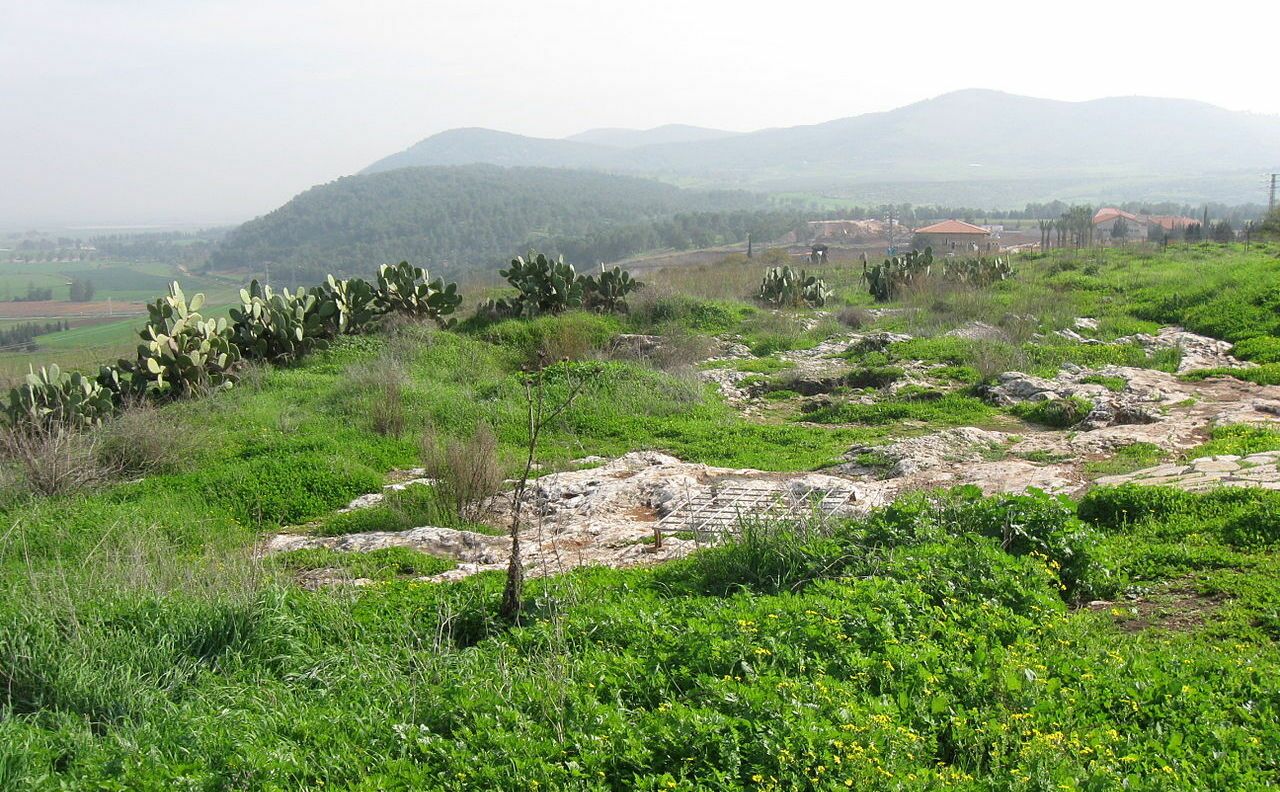

| The term Gilboa has Hebrew origins, meaning “bubbling fountain” or “agitated spring,” derived from the words “gil” (joy) and “boa” (to bubble up) Wisdom Library. It is also associated with a biblical place name referring to a mountain range in northern Israel, symbolizing strength and divine connection, and is interpreted as “hill of God” namediscoveries.com+1. Additionally, the name evokes imagery of a source of joy and abundance, reflecting cultural roots Wisdom Library+1. |
King Ahab’s existence has been verified through archaeology: His name is famously recorded on the Assyrian Kurkh Monolith. And a small seal stamp almost certainly references his infamous wife. Likewise, a series of geopolitical events surrounding the reign of this king, as described in the biblical account, have been verified through excavations (particularly in relation to Ahab’s battles with Syria).
Now, archaeological evidence reveals a biblical event much closer to home for Ahab. So close to home, in fact, that it happened next door. It is the dramatic and sanguine story of Naboth’s vineyard.
Has Naboth’s vineyard been found?
The Biblical Account

Neighboring Ahab’s palatial grounds in Jezreel was the vineyard of the wealthy Naboth. Ahab began to covet the vineyard, and went to Naboth to purchase the land or trade it for property elsewhere. The Bible records the meeting in 1 Kings 21:1-4:
And it came to pass after these things, that Naboth the Jezreelite had a vineyard, which was in Jezreel, hard by the palace of Ahab, king of Samaria. And Ahab spoke unto Naboth, saying: ‘Give me thy vineyard, that I may have it for a garden of herbs, because it is near unto my house; and I will give thee for it a better vineyard than it; or, if it seem good to thee, I will give thee the worth of it in money.’ And Naboth said to Ahab: ‘The Lord forbid it me, that I should give the inheritance of my fathers unto thee.’ And Ahab came into his house sullen and displeased because of the word which Naboth the Jezreelite had spoken to him; for he had said: ‘I will not give thee the inheritance of my fathers.’ And he laid him down upon his bed, and turned away his face, and would eat no bread.
Naboth was fully within his rights to reject the king’s offer and maintain his vineyard. This was inherited land that had been passed down the generations of his family. According to Israelite law, it wouldn’t be right for him to sell it.
The account continues with the arrival of Jezebel (verses 5-7:
But Jezebel his wife came to him, and said unto him: ‘Why is thy spirit so sullen, that thou eatest no bread?’ and he said unto her: ‘Because I spoke unto Naboth the Jezreelite, and said unto him: Give me thy vineyard for money; or else, if it please thee, I will give thee another vineyard for it; and he answered: I will not give thee my vineyard.’ And Jezebel his wife said unto him: ‘Dost thou now govern the kingdom of Israel? arise, and eat bread, and let thy heart be merry; I will give thee the vineyard of Naboth the Jezreelite.’
The Bible goes on to record Jezebel’s actions. The queen wrote letters convening a court case and a fast, and sealing them with Ahab’s royal seal. Naboth was to stand accused of cursing God and the king. Two false witnesses were brought forward to give “evidence.” Poor Naboth had no chance: “Then they carried him forth out of the city, and stoned him with stones, that he died” (verse 13).
Ahab, upon hearing of the death of Naboth, took possession of the vineyard. However, his victory was short-lived. Elijah the prophet soon came to him with a prophecy of a humiliating death for him and his wife, and the extinguishing of his royal line.
It’s a dramatic account. And new archaeological evidence supporting it has been discovered.
Naboth’s Vineyard Found?
Left: The Jezreel Winery Complex / Jezreel Expedition
In 2012, the Jezreel Expedition was founded, and there have been digs at the site every year since under the direction of Dr. Norma Franklin of the University of Haifa. The site consists of two nearby tel mounds within a 1-square-mile agricultural area—the upper Tel Jezreel and the lower Tel ‘Ein Jezreel. At the foot of Tel Jezreel, archaeologists have uncovered a prominent ancient winery that was operating during the ninth-century b.c.e. time of Naboth.
The biblical account describes Ahab’s “house” near the vineyard at Jezreel as a hekhal, which simply refers to a “large, important building, possibly of a military or religious nature”—not necessarily a palace. Excavations at the top of Tel Jezreel have revealed a hekhal, related to some kind of military use, dated roughly to the ninth century b.c.e. And at the foot of Tel Jezreel, below the large building, they found the 40-square-foot wine-making complex, complete with a large treading floor, deep vats and a basin.
Today wineries are almost always located alongside a vineyard. It saves on transportation costs and makes the processing more efficient. This would have been even more important during Bible times. So if one finds a winery, it is logical to deduce that the vineyard would have been close by—especially in the rich Jezreel agricultural region.
Rock-cut archaeological features such as wineries are nearly impossible to date, since they are regularly cleaned and cleared of identifying pottery or carbon samples. Still, Franklin’s team was able to retrieve plaster pieces containing carbon samples. These revealed a final use of the winery between the first century b.c.e. and first century c.e. As for when its use began, the floor matches with other securely dated Israelite wineries to the early ninth century b.c.e., Omride period. Further, there is no evidence of a beam press or screw press, which were typical installations from later periods.
The winery, therefore, is a good match with the biblical account of Ahab and Naboth. And it fits even better when we consider the precise geographic positioning of Naboth’s vineyard as shown retroactively, in a later biblical passage: 2 Kings 9.
Joram and Geography
 Ahab’s son, King Joram, had been wounded during battle against the Syrians at Ramoth-gilead. He withdrew to Jezreel to recover while the battle continued (note that the hekhal of Tel Jezreel showed signs of a military-station function, playing into this account). Partway through the ongoing battle, the military commander Jehu was anointed king by one of Elisha’s servants (see here for inscriptional evidence relating to this interlude) and was commissioned to dispatch Ahab’s royal line.
Jehu subsequently rode his chariot to Jezreel from the east (by way of the Via Maris). Joram spotted his arriving commander and began to ride down from Jezreel to meet him. They met at Naboth’s vineyard (2 Kings 9:21), where Jehu killed Joram and discarded his body in the winery—again, below and on the east side of Tel Jezreel.
Right: Map of the Jezreel Excavation, looking south / Jezreel Expedition
The general region around Tel Jezreel is known for its ancient production of olive oil and wine. Indeed, after conducting airborne LiDAR scans of the area, Franklin’s team noted some 57 wine and olive oil presses. But soil analysis showed that it was specifically the area east of Tel Jezreel, and around the above-described large ancient winery, that was best suited for grapes. The land west of the tel, on the other hand, proved best suited for growing olives.
Proof of the Bible’s accuracy?
Dr. Franklin wrote about her discoveries in TheTorah.com and Biblical Archaeology Review. She wrote, “Even if it cannot be securely attributed to Naboth the Jezreelite, the excavated Jezreel winery reflects the reality on the ground as described so vividly in 2 Kings.” And, we might add, 1 Kings 21.
Short of finding an inscription saying “Naboth was here,” the evidence for this vineyard is as sure as an archaeologist could ask for.
With everything that has been uncovered, the accuracy of the Bible is beyond reasonable doubt. Of course, today there are few archaeologists who are bold enough to make that claim. At least six biblical figures from the reign of King Ahab have been proved by archaeology. Several more have been identified with “near” proof (including possible evidence for the Prophet Elisha). Evidence attests to the geopolitical situation with Syria, including evidence for Syria’s belligerent kings. And we now have evidence relating to Naboth’s vineyard.
For more information about the growing number of exciting archaeological finds attesting to the accuracy of the biblical record, read Christopher Eames’ article “Proof: Archaeology Proves the Bible.”
spacer