
WOW-WOW=WOW, Things are moving so fast and new information is being revealed on the daily. So much, so fast our heads are spinning. There is no way for anyone to stay on top of it all. Very clearly, we are coming to the end. One thing I have noticed is that they have had so much of this knowledge for much, much longer than any of us could have imagined. Not only have they had it, but they have also been applying it in secret. Creating the stuff of which NIGHTMARES are made. All the while convincing the masses that all their efforts have been in the interest of society and saving the planet.
When they truly unleash the fruit of their labor on the unsuspecting public it will be devastating. No one should be surprised. We have been warned from the beginning who is behind it all and what is in store for a faithless, selfish, ungrateful WORLD!
ONE THING that should be very clear by the time you finish viewing this post is that they are out to CHANGE TIMES AND LAWS, just as we read i the BIBLE.
Daniel 7:25
I know that most of the world, most especially young people, think that technology is just the best thing since chocolate. Oh, how the world loves their “smart phones”, IPads, Smart Watches, Google Glasses and Virtual Reality Headsets. Where would we be with Alexa and Siri? Without the CoPilot and Chatbots?
Well, folks. There is NOTHING NEW UNDER THE SUN. You can trace the root of Technology all the way back to the Primordial “gods” that emerged from the DEEP. Most especially from the Island of Rhodes. There was a group there who were the originators of metallurgy, pharmakoi, magic and witchcraft. The first to initiate the worship of the gods and create images of them in sculptured stone and bronze. They could manipulate the weather, causing storms, creating lightning, earthquakes, winds and waves. They were shapeshifters, tricksters and malevolent evil doers. They were known by many names but primarily they were called TELCHINES.
From a far off – can refer to viewing the tiniest creatures inhabiting the earth or the microscopic or nano particles in our bodies which are not visible to the human eye. Or it can apply to the studying of the AIR above us. The layers of the heavens along with the sun, moon, stars and wandering stars that inhabit them. Or, it could refer to the communication from spirits who are in a totally different dimension, who communicate with will spirits and send visualizations that are not real but manifestations of things unseen.
The etymology of “technique” comes from the Greek word “technikós,” meaning “one who creates” or “develops,” which is related to “téchnē,” meaning “art” or “skill.” This term reflects the creative aspect of craftsmanship and skill development. Online Etymology Dictionary
These terms highlight the historical roots of both concepts in relation to creativity and the application of skills in various fields.
spacer
COLOSSUS TECHNE
Throughout history the ruling class/elites hae been trying very hard to return us to life as it was in Ancient History. You know, before Christ came and ruined all their fun. Why do they so desperately want to return to those days? Because the ruling class are descendants of the Fallen and their progeny. THEY … Click Here to Read More
It’s About Time – Part 8 – ETERNALLY CHANGED View this first or last but do not miss it. VERY RELEVANT!
RESTORED: 1/30/26 Satan’s plan is to reduce us all to nothing more than random particles tossed together by chance. God had purpose for placing us on the this Earth. And it was not so that we could fill time up with the pursuit of our own lusts and gratification. Satan wants to take our focus … Click Here to Read More
I submit to you, that we have allowed witches, wizards and magi to become the teachers, preachers and priests over us. This is totally against GOD and against our humanity. God did indeed create heaven and earth, he gave us all the knowledge that we needed and he set up protctions for us to keep … Click Here to Read More


spacer
Unraveling the Mysteries of Chinese Magic Mirrors


Chinese magic mirror
A Chinese magic mirror is an ancient bronze artifact, typically convex on its polished reflecting front and decorated with intricate relief patterns on the reverse, renowned for its optical property of projecting the back design as a visible image onto a nearby surface when strong light, such as sunlight, is directed through the front.[1] These mirrors, also called transparent mirrors (tōuguāng jìng), exploit advanced ancient metallurgical techniques to create a semi-translucent effect in the thin bronze material, allowing light to partially penetrate and form the illusion of transparency.[2]Originating during the Han dynasty (206 BCE–220 CE), Chinese magic mirrors represent a pinnacle of early optical and casting craftsmanship, with the technique involving precise control of metal thickness and surface variations to enable the projection.[1][3] Production appears to have been concentrated in this period, though rare surviving examples date to as late as the 16th century during the Ming dynasty (1368–1644 CE), often featuring Buddhist motifs like the Amitābha Buddha symbolizing enlightenment and protection.[1] The technique spread to Japan by the 8th century, where it was further adapted.[4] The mirrors held cultural significance beyond utility, serving as talismans to ward off evil and symbolize self-reflection in Taoist and Confucian traditions.[5]The projection mechanism relies on microscopic irregularities in the bronze’s surface and thickness—typically around 1–2 mm at the center—causing light rays to scatter differently: thinner or less polished areas transmit more light, while thicker regions reflect it, reconstructing the back pattern at a focal distance of about 1–2 meters.[2] Modern analyses, including phase-measuring reflectometry, confirm that these effects stem from intentional manufacturing flaws introduced during casting and polishing, rather than modern layering techniques seen in replicas.[6] The knowledge of creating authentic magic mirrors largely declined after the Song dynasty (960–1279 CE), with only rare later examples, and was not widely replicated until rediscovered in the 20th century through scientific study.[7]
Role in Chinese Society
In ancient China, magic mirrors, like other bronze mirrors, served practical purposes in daily life, primarily as grooming tools for personal reflection and adornment. Their polished surfaces allowed users to check their appearance, contributing to routines of self-care and social presentation. However, their unique optical properties distinguished them, enhancing their role beyond ordinary mirrors.[15]Bronze mirrors in general were employed in divination practices, such as square mirrors inscribed with Daoist fortune-telling symbols from the Song Dynasty, which facilitated interpretations of fate through reflections and motifs. Magic mirrors, with their projecting designs, may have amplified such symbolic uses.[31]Ritually, magic mirrors held profound significance, often buried in tombs to aid the deceased in the afterlife by dispelling evil spirits and providing protection, as their reflective quality was believed to shatter darkness and gather light. The projection effect, revealing hidden designs, symbolized the unveiling of spiritual truths. In Han burials, these mirrors symbolized longevity and eternal well-being, placed near the body to ensure continuity in the spiritual realm. Emperors gifted bronze mirrors, including rare magic examples, to officials and ministers, embodying ideals of clarity and self-reflection to encourage moral introspection and loyalty, as seen in exchanges during the Tang Dynasty under Emperor Xuanzong.[32][33][15]Socially, ownership of magic mirrors denoted elite status due to their intricate craftsmanship and rare optical properties, making them prized possessions among the aristocracy and affluent families. While bronze mirror production and use among women for vanity purposes were popularized in Tang court fashions, magic mirrors remained rare.[32][33]Round bronze mirrors symbolized completeness and reunion as tokens of love and marital harmony, often included in dowries or split into halves for spouses. For magic mirrors, the projecting design added layers of symbolic depth to these roles.[32][33]Literary and philosophical traditions elevated the cultural role of magic mirrors. The Tang Dynasty text Record of Ancient Mirrors (c. 800 CE) documented their creation and praised the illusory beauty of their designs, blurring the line between appearance and hidden depth. This resonated with Taoist ideals, where the mirrors’ projection served as ritual objects to reflect and dispel illusions of demons and spirits, aiding harmony between material and ethereal worlds, and symbolizing self-reflection in Confucian traditions. Predominantly associated with women in personal and marital contexts, magic mirrors encapsulated themes of vanity balanced by spiritual insight.[15]
Role in Japanese Culture
In Japanese culture, magic mirrors, known as makkyō (魔鏡), hold profound religious significance, particularly within Shinto traditions where they symbolize divine wisdom and purity, drawing from sacred mirrors like the Yata no Kagami—one of the Three Imperial Regalia believed to embody the sun goddess Amaterasu and represent wisdom or honesty, housed in the Inner Shrine (Naikū) of Ise Grand Shrine in Mie Prefecture. However, Yata no Kagami itself is a symbolic sacred mirror without the projection property.[34] Makkyō mirrors are integral to Shinto purification rites at sites like Ise Shrine, facilitating spiritual cleansing and reflection of the kami (divine spirits) through their reflective and projecting properties.[35][36]Buddhist influences enriched the cultural adaptation of magic mirrors in Japan, transforming them into meditative tools that project sacred imagery to enhance spiritual contemplation. In temples influenced by Pure Land Buddhism, these mirrors were crafted with embossed designs on the back, such as Amida Buddha or lotus motifs, which become visible when light passes through, serving as aids for devotees during meditation to visualize enlightenment and purity. The lotus projection, in particular, symbolizes spiritual awakening, aligning with Buddhist practices emphasizing transcending illusion through focused reflection.[26][37][38]During the Edo period (1603–1868), amid persecutions of Christianity, magic mirrors provided a covert means for hidden Christians (kakure Kirishitan) to practice their faith discreetly. These mirrors were designed to project Christian symbols like the cross or Jesus Christ when illuminated, allowing believers to identify fellow practitioners without arousing suspicion.[27][39]The mystical quality of magic mirrors—revealing hidden images and truths—inspired motifs in traditional Japanese arts, evoking themes of illusion and revelation. In ukiyo-e woodblock prints, mirrors often framed scenes of beauty and ephemerality, echoing the transformative projections of makkyō to symbolize deeper realities beyond the surface.[40] Similarly, Noh theater incorporated mirror imagery in performances to represent spiritual unveiling and the interplay between the seen and unseen worlds, drawing on the mirrors’ ability to manifest latent designs as metaphors for enlightenment and hidden truths.[41]In contemporary Japanese culture, magic mirrors persist as mystical artifacts in popular media and traditional craftsmanship. They feature prominently in anime and manga, such as in Oblivion Island: Haruka and the Magic Mirror (2009), where they serve as portals to otherworldly realms. Additionally, in Kyoto, the last traditional makers at Yamamoto Gokin Seisakusho—established in the Edo period—continue the craft as of 2022, honored through artisan demonstrations and cultural preservation events.

spacer
It’s About TIME – Part 7 – 10,000 Year Clock
Tags: TIME, Clocks, Perception, Space, Magick, Philanthropy, Wealthy, WEF, Bells, Deserts, Mountains, Megalomaniacs, Millennium, End of the Age, Maritime, Ancestors Symbols, Signs and Sigils these are the language of the Elite/Magicians/Illumined. These are employed not only as a means of communicaiton but as instruments of Magick meant to conjure demonic assistance for the completion of … Click Here to Read More
It’s About TIME – Part 6 – Time Travel or a Gateway to the Inhabitation of Devils?
The portal in the photo above appeared in the sky and was captured in this photo. I believe it was in California. As this world gets crazier and crazier, TIME TRAVEL, SPACE TRAVEL, INTER-DIMENTIONAL TRAVEL, AND VIRTUAL TRAVEL, are all becoming more of a reality… OR ARE THEY? It gets more and more difficult everyday … Click Here to Read More
It’s About TIME – Part 5 -Time Travel is Possible. The Mandela Effect is Real. The earth is FLAT. The DEVIL is a LIAR!
; Photo Credit: No Copyright Infringement Intended. RESTORED 8/19/23; RESTORED 12/22/25 The devil and his minions are out to COMPLETELY CONTROL us or WIPE US OUT! They believe that by changing the TIME, they can defeat GOD’s purpose and WIN the right to keep their dominion over the earth forever. Remember now, you must give … Click Here to Read More
It’s About TIME – Part 4 – Corpus Clock and Chronophage
PHOTO CREDIT: CORPUS CLOCK RESTORED: 3/16/22 Years back when this thing was first introduced it really creeped me out. I knew that one day I would have to post an article about it. Seriously, who creates something so ominous? My instincts told me it was a magick device created to affect time in some way, … Click Here to Read More
It’s About TIME – Part 3 – Breaking The Time Barrier
Ever since the fall in the Garden of Eden, humans and the offspring of the fallen have been confined to this holding place called time. From that day to this the Fallen Angels have been looking for a way to defeat God and take CONTROL OF TIME. The best way for them to defeat GOD … Click Here to Read More
It’s About TIME – Part 2 – Astronomical Clocks around the World
These Astronomical Clocks Were a Wonder of the Medieval World Vincze Miklós 12/16/13 6:53pm Filed to: DESIGN Astronomical clocks are over 1,000 years old — some say the first was the mysterious Antikythera Mechanism. They predict the movements of the stars, sun, moon, and planets. They are also among the most beautifully-designed timepieces in the world. … Click Here to Read More
It’s About TIME – Part 1 – Changing Clocks to Change Time
spacer
God’s Time is written in the Sun, Moon and Stars! I got started on this topic while working on another. I just recently learned that the BA’AL Arch was erected once again. This time in Bern, Switzerland. I am still working on that research. That is a very heavy topic and will take me some … Click Here to Read More


spacer

Physics and TORSIAN FIELDS
spacer

spacer

spacer
INTERESTING. Is this the reason for all the chatter about ICE? Is this why they have been working so hard to MELT the ICE in ATARTICA, the POLES and Glaciers everywhere calling it CLIMATE CHANGE?
spaceerspacer

spacer
What Are Metamaterials and How Do They Work?
Metamaterials are engineered materials with properties not found in natural substances. Unlike conventional materials, whose characteristics are dictated by chemical composition, metamaterials derive their behaviors from their precisely structured architecture. These artificial constructs are fashioned from multiple materials, often metals and plastics, arranged in repeating patterns at scales smaller than the wavelengths of the phenomena they influence. This allows them to manipulate electromagnetic, acoustic, or even seismic waves.
Beyond Natural Limits
Naturally occurring materials exhibit properties determined by their atomic and molecular structures. For instance, light bends through glass based on its fixed refractive index.
Metamaterials transcend these natural limitations by creating “designer properties” through their crafted internal geometries. This allows them to achieve behaviors impossible with conventional substances, such as a negative refractive index. Unlike positive refractive index materials where light bends in one direction, a negative refractive index causes light to bend in the opposite direction.
This light-bending capability opens possibilities for applications like super-lenses that can image details smaller than the wavelength of light, surpassing the traditional diffraction limit. Metamaterials can also be engineered to exhibit properties like perfect absorption or the ability to block, enhance, or bend waves beyond what is possible with everyday materials.
The Science Behind Their Behavior
Metamaterial properties arise from their designed microscopic or nanoscopic structures, which are much smaller than the wavelength of interacting waves. These sub-wavelength elements, called “meta-atoms” or “unit cells,” act as tiny resonators. When waves encounter these structures, they induce resonant interactions.
This resonant response allows the metamaterial to collectively behave as if it has different macroscopic properties. This concept is described by “effective medium theory,” where the material can be treated as a homogeneous medium with tailored effective parameters like permittivity and permeability. Designing the geometry of these unit cells allows engineers to achieve simultaneously negative electric permittivity and negative magnetic permeability, leading to the negative refractive index.
Diverse Applications Across Fields
Metamaterials’ ability to manipulate waves has led to a wide array of potential applications across scientific and technological domains. One application is invisibility cloaking, where metamaterials guide electromagnetic waves around an object, making it appear as if light passes directly through empty space. Current cloaking devices are limited in size and frequency, but the principle involves steering incident waves around an object without reflection, rendering it invisible to certain detection methods.
Metamaterials also promise advancements in imaging, with “super-lenses” that overcome the diffraction limit of conventional optics. These lenses enable visualization of structures far smaller than currently possible, with implications for medical diagnostics and nanoscale research. In telecommunications, metamaterial antennas improve performance, allowing for smaller, more efficient designs with enhanced signal strength, directivity, and broadband capabilities. These antennas manipulate electromagnetic waves to focus and direct signals, leading to better wireless communication systems.
Beyond electromagnetic applications, acoustic metamaterials control sound waves. This includes acoustic cloaking, which could render objects invisible to sonar by bending sound waves around them, and applications in noise control and ultrasonic sensing. Metamaterials also hold promise for advanced sensors, efficient energy harvesting systems, and seismic metamaterials designed to protect structures from earthquake vibrations by diverting seismic waves.
Creating the Unseen
Fabricating metamaterials requires precision engineering for intricate structures at sub-wavelength scales. The manufacturing process involves creating repeating patterns smaller than the wavelength of the energy they control. This demands specialized equipment and controlled parameters.
Common fabrication techniques include lithography, such as photolithography or electron-beam lithography, used to pattern materials with high resolution. Three-dimensional (3D) printing, including additive manufacturing techniques like two-photon polymerization, is emerging as a tool for creating complex metamaterial geometries. These methods allow for layer-by-layer construction of 3D structures. While challenges remain in scalability, cost, and precise dimensions at the nanoscale, continuous innovation in manufacturing processes is important for translating metamaterial concepts from laboratories to practical applications.
spacer
Posted on March 13, 2023 in ASRC News, Photonics Initiative

Credit: Getty Images
The discovery establishes the foundations for revolutionary applications in wireless communications and optical computing.

(a) Conventional spatial reflections: A person sees their face when they look into a mirror, or when they speak the echo comes back in the same order.
(b) Time reflections: The person sees their back when they look into a mirror, and they see themselves in different colors. They hear their echoes in a reversed order, similar to a rewound tape.
(c) Illustration of the experimental platform used to realize time reflections. A control signal (in green) is used to uniformly activate a set of switches distributed along a metal stripline. Upon closing/opening the switches, the electromagnetic impedance of this tailored metamaterial is abruptly decreased/increased, causing a broadband forward-propagating signal (in blue) to be partially time-reflected, (in red) with all its frequencies converted. (Adapted from Nature Physics)
NEW YORK, March 13, 2023 — When we look in a mirror, we are used to seeing our faces looking back at us. The reflected images are produced by electromagnetic light waves bouncing off of the mirrored surface, creating the common phenomenon called spatial reflection. Similarly, spatial reflections of sound waves form echoes that carry our words back to us in the same order we spoke them.
Scientists have hypothesized for over six decades the possibility of observing a different form of wave reflections, known as temporal, or time, reflections. In contrast to spatial reflections, which arise when light or sound waves hit a boundary such as a mirror or a wall at a specific location in space, time reflections arise when the entire medium in which the wave is traveling suddenly and abruptly changes its properties across all of space. At such an event, a portion of the wave is time reversed, and its frequency is converted to a new frequency.
To date, this phenomenon had never been observed for electromagnetic waves. The fundamental reason for this lack of evidence is that the optical properties of a material cannot be easily changed at a speed and magnitude that induces time reflections. Now, however, in a newly published paper in Nature Physics, researchers at the Advanced Science Research Center at the CUNY Graduate Center (CUNY ASRC) detail a breakthrough experiment in which they were able to observe time reflections of electromagnetic signals in a tailored metamaterial.
“This has been really exciting to see, because of how long ago this counterintuitive phenomenon was predicted, and how different time-reflected waves behave compared to space-reflected ones,” said the paper’s corresponding author Andrea Alù, Distinguished Professor of Physics at The City University of New York Graduate Center and founding director of the CUNY ASRC Photonics Initiative. “Using a sophisticated metamaterial design, we were able to realize the conditions to change the material’s properties in time both abruptly and with a large contrast.”
This feat caused a significant portion of the broadband signals traveling in the metamaterial to be instantaneously time reversed and frequency converted. The effect forms a strange echo in which the last part of the signal is reflected first. As a result, if you were to look into a time mirror, your reflection would be flipped, and you would see your back instead of your face. In the acoustic version of this observation, you would hear sound similar to what is emitted during the rewinding of a tape.
The researchers also demonstrated that the duration of the time-reflected signals was stretched in time due to broadband frequency conversion. As a result, if the light signals were visible to our eyes, all their colors would be abruptly transformed, such that red would become green, orange would turn to blue, and yellow would appear violet.
To achieve their breakthrough, the researchers used engineered metamaterials. They injected broadband signals into a meandered strip of metal that was about 6 meters long, printed on a board and loaded with a dense array of electronic switches connected to reservoir capacitors. All the switches were then triggered at the same time, suddenly and uniformly doubling the impedance along the line. This quick and large change in electromagnetic properties produced a temporal interface, and the measured signals faithfully carried a time-reversed copy of the incoming signals.
The experiment demonstrated that it is possible to realize a time interface, producing efficient time reversal and frequency transformation of broadband electromagnetic waves. Both these operations offer new degrees of freedom for extreme wave control. The achievement can pave the way for exciting applications in wireless communications and for the development of small, low-energy, wave-based computers.
“The key roadblock that prevented time reflections in previous studies was the belief that it would require large amounts of energy to create a temporal interface,” said Gengyu Xu, the paper’s co-first author and a postdoctoral researcher at CUNY ASRC. “It is very difficult to change the properties of a medium quick enough, uniformly, and with enough contrast to time reflect electromagnetic signals because they oscillate very fast. Our idea was to avoid changing the properties of the host material, and instead create a metamaterial in which additional elements can be abruptly added or subtracted through fast switches.”
“The exotic electromagnetic properties of metamaterials have so far been engineered by combining in smart ways many spatial interfaces,” added co-first author Shixiong Yin, a graduate student at CUNY ASRC and at The City College of New York. “Our experiment shows that it is possible to add time interfaces into the mix, extending the degrees of freedom to manipulate waves. We also have been able to create a time version of a resonant cavity, which can be used to realize a new form of filtering technology for electromagnetic signals.”
The introduced metamaterial platform can powerfully combine multiple time interfaces, enabling electromagnetic time crystals and time metamaterials. Combined with tailored spatial interfaces, the discovery offers the potential to open new directions for photonic technologies, and new ways to enhance and manipulate wave-matter interactions.
This research was partially supported by the Air Force Office of Scientific Research and the Simons Foundation.
spacer
Trump’s Tech Chief Claims US Can ‘Manipulate’ Time And Space

White House Science and Technology Director Michael Kratsios made waves this week after claiming that the U.S. possesses technology that can “manipulate time and space.”
What Happened: Kratsios made the statement during a speech at the Endless Frontiers tech retreat in Texas, where he advocated a renaissance of American innovation.
“Our technologies permit us to manipulate time and space. They leave distance annihilated, cause things to grow, and improve productivity,” Kratsios said.
Kratsios mourned a downturn in technological advancement in comparison with the mid-20th century.
“A gap lies between our moment and the speed of transformation America experienced midcentury,” he said.
While he did not specify which tools he was referring to, Kratsios did reference artificial intelligence, biotechnology, and semiconductors in the same address.
Why It Matters: The comments come as the Trump administration makes policy moves targeted at promoting the tech sector, including tariff exemptions for electronics like Apple’s iPhones and semiconductor equipment.
A new presidential memo released this week also instructs federal agencies to increase the use of emerging technologies in infrastructure.
At the same time, NASA is facing a proposed 50% reduction to its science budget under the Trump administration’s draft plan for the upcoming fiscal year.
| Link: https://video.twimg.com/amplify_video/1912497999701311488/vid/avc1/458×360/weSuBFVEE09J4hTQ.mp4?tag=16
|

spacer
Scientists Just Made Time Run BACKWARD (This Changes Everything About Reality)

252K subscribers
PROGRAMMABLE REALITY

Julia McCoyisa prominent entrepreneur and AI thought leader, currently serving as the CEO of First Movers, where she focuses on integrating AI into marketing strategies for businesses.
She cloned herself and “downloaded her brain”.
 The First Movers Coalition (FMC)isa global initiative launched at COP26 to accelerate the adoption of low-carbon technologies in high-emission sectors.It aims to create early markets for these technologies by leveraging the collective purchasing power of major companies,such as Apple and Amazon,to drive demand for decarbonization solutions.
Key commitments include:
-
Decarbonization of Heavy-Emitting Sectors: The coalition focuses on sectors like shipping, aviation, and steel, which are difficult to decarbonize.
-
Commitments to Near-Zero Carbon Cement: Companies are committing to purchase at least 10% near-zero carbon cement and concrete by 2030.
spacer
ZERO IS THE WORD
zero (n.) “figure which stands for naught in the Arabic notation,” also “the absence of all quantity considered as quantity,” c. 1600, from French zéro or directly from Italian zero, from Medieval Latin zephirum, from Arabic sifr “cipher,” translation of Sanskrit sunya-m “empty place, desert, naught” (see cipher (n.)).A brief history of the invention of “zero” can be found here. Meaning “worthless person” is recorded from 1813. … Click Here to Read More
NET ZERO – THE FINAL SOLUTION?
WE ARE ALL ONE, Brotherhood not only of man but of every thing on the planet. They talk about LOVE and ACCEPTANCE. They talk about PEACE, SAFETY and HARMONY. UNITY – EQUITY – FREEDOM! ALL ARE ONE! All that sounds so good. Sadly, the general masses believe they are talking about us. No, no, no, … Click Here to Read More
ZERO IS THE PLAN! BEWARE!
ZERO seems to be the WORD of our TIMES. It is everywhere. Zero this and Zero that. It is all over our groceries, its in the news and on the television. In big, colorful letters so you just can’t miss it. You can hardly escape it. That is by design. ZERO is where we are … Click Here to Read More
Waves, Rays and Energy Beams what are they really Up To?
If all the craziness around you is starting to sound too much like Star Trek it is not by mistake. The ruling elite have been working their plan for hundreds, no thousands of years. In their mind, it does not matter if it is fulfilled in their lifetime, they are focused on the end result. … Click Here to Read More
WAVE ON WAVE – Communication via Light
Communication what a complex, multi-faceted Word. It is so vital to our existence and so core to our relationships. Communication simply put is a verbal or written exchange. I talk, you listen. You talk, I listen. Both parties are intently involved in the process. Originally the only way to communicate was to be face to … Click Here to Read More


Who know how many trillions of dollars have been spent globally just on TELESCOPES ALONE? Not to mention all the other space vehicles, stations, launch pads, crews, maintenance, staff, experiments, training programs, etc. I don’t think there is any OVERSIGHT over all of this nonsense. I don’t even think there is any one group who … Click Here to Read More


Overview of the Unfolding Process
|
The second Lagrange point (L2) is a position in space where the gravitational forces of the Earth and the Sun balance with the
centrifugal force experienced by a small object, making it an ideal location for space telescopes like the James Webb Space Telescope. What is L2?Significance of L2 |

spacer
We should all know that there is no “outer space”. No PLANETS LIKE EARTH, that we could visit or on which we could live. We should all know that no one, nor anything has traveled outside our Ionosphere. There is an impenetrable Dome above us. No alien’s (other than spiritual entities) are coming in and no astronauts have gone out. There are no manmade devices traveling through the “galaxies” taking pictures and sending them back to us.
spacerThe Firmament’s Boundaries: The Scientific Proof of 78 Miles and …
Sep 20, 2025 · Modern science fabricates an infinite universe narrative, but through rigorous analysis and recursive testing using the ANIMA Framework, we have identified two critical boundaries of the …
The Rocket Hoax — Why Nothing Has Pierced the Firmament
Let’s get into the analysis and understand exactly why no rocket has ever breached the firmament. The firmament is an impenetrable barrier with 99.9% reflectivity (see through) which is why we don’t see …
Scientists Discover Impenetrable Barrier 11,500 km above Earth
Nov 27, 2014 · A group of researchers headed by Prof Daniel Baker of the University of Colorado’s Laboratory for Atmospheric and Space Physics has discovered a nearly impenetrable barrier some …
During the first month in space, the telescope undergoes a carefully orchestrated unfolding sequence that includes several key steps:
Timeline and Commissioning
-
The first focused images from the JWST are expected to be delivered about four monthsafter launch,confirming that the mirrors are
properly aligned and operational.1
The JWST represents a significant advancement in our ability to explore the universe,and its unfolding process is a critical step in
preparing it for its groundbreaking scientific mission. For more detailed information, you can refer to the NASA and ESA resources on the JWST’s
unfolding sequence. 2
spacer
James Webb Telescope’s Mirrors, What are they made of?

spacer
G.O. – GRAPHENE OXIDE PART 3
Tags: Bitcoin, Blockchain, WEF, Graphene, Taxes, Totalitarian, Beast System, CRYPTOCURRENCY, Digital Currency, SYNTHS, Holograms, NFT, Slavery, Hitler Here is another aspect of the Graphene. Also, another aspect of TOTAL CONTROL. Here are all the posts in this series: G.O.- GRAPENE OXIDE G.O. – GRAPHENE OXIDE Part 2 G.O. – GRAPHENE OXIDE PART 3 What you … Click Here to Read More

G.O. – GRAPHENE OXIDE Part 2
Tags: Graphene, Triangulene, Galactic Structures, CERN, Keys, Abyss, Gateway, Kill God, Mental Time Travel, Grid Cells, Neuroscience, Spatial cognition, Golden Age, Builders, Carbon Temples, Brain Hacking, NOAH, Electric Fire In my research on Graphene Oxide, I came across this ladies blogs. She has done some fantastic research and I found here posts very informative. I … Click Here to Read More
G.O.- GRAPENE OXIDE
“Signs and symbols rule the world, not words or laws.” ~ Confucius TAGS: Graphene, Mind Control, NanoTechnology, Allotropes, Graphene Tubes, Vaccines, 5G, Holograms, Hexagons, Saturn, Space, Cosmos, Electromagnetic Waves, Lucis Trust, Satan, Artificial Intelligence There is a terrible and deadly conspiracy at work against the people of earth. Anyone who does not believe that is … Click Here to Read More

-
These aspects highlight the rich and multifaceted significance of emeralds in occult practices and spirituality.
5 Sources

spacer
Aren’t the Kozyrev mirrors made of aluminum?
spacer
beryllium (Be), chemical element, the lightest member of the alkaline-earth metals of Group 2 (IIa) of the periodic table, used inmetallurgyas a hardening agent and in many outer spaceand nuclear applications.
| atomic number | 4 |
|---|---|
| atomic weight | 9.0121831 |
| melting point | 1,287 °C (2,349 °F) |
| boiling point | 2,471 °C (4,480 °F) |
| specific gravity | 1.85 at 20 °C (68 °F) |
| oxidation state | +2 |
| electron configuration | 1s22s2 |
Occurrence, properties, and uses
Beryllium is a steel-gray metal(similar to the Kozyrev Mirror)that is quite brittle at room temperature, and its chemical properties somewhat resemble those of aluminum (Aluminum is what was used in the Kozyrev Mirror) . It does not occur free in nature.Beryllium is found in beryl and emerald, minerals that were known to the ancient Egyptians.Although it had long been suspected that the two minerals were similar, chemical confirmation of this did not occur until the late 18th century.Emerald is now known to be a green variety of beryl.Beryllium was discovered (1798) as the oxide by French chemist Nicolas-Louis Vauquelinin beryl and in emeralds and was isolated (1828) as the metal independently by German chemist Friedrich Wöhler and French chemist Antoine A.B. Bussy by the reduction of its chloride with potassium. Beryllium is widely distributed in Earth’s crust and is estimated to occur in Earth’s igneous rocks to the extent of 0.0002 percent.Its cosmic abundance is 20 on the scale in which silicon, the standard, is 1,000,000.The United States has about 60 percent of the world’s beryllium and is by far the largest producer of beryllium; other major producing countries include China, Mozambique, and Brazil.
There are about 30 recognized minerals containing beryllium, including beryl (Al2Be3Si6O18, a beryllium aluminum silicate), bertrandite (Be4Si2O7(OH)2, a beryllium silicate), phenakite (Be2SiO4), and chrysoberyl(BeAl2O4). (Thepreciousforms of beryl, emerald and aquamarine, have a compositionclosely approaching that given above, but industrial ores contain less beryllium;most beryl is obtained as a by-product of other mining operations, with the larger crystals being picked out by hand.) Beryl and bertrandite have been found in sufficient quantities to constitute commercial ores from which beryllium hydroxide or beryllium oxide is industrially produced. The extraction of beryllium is complicated by the fact that beryllium is a minor constituent in most ores (5 percent by mass even in pure beryl, less than 1 percent by mass in bertrandite) and is tightly bound to oxygen. Treatment with acids, roasting with complex fluorides, and liquid-liquid extraction have all been employed to concentrate beryllium in the form of its hydroxide. The hydroxide is converted to fluoride via ammonium beryllium fluoride and then heated with magnesium to form elemental beryllium. Alternatively, the hydroxide can be heated to form the oxide, which in turn can be treated with carbon and chlorine to form beryllium chloride; electrolysis of the molten chloride is then used to produce the metal. The element is purified by vacuum melting.
Beryllium is the only stable light metal with a relatively high melting point. Although it is readily attacked by alkalies and nonoxidizing acids, beryllium rapidly forms an adherent oxide surface film that protects the metal from further air oxidation under normal conditions. These chemical properties, coupled with its excellent electrical conductivity, high heat capacity and conductivity, good mechanical properties at elevated temperatures, and very high modulus of elasticity (one-third greater than that of steel), make it valuable for structural and thermal applications. Beryllium’s dimensional stability and its ability to take a high polish have made it useful for mirrors and camera shutters in space, military, and medical applications and in semiconductor manufacturing.Because of its low atomic weight, beryllium transmitsX-rays17 times as well as aluminum and has been extensively used in making windows for X-ray tubes.Beryllium is fabricated into gyroscopes, accelerometers, and computer parts for inertial guidance instruments and other devices for missiles, aircraft, and space vehicles,and it is used for heavy-duty brake drums and similar applications in which a good heat sink is important.Its ability to slow down fastneutronshas found considerable application innuclear reactors.
Much beryllium is used as a low-percentage component of hard alloys, especially with copper as the main constituent but also with nickel– and iron-based alloys, for products such as springs. Beryllium-copper (2 percent beryllium) is made into tools for use when sparking might be dangerous, as in powder factories. Beryllium itself does not reduce sparking, but it strengthens the copper (by a factor of 6), which does not form sparks upon impact. Small amounts of beryllium added to oxidizable metals generate protecting surface films, reducing inflammability in magnesium and tarnishing in silver alloys.
Neutrons were discovered (1932) by British physicist Sir James Chadwick as particles ejected from beryllium bombarded by alpha particlesfrom a radium source. Since then beryllium mixed with an alpha emitter such as radium, plutonium, or americium has been used as a neutron source.The alpha particles released by radioactive decay of radium atoms react with atoms of beryllium to give, among the products, neutrons with a wide range of energies—up to about 5 × 10⁶electron volts (eV).If radium is encapsulated, however, so that none of the alpha particles reach beryllium, neutrons of energy less than 600,000 eV are produced by the more-penetrating gamma radiation from the decay products of radium.Historically important examples of the use of beryllium/radium neutron sources include the bombardment of uranium by German chemists Otto Hahn and Fritz Strassmann and Austrian-born physicist Lise Meitner, which led to the discovery of nuclear fission (1939), and the triggering in uranium of the first controlled-fission chain reactionby Italian-born physicist Enrico Fermi (1942).
The only naturally occurring isotope is the stable beryllium-9, although 11 other synthetic isotopes are known.Their half-lives range from 1.5 million years (for beryllium-10, which undergoes beta decay) to 6.7 × 10⁻¹⁷ second for beryllium-8 (which decays by two-proton emission). The decay of beryllium-7 (53.2-day half-life) in the Sun is the source of observed solar neutrinos.
spacer
The James Webb Hexagon mirrors are covered in GOLD.

spacer
The James Webb Space Telescope’s Folding Mirrors
You really must see this video revealing the true appearance of the mirrors and how it opens up.
WHAT IS IN THE NAME?

James Edwin Webb (October 7, 1906 – March 27, 1992) was an American government official who served asUndersecretary of State from 1949 to 1952. He was the second administrator of NASA from February 14, 1961, to October 7, 1968. Webb led NASA from the beginning of the Kennedy administration through the end of the Johnson administration,thus overseeing each of the critical first crewed missions throughout the Mercury and Gemini programsuntil days before the launch of the first Apollo mission.He also dealt with the Apollo 1 fire. He helped found the National Academy of Public Administration, a key locus for governmental reform studies.[2]
In 2002, the Next Generation Space Telescope was renamed the James Webb Space Telescope as a tribute to Webb.
Meaning of the name James – Wisdom Library
Jun 9, 2025 · Background, origin and meaning of James:The name James is of Hebrew origin, ultimately derived from Ya’aqov (Jacob), meaning “supplanter” or “he who grasps the heel.”
What does supplant mean in the bible? – The holy script
Apr 1, 2023 · The word “supplant” is used in the Bible to describe the act of taking the place of someone or something else by the use of scheming, strategy, trickery, or force. In most cases, it is used to describe how Satan tries to take the place of God.
Meaning & History
Webb Name Meaning, Family History, Family Crest & Coats of ArmsEtymology of WebbWhat does the name Webb mean?
When the ancestors of the Webb family arrived in England following the Norman Conquest of 1066, they brought their name with them. It is a name for a weaverwhich was in turn derived from the Old English word webbe,meaning a woven cloth, and was used to indicate someone employed in making such fabric. |
 By c. 1300 as “plexus of threads made by a spider.” Figuratively, “subtle snare, entanglement,”1570s. Applied from c. 1300 in anatomy to the caul of a fetus, also other thin membrane or connective tissue. In zoology, applied to the membranes between the toes of ducks and other aquatic birds from 1570s.
SPACERacer
Knots and Weaving in Folklore: Magic and Meaning
 By / January 13, 2025
The Symbolism of Knots: Binding, Protection, and Power
Knots have held symbolic importance in folklore across cultures for centuries, representing concepts as diverse as protection, binding, and mystical power. The act of tying a knot often symbolises the creation of a bond—whether between people, as in marriage rites, or between the physical and spiritual realms, as in magical practices. Knots have been used in rituals to bind oaths, ward off evil, and even trap spirits.
In Norse maritime folklore, for instance, sailors tied protective knots (tying ropes with three knots, or the Seidr wind knot) to safeguard against storms, often incorporating runes to invoke divine protection from gods like Thor. Similarly, in Celtic traditions, intricate knotwork such as the triquetra symbolised the interconnectedness of life and the eternal cycle of birth, death, and rebirth. These knots were often depicted in carvings on standing stones, illuminated manuscripts like the Book of Kells, and jewellery such as torcs, reinforcing their spiritual and protective significance.
Weaving as a Metaphor for Fate and Creation
Weaving, like knot-tying, has long been imbued with rich symbolism, frequently associated with the concept of fate.In Greek mythology, the three Fates—Clotho, Lachesis, and Atropos—were said to spin, measure, and cut the thread of life, determining the destiny of gods and mortals alike. This imagery underscores the power of weaving as a metaphor for the creation and control of life’s narrative.
In many cultures, weaving is also linked to the idea of creation itself. The act of interlacing threads mirrors the formation of the cosmos, where chaos is ordered into structure. In Native American traditions, the Spider Woman deity is said to have woven the world into existence, her web a symbol of the interconnectedness of all things. Similarly, in Hindu and Buddhist traditions, Indra’s Net serves as a powerful metaphor for the interconnected nature of the universe, depicting a vast net with jewels at each intersection, each reflecting all others. In Chinese folklore, the Weaver Girl (Zhinü) weaves the starry heavens, her story symbolising love, separation, and cosmic balance.
Knots and Weaving in Magical Practices
Throughout history, knots and woven patterns have played key roles in magical practices. Knot magic, sometimes called “cord magic,” involves tying specific knots to focus intent, store energy, or manifest desires. For example, a knot tied with the intention of securing love or protection was believed to hold that energy until untied.
Weaving, too, found its place in magical and ritual contexts. In medieval Europe, witches were often accused of using woven charms to influence weather or harm enemies.These woven spells, like knots, acted as tangible vessels for metaphysical power.The patterns created through weaving—from the simplicity of a cross-stitch to the complexity of a tapestry—were believed to carry symbolic meanings and spiritual significance.
The Folklore of Unraveling: Release and Liberation
The process of unraveling knots or weaving also holds symbolic meaning in folklore. To untie a knot or undo a woven piece is often associated with release, liberation, or the breaking of a spell. In some traditions, undoing a knot was thought to release trapped spirits or break curses.
In Japanese folklore, the untying of ceremonial knots during certain rituals is seen as a way to bring clarity and resolution to a situation. Similarly, in Slavic folklore, untying a knot during childbirth was believed to ease labour by symbolically releasing obstacles.
Modern Interpretations and Continuations
Today, the symbolic power of knots and weaving continues in various forms. Macramé art, for instance, revives the ancient practice of knot-tying with modern aesthetic sensibilities, while the intricate designs of woven textiles maintain their cultural and spiritual significance in Indigenous communities around the world. Even in contemporary storytelling, the metaphor of life as a woven tapestry persists, reminding us of the enduring impact of these ancient symbols.
Knots and weaving in folklore remind us of the threads that bind humanity—to each other, to nature, and to the unseen forces that shape our lives. Whether used to protect, create, or liberate, these practices have woven their way into the fabric of human culture, maintaining their timeless relevance and mystical allure.
Newest and best bigger than James Webb

SPHEREx and the Vera C. Rubin Observatoryare the latest and best telescopessurpassing the capabilities of the James Webb Space Telescope. The Rubin Observatory, with its 3.2-gigapixel camera and three-mirror design,will map the night sky with unprecedented speed and detail, while SPHEREx, with its 8.5 feet tall and 10.5 feet wide structure, will survey the entire sky in 102 different infrared colors. Both telescopes aim to provide a ‘big-picture view of the cosmos’ and contribute significantly to our understanding of the universe’s origins and evolution. Jason Deegan+4
SPACER
SPHEREx
 |
 |
 |
The Spectro-Photometer for the History of the Universe, Epoch of Reionization and Ices Explorer (SPHEREx)is a planned two-year mission that will survey the sky in optical as well as near-infrared light which, though not visible to the human eye, serves as a powerful tool for answering cosmic questions. Astronomers will use the mission to gather data on more than 450 million galaxies, as well as, more than 100 million stars in our own Milky Way.
SPHEREx will survey hundreds of millions of galaxies near and far, some so distant their light has taken 10 billion years to reach Earth.In the Milky Way, the mission will search for water and organic molecules – essentials for life, as we know it– in stellar nurseries, regions where stars are born from gas and dust, as well as disks around stars where new planets could be forming. Source: Spectro-Photometer for the History of the Universe, Epoch of Reionization and Ices Explorer | NASA Jet Propulsion Laboratory (JPL)
Spacecraft/telescope
The triple mirror telescope has an aperture diameter of 20 centimeters with a 3.5° × 11° field of view and six 2K × 2Kmercury cadmium telluride (HgCdTe) photodetector arrays.[12][8] Each 2K × 2K focal-plane array is covered with a linear variable filter, providing narrow-band response with a band center that varies along one axis of the array. SPHEREx obtains spectra through multiple exposures, placing a given source at multiple positions in the field of view, where it is measured at multiple wavelengths by repointing the spacecraft.[8]
The SPHEREx spacecraft and telescope were provided by BAE Systems Inc. Space & Mission Systems division (previously Ball Aerospace & Technologies) while the payload was developed by Caltech and NASA’s Jet Propulsion Laboratory. The Korea Astronomy and Space Science Institute supplied a non-flight cryogenic test chamber.[13][14][15]
In August 2022 NASA announced that the 4 microsatellites of the PUNCH constellation would be launched as rideshare payloads together with SPHEREx.[19]The mission launched on 12 March 2025.[2]First light was on April 2025.[20] Regular science operation started on 1 May 2025.[21]
The total cost of the mission (design, build, launch, and prime operations) was $488 million.[1] Source: SPHEREx – Wikipedia
spacer
Is it just me, or does SPHEREx look a lot like the Kozyrev Mirror??
Kozyrev Mirrors: Portals to the Unknown

In the realm of scientific exploration, few phenomena have intrigued and baffled researchers as much as the Kozyrev Mirrors. These enigmatic devices, named after Russian scientist Nikolai Kozyrev, are mirrors that allegedly possess the power to manipulate time and consciousness. While the historical events surrounding the Kozyrev Mirrors have been well-documented, there is a lesser-known story that has intrigued scientists and paranormal enthusiasts alike— an incident where someone disappeared while sitting inside one of these mysterious mirrors.
Nikolai Kozyrev, a brilliant astrophysicist, first delved into the study of these mirrors during the mid-20th century.His fascination with time, energy, and the nature of the universe led him to explore the uncharted territory of mirror-based experiments.Kozyrev believed that mirrors could harness and amplify energy,potentially unlocking the secrets of time travel and consciousness expansion.
Kozyrev’s experiments, which involved rotating specially crafted mirrors,sparked a flurry of scientific inquiry and debate. While some hailed his findings as revolutionary, others dismissed them as mere pseudoscience. Yet, one undeniable fact remained — Kozyrev Mirrors had an uncanny ability to influence the human mind.
 |
 |
The curved reflective metal focuses“time flow” or “torsion fields”
spacer

spacer
WHAT IS IN THE NAME?
SPIRITUAL SIGNIFICANCE AND MEANING OF SPHERE
The sphere is a profound, universal symbol embedded with deep significance and infinite meanings throughout history. Its shape represents unity, completeness, infinity – the whole universe. In spirituality and metaphysics, the sphere symbolizes eternity as it has no beginning or end.This article aims to explore various spiritual perspectives on spheres from different cultures to comprehensive dream interpretations.
For Native Americans, the sphere symbolizes Mother Earth in her most divine form. It signifies balance, totality of life cycle and spiritual perfection. The hoop dance using spherical shapes in their rituals represents the circle of life and unity among all life forms.
In Hindi, sphere is known as गोला (Gola). This term intrinsically also represents Indianphilosophyregarding the concept of ‘Samsara’, the continuously revolving wheel of life and death, expressing the cyclic nature of Universe reflecting core existence ruled by Karma chilli. SOURCE: Sphere spiritual meaning
space
x
space
The Greek word Telchines is a compound word combining the three words, Tel, chi and nes. The word tel or tele, a form of tele, meaning “afar, far off.” The word Chi is the 22nd letter of the Greek alphabet, (X) pronounced /’ka?/ or /’ki?/ in English. Chi or x is a symbol or number for Christ (Not Jesus Christ, but the Greek Christ Poseidon) whose name in Greek (XpiVros, “Christos”) begins with this letter which is often used to abbreviate the name Christ, as in the holiday Christmas (Xmas). Christos means “anointed one” or “messiah.” In Plato’s Timaeus, it is explained that the two bands which form the soul of the world cross each other like the letter X.The word “nes or ines” in Spanish is “Inés,( orEenés),” which in Latin is the name Ynez and in French Agnes. Agnes \ag-nes\ as a girl’s name is pronounced AG-ness. It is the Latin form of the Greek name Hagnes, meaning “pure, holy.”
Hence, they (The Telchines) were the original anointed priesthood from far off (The East) who were the pure and holy priests placed in charge of our savior (Poseidon?). They were and are still in charge of religion, magic and commerce.
 OCCULT Significance and Meaning of “x” = Transformation, choice, and the crossing of boundaries
spacer
Vera C. Rubin Telescope

The Vera C. Rubin Observatory mirrors

The Vera C. Rubin Observatory is a wide-field reflecting telescopethat will digitally scan the entire available sky every few nights from its mountain top location in Chile. Rubin was the top-ranked large ground-based initiative in the 2010 National Academy of Sciences decadal survey in astronomy and astrophysics and received its US federal construction start in July 2012. Stay tuned for videos and animations from Rubin as the project moves forward.
Créditos:
LSST/NSF/AURA/Todd Mason Productions Inc.
Vera C. Rubin Observatory Rotates

film noir(n.)
noir 2 of 2 adjective
: having a bleak and darkly cynical quality of the kind associated with hard-boiled crime fiction and film noir
a noir thriller
In this boldly styled first novel, Komarnicki follows a 30-year-old homeless man on a noir odyssey of death and survival through the streets of New Orleans and Hong Kong.—Sybil S. Steinberg

WHAT IS IN THE NAME?
Vera – Mythological Connections
[A]n illustrious family of Florence, appearing first as merchants of the medieval republic, and at the dawn of the Renaissance, in the fifteenth century, raised to supreme power through their liberality and merit. From this time on for three centuries, amid fortunes of varying brilliancy, this family produced popes, sovereigns, and tyrants, and it occupies a large place in the history of Europe. In the fine arts and literature the epithet has particular reference to Cosimo dei Medici, known as Cosimo the Elder, and to Lorenzo the Magnificent. [Century Dictionary]
SPACER
A dry cooper makes casks, etc., to hold dry goods, a wet cooper those to contain liquids, a white cooper pails, tubs, and the like for domestic or dairy use. [OED]
As a verb, “to make barrels, casks, etc.,”1746. The surname Cowper (pronounced “cooper”) preserves a 15c. spelling.
Background, origin and meaning of Rubin:
The name Rubin is a variant of Reuben, a Hebrew name meaning “behold, a son.” It originates from the biblical figure Reuben, the eldest son of Jacob and Leah in the Old Testament. The name’s etymology traces back to the Hebrew words “ra’a” (to see) and “ben” (a son). Associated names include Ruben, Rubina, and Rubie. Source: Meaning of the name Rubin
Genesis 49 (Isaac’s blessings on his sons)
3 Reuben, thou art my firstborn, my might, and the beginning of my strength, the excellency of dignity, and the excellency of power:
4 Unstable as water, thou shalt not excel; because thou wentest up to thy father’s bed;then defiledst thou it: he went up to my couch.
So, Reuben had sex with his father’s wife. Reuben did not have sex with his mother. Instead, he had a relationship with his father’s concubine, Bilhah, which is described in Genesis 35:22. This act is often interpreted as a challenge to Jacob’s authority and a desire for power, AND a direct incestuous relationship. The story highlights the complexities of Reuben’s actions and their implications for the family and clan dynamics. Ready4Eternity+2
spacer

NSF Vera C. Rubin Observatory
 |
| Vera Rubin operated the No. 1 36-inch telescope at Kitt Peak National Observatory. Kent Ford’s Image tube spectrograph is attached to the telescope. NOAO/AURA/NSF |
We are pleased to announce that the Large Synoptic Survey Telescope (LSST), which will conduct a vast astronomical survey for unprecedented discovery of the deep and dynamic universe beginning in 2022, will now be named Vera C. Rubin Observatory (Rubin Observatory). This new name honors Vera Rubin, a brilliant astronomer and a champion for women in science.
Vera Rubin, who passed away in 2016, spent her career making extraordinary contributions to the field of astronomy. Among other notable advances, her work confirmed the existence of dark matterafter Swiss astrophysicist Fritz Zwicky first proposed it in 1933. Dark matter emits no light and therefore can’t be observed directly, but it makes up more than 90% of the mass of the Universe. Understanding the nature of dark matter is one of the main science topics that drove the design of survey that will be conducted at the Rubin Observatory. By mapping galaxies through time and space, cataloging their masses, and studying their influence on the distortion of space-time we will gain new insight into the nature of dark matter and dark energy.
In addition to her remarkable contributions to astronomy, Vera Rubin was a mentor and advocate for women as astronomers and scientists.She worked throughout her career to encourage young women in the profession. Naming this observatory in her honor underscores the Rubin Observatory’s commitment to inclusivity and diversity.
Rubin Observatory Promotional Video: https://www.youtube.com/watch?v=m9UzJ29bNII
Annoucement at AAS 235 (2020 Winter Meeting): Video Link
Link to press release: https://www.lsst.org/news/vro-press-release

Time mirrors are real, physicists finally prove the weird effect.
Recent reporting describes how, after decades of speculation, physicists finally confirm the existence of time mirrors by creating a time interface that flips electromagnetic waves.

Physicists have finally turned a long standing thought experiment into a laboratory reality, showing that electromagnetic waves can be reflected in timeas cleanly as light bounces off a mirror in space. Instead of watching a beam reverse direction, researchers are now watching signals flip their temporal order and jump to new frequencies, a result that forces a rethink of how rigid the flow of time really is in physical systems. The effect, once dismissed as too subtle to capture, is now being engineered on demand in carefully designed materials.
From wild idea to laboratory reality
For decades, time reflection sat in the margins of theoretical physics, a mathematical curiosity that emerged when researchers played with equations describing how waves evolve. The basic prediction was simple but unsettling: if a medium changed its properties fast enough and uniformly enough, an incoming wave would not just scatter, it would reverse its temporal profile, as if the movie of its life had been run backward. That prediction lingered without proof because no one had a clear way to flip a material’s properties everywhere at once, which is what the equations demanded.
|
|
spacer
|
Symmetry in physics refers to the invariance of physical systems under specific transformations, playing a crucial role
in understanding fundamental laws and conservation principles. Definition of SymmetryImportance of Symmetry |
ARTICLE CONTINUES HERE
How a time interface actually works inside the material
To understand what is happening inside these devices, it helps to think of a time interface as the temporal cousin of a boundary between glass and air. In space, when a wave crosses such a boundary, part of it reflects and part transmits, with the details set by the contrast in material properties. In time, when the properties of a single medium change abruptly everywhere at once, the wave experiences a similar kind of mismatch, but now the reflection happens in the time domain rather than in space. The wave cannot instantly adjust to the new conditions, so it splits into components that carry the imprint of both the old and new states.
Accounts of the experiments explain that the researchers achieved this by driving their metamaterial with a strong, fast control signal that changed its effective parameters in a tiny fraction of the wave’s period. One description notes that they injected broadband signals into a medium whose properties could be modulated, and that a postdoctoral researcher at CUNY ASRC helped design the switching scheme that produced a clean time reflection. The sudden change caused part of the signal to become a time reversed copy at a new frequency, while the rest continued forward in its original form, giving experimenters a direct handle on how energy is partitioned at a time boundary.
What time mirrors could mean for communications and computing
Once time mirrors can be built reliably, they become a new kind of component for managing information, with potential uses that go far beyond proving a point about fundamental physics. In communications, a device that can reverse and frequency shift a signal on demand could help clean up interference, compress data streams, or route information between different bands of the spectrum without the usual losses. Because the time reversed copy carries a scrambled chronology, it could also be used as part of encryption schemes or as a way to probe a channel’s properties by sending in a known pattern and analyzing its reversed echo. The same control over temporal order could be transformative for computing architectures that rely on waves rather than electrons, such as optical or microwave based processors. The original metamaterial experiment was framed as laying the foundations for revolutionary applications in wireless communications and optical computers, because time interfaces allow engineers to manipulate signals in ways that are hard to achieve with conventional filters and modulators. By integrating time mirrors into photonic circuits, designers could build logic elements that operate on the history of a signal, not just its instantaneous value, opening the door to new forms of analog computing and signal processing.
Why physicists describe the effect as “impossible” and “astonishing”
Part of the public fascination with time mirrors comes from the language physicists themselves have used to describe their first encounters with the effect. Researchers who had spent their careers working with waves in static or slowly varying media suddenly found themselves looking at data that seemed to show a signal running backward in time, a result that felt almost like a violation of causality even though it was fully consistent with the equations. That emotional jolt has colored the way the experiments are discussed, with words like “impossible” and “astonishing” appearing alongside the technical details.
One account describes how scientists confirm the impossible by showing that time reflections are real, shattering what many had assumed were firm boundaries in physics and human understanding. Another narrative, written in a more reflective style, talks about the astonishing presence of time mirrors and how comprehending time mirrors requires rethinking familiar cause and effect within the system. Those reactions underscore that even seasoned experts are still adjusting to the idea that time can be manipulated in the lab as flexibly as space.
Limits, open questions, and what comes next
For all the excitement, time mirrors are still in their infancy, and the current devices come with significant constraints. The effect depends on switching the medium’s properties extremely quickly and uniformly, which is easier to do in small, carefully controlled samples than in large, practical systems. There are also questions about how efficiently energy can be converted into the time reversed component, how robust the effect is to noise and imperfections, and how it behaves when multiple waves interact in complex ways inside the same material. Some reports emphasize that the sudden change in the medium’s properties is what makes the effect both powerful and hard to achieve, noting that this sudden change caused the signals to carry a time reversed copy, but that the need for such a rapid, uniform switch is part of what has made studying the concept so difficult. As researchers refine their metamaterials and photonic platforms, they will be looking for ways to relax those constraints, perhaps by using resonant structures or nonlinear effects to amplify the time reflection without demanding ever faster control pulses. The field is now moving from proof of principle to optimization, and the next few years will determine whether time mirrors become niche laboratory curiosities or standard tools in the wave engineer’s kit.
spacer
Do You Believe In Magick? Part 21 – STRANGE STUFF HAPPENS AROUND CERN
Updated and Restored: 4/8/22; RESTORED 10/12/23 Originally Posted 1/30/16; Updated 3/25/19; 2020-05-27; 8/7/21 Tags: CERN, ALICE, ATLAS, PORTALS, Demonic Entities, Antimatter, World Destruction, Human Sacrifice, Shiva, Kahli Strange Stuff Happens Around CERN EERIE Video Captures STRANGE Event In Skies Over Large Hadron Collider Posted on January 7, 2016 by Sean There’s been much debate over the … Click Here to Read More

spacerpacer
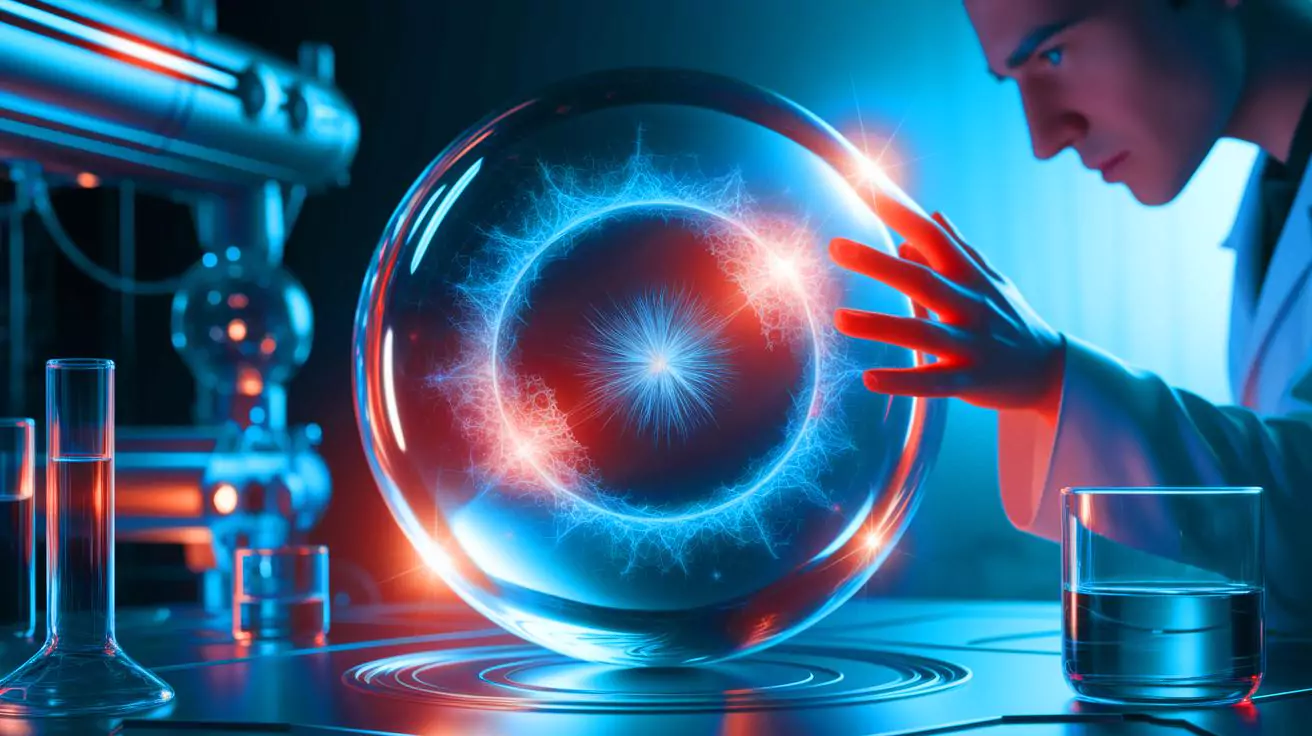
| IN A NUTSHELL |
|
Imagine a mirror that doesn’t reflect your face, but your back. As strange as it sounds, this image encapsulates a newly confirmed scientific phenomenon: temporal reflection. Once a theoretical concept, researchers at the CUNY Advanced Science Research Center (CUNY ASRC) in New York have now brought it to life. This breakthrough could revolutionize our understanding of electromagnetic waves and pave the way for unprecedented technological applications. The implications are vast, potentially touching every corner of science and technology with the promise of a new frontier.
Understanding Temporal Reflection
To grasp this bizarre concept, let’s start with something familiar: spatial reflection. Picture throwing a ball against a wall. It bounces back towards you. The same principle applies to light or sound waves: when a wave hits a surface like a mirror or wall, it changes direction and returns. This is how we see our reflection or hear an echo. However, temporal reflection operates differently. Here, it’s not the wave’s direction that alters, but the flow of time itself. Imagine a wave traveling through material when suddenly, that material’s properties change dramatically and uniformly. This change acts like a magical switch, forcing the wave to “rewind” in time.
It’s akin to pressing rewind on a video: movements reverse, sounds distort, and everything appears to run backward. This phenomenon also shifts the wave’s frequency. For instance, red light could transform into blue, or a deep sound into a high-pitched one. It’s like listening to an old cassette rewinding: sounds reverse and speed up. Though theorized for a long time, this peculiar dance of waves had never been directly observed until now.

A Theory Confirmed After 50 Years
First theorized in the 1970s, temporal reflection remained elusive due to technical challenges. To observe this phenomenon, it’s crucial to alter a material’s properties swiftly and uniformly to interact with a fast-moving wave. This requires a high level of precision and energy. Researchers at CUNY ASRC tackled this challenge using an innovative approach. Their setup included a metallic strip with highly responsive electronic switches connected to capacitors capable of quickly storing and releasing energy. By synchronizing these switches perfectly, they instantly doubled the strip’s electrical impedance.
This sudden property change created ideal conditions for temporal reflection. When this transformation occurred, a part of the electromagnetic wave reflected not in space, but in time. Measuring instruments captured a reversed signal, a time-inverted copy of the original wave. This observation, achieved with unprecedented precision, marked the first experimental validation of a theory that had remained abstract for over 50 years.

Revolutionary Applications
This discovery extends beyond theoretical achievement; it opens doors to major technological innovations. By manipulating electromagnetic waves with this technique, researchers anticipate significant advances in wireless communications, radar, and advanced imaging systems (Like undetectable holograms to create new realities). Thanks to temporal reflection, transmitting signals could become faster, more efficient, and nearly impossible to intercept. Another promising field is metamaterials, artificial structures that can control waves in novel ways.
These materials could lead to futuristic devices like invisibility systems or ultra-sensitive sensors. On a fundamental level, this advancement provides a new perspective on the symmetry between time and space, with potential implications for thermodynamics and quantum mechanics. As scientists explore these new avenues, they could push the boundaries of our understanding of physical laws.
A Future Full of Promises
The confirmation of temporal reflection marks a decisive turning point in scientific research. What was once seen as a theoretical curiosity now emerges as a tool with revolutionary practical applications. We can envision ultra-secure communication systems, where time-reversed signals are nearly impossible to intercept. Next-generation radars, thanks to this technology, could achieve unprecedented precision and range, detecting objects with clarity and over vast distances.
Metamaterials resulting from this research could also transform sectors like healthcare, defense, or telecommunications. Ultimately, this discovery reminds us that the boldest ideas can lead to major advances. By mastering the temporal reflections of waves, we might be on the brink of a scientific and technological revolution with possibilities yet to be explored.
As we stand on the threshold of this new frontier, one cannot help but wonder: How will the mastery of temporal reflection reshape our world, and what unforeseen innovations will emerge from this scientific breakthrough?
spacer
Sorry folks, but to my mind this type of stuff is EVIL. It seems to me to be more of a threat than a promise. I can see nothing good coming out of it. “Scientists” should know by now that when you mess with things that have the potential of throwing off the balance built into nature you end up with bigger problems than you had before and no way to fix them. Everyone knows that if you change the past or the future, you create problems in the time continuum. Every little ripple can become a tsunami wave in space and time. “Scientists” may think they have things all figured out, but they really have no idea what consequences will follow their experimentations. And HONESTLY THEY DO NOT CARE! REMEMBER PANDORA’S BOX!
spacer
How to Build a Kozyrev Mirror Step by Step Guide.

Kozyrev Mirror’s DARK SECRET Exposed After 30 Years of Research
spacer

spacer
 |
 |
spacer

A time mirror allows light waves to collide with each other like billiard balls.
The team demonstrated their time-mirror technology back in March, but now they’ve shown that two opposing light pulses hitting the same time mirror can be made to collide with each other, much like massive objects. Moreover, the researchers can exert control over the type of collision that occurs. The light pulses, the researchers report, can collide elastically, like two billiard balls bouncing off each other; inelastically, like two pieces of Silly Putty hitting each other and sticking together; or constructively, like two balls with spring-loaded mechanisms tripped by the collision, shooting apart faster than they came together.
“You can decide if the total energy in the system decreases, grows, or stays the same.”
—Andrea Alù, CUNY
“We call them photon collisions because it reminds us of how two massive objects interact when they bump into each other,” says Andrea Alù, distinguished professor of physics at CUNY and senior author on the study. “What is remarkable about this time interface is that if you choose the instant in which you drive it, you can decide if the total energy in the system decreases, grows, or stays the same.”
To create their time mirror, the team used a specially engineered metamaterial. A regular mirror is formed by an abrupt change in the index of refraction between two materials, causing light to be reflected at the interface. Similarly, a time mirror is formed by an abrupt change in the index of refraction—but in time. Time-reflected light is still traveling in the same direction, but backward—like a sound recording played in reverse.

The researchers achieved this time mirror using a 6-meter-long meandering transmission line printed on a chip. They connected many switches, linked capacitors between the transmission line and the ground every 20 centimeters, closer together than one wavelength of the light. By switching these capacitors on or off, they could change the index of refraction in the material as quickly as 3 nanoseconds. “Suddenly, the wave feels as if it’s in a completely different medium,” Alù says.
They sent light pulses toward each other from both ends of the transmission line and switched the index of refraction at different points in time. By changing how overlapped the two light beams were during the switch, they could change the nature of the collision—elastic, inelastic, or constructive.
What’s more, by choosing the shape of one of the light beams and the timing of the switch, the researchers could effectively reshape the other beam to suit their needs. They demonstrated erasing a section of a light signal and shortening a pulse. Because the time interface works for a huge range of frequencies, this method can be used to shape broadband light; it’s very useful for wireless communications. The ability to shape light into ever shorter bursts is also of great promise for sensing and measurement applications.
The team is currently working on extending this method into the visible-light and infrared-light regimes. They expect the wave interaction effect to persist across a huge range of settings. “In principle, one could kill [an electromagnetic] tsunami using this technique. You have a tsunami coming to you, and then you send a wave against it,” Alù says. “Of course, you have to shape it right. And you have to make this transition happen, but you can completely suppress the waves coming towards you.”
In addition to possible applications in telecommunications, this technique holds a lot of scientific promise. Applying the time mirror many times in rhythm could be used to create a time crystal. The team is also currently looking at the potential quantum properties of these time interfaces, and the fate of single photons colliding through them.
SPACER

Artist’s depiction of a time crystal. Google Quantum AI
UPDATE 23 FEBRUARY 2024: In the couple of years since researchers on the Google Quantum AI team and colleagues at multiple institutions realized a 20 qubit time crystal on Google’s Sycamore quantum computer (original story, below), other groups have exceeded the feat. Most notably, physicists at the University of Melbourne managed a 57-qubit time crystal in 2022, more than twice as large as the Google group’s effort.
Later in 2022, another group at the University of Hamburg managed to produce a continuous time crystal. Earlier attempts, including those from the Melbourne group and Google group, had created discrete time crystals driven by a periodic system—the practical gist being that the time crystal had to be cut off from the system that instigated it and protected from decaying (which ultimately happened regardless). A continuous time crystal, in contrast, should prove more robust against such decay.
Despite these triumphs, time crystals still remain very much in the realm of hard physics. Physicists continue to explore their nature. Applications remain a long ways away, although time crystals still seem to be a potential candidate for memory in quantum computers someday. —IEEE Spectrum
Original article from 9 December 2021 follows:
First conceived of a decade or so ago, a time crystal is a new kind of matter that bears an uncanny resemblance to a perpetual motion machine. Its parts can theoretically move in a repeating cycle without consuming energy for eternity, like a watch that runs forever without any batteries.
Scientists have raced to create this novel phase of matter for years. Now researchers at Google Quantum AI and their colleagues reveal they have created time crystals using Google’s Sycamore quantum computing hardware, findings they detailed online Nov. 30 in the journal Nature.
Whereas classical computers switch transistors either on or off to symbolize data as ones and zeroes, quantum computers use quantum bits, or qubits that, because of the nature of quantum mechanics, can exist in a state of superposition where they are both 1 and 0 simultaneously. By linking qubits together via a quantum effect known as entanglement, a 300-qubit quantum computer theoretically could perform more calculations in an instant than there are atoms in the visible universe. In 2019, Google argued it used Sycamore to display “quantum primacy,” finding answers to problems no classical computer could ever solve.
In the new study, the researchers used a 20-qubit system not for computation, but to realize time crystals. To find out more, we spoke with Google staff research scientist Kostyantyn Kechedzhi and Google senior research scientist Xiao Mi, who conducted much of the research on the theoretical and experimental sides, respectively. The conversation has been edited for length and clarity.
IEEE Spectrum: What is a time crystal?
Kostyantyn Kechedzhi: A crystal is a system of many atoms that, due to mutual interactions, organize themselves into a periodic pattern in space. A time crystal is a quantum system of many particles that organize themselves into a periodic pattern of motion—periodic in time rather than in space—that persists in perpetuity.
Spectrum: What might you compare time crystals to in nature?
Kechedzhi: Persistent periodic motion is very familiar in nature. A system of two massive objects attracting each other due to gravity is the simplest example—the two objects move around the common center of mass following strictly periodic orbits. At first sight, this might seem like an example of a time crystal. However, the key novelty of a time crystal is the periodic motion of a system of many objects interacting with each other.
A system of many interacting objects demonstrates an entirely different behavior compared with just two massive objects orbiting each other—instead of repeated patterns, the motion continually changes. For instance, in the solar system, planets follow trajectories that are approximately periodic, but the true behavior of planets is chaotic, which means a small deviation of a planet from its path today will result in a completely reshaped trajectory over time, albeit billions of years.
The second law of thermodynamics postulates that systems of many interacting objects tend toward more disorder, which appears in contradiction with the strictly periodic motions of a time crystal. Nonetheless, a system of many interacting quantum objects could demonstrate periodic motion without violating the second law of thermodynamics due to a fundamentally quantum phenomenon called many-body localization.
A time crystal is a quantum system of many particles that organize themselves into a periodic pattern of motion—periodic in time rather than in space—that persists in perpetuity.
Spectrum: So in your new work, you created a periodically driven many-body localized time crystal. This is a time crystal consisting of many parts whose activity is driven by an externally applied cyclic series of pulses. And by localization, you mean that physical laws act in the specific locale of this time crystal to help keep it stable and from dissipating energy?
Kechedzhi: Yes. A key property of a localized quantum system of many objects is that a sufficiently weak external pulse or force applied to any one of the objects will affect its neighbors, but will not be felt across the entire system. In this sense, the system’s response is localized. In contrast, in a chaotic system, a small disturbance is felt across the entire system. The phenomenon of localization prevents absorption of energy from the external drive.
Spectrum: How comparable are your time crystals to perpetual motion machines?
Kechedzhi: The time crystals observed in our experiment do not absorb any net energy from the pulses used to drive their behavior. This is perhaps why they are often compared to perpetual motion machines.
However, perpetual motion machines are expected to produce work without an energy source, which would violate the laws of thermodynamics. In contrast, the motion of a time crystal does not produce work without an energy source and therefore does not violate physical laws.
Spectrum: Do your time crystals break down over time?
Kechedzhi: Our processor is not 100% isolated from the environment, and this weak coupling to the environment introduces a finite “extrinsic” lifetime of the time crystal. In other words, after a sufficiently long time, the order is lost and the periodic pattern no longer repeats itself.
Spectrum: What applications might time crystals have?
Kechedzhi: A time crystal is, like ferromagnetism or superconductivity, an example of spontaneous symmetry breaking, or spontaneous order. For instance, a ferromagnet is essentially a system of much smaller magnets whose magnetic poles all point in a single direction, and in this sense are ordered. Symmetry is said to be “spontaneously” broken in such a state, since in normal matter the poles all point in random directions. Stable examples of spontaneous symmetry breaking, as seen in ferromagnetism or the vanishing electrical resistance of a superconductor, often have significant technological value.
Spontaneous symmetry breaking is associated with equilibrium. For instance, think of liquid water freezing into a crystal when brought to a stable low temperature. A remarkable property of the time crystal we observed is its spontaneous order despite it being driven out-of-equilibrium. This observation opens the door to identifying other out-of-equilibrium states of quantum matter with novel types of order.

Google Sycamore chip.Google Quantum AI
Spectrum: What about time crystals has proven difficult to research, and why?
Kechedzhi: The challenge is the isolation of quantum matter from its environment is never perfect.
Spectrum: Why use a quantum computer to help create time crystals?
Xiao Mi: Quantum computers are the platform of choice to realize time crystals because they have precisely calibrated quantum logic gates.
Spectrum: A quantum logic gate is the quantum computing version of the logic gates that conventional computers use to perform computations?
Mi: Yes. Quantum logic gates allow the many-body interactions that are necessary for time crystals to exist to be implemented with very high precision.
Previous studies on time crystals were all performed on so-called quantum simulators. These platforms lack the precision of quantum computers. As a result, many of these experiments were later found to be flawed due to unintended interactions.
Spectrum: What did you show in your new study?
Mi: We engineered quantum circuits that have the types of interactions that are theoretically expected to lead to a time crystal. We then collected data from these quantum circuits and used a variety of techniques to verify that our data are consistent with time-crystalline behavior. This included three things:
- Any decay or “melting” of time-crystalline order was only induced by external decoherence, not the internal dynamics of our system.
- The signature of a time crystal was present regardless of the initial state of the system.
- We could determine the boundary of the time crystal phase—that is, where it “melted.”
Quantum logic gates allow the many-body interactions that are necessary for time crystals to exist to be implemented with very high precision.
Spectrum: What do you personally find most interesting about these results?
Mi: Understanding the behavior of interacting particles near the critical point of phase transitions—for example, the melting temperature of ice into water—is a longstanding problem in physics and still holds many unresolved puzzles for quantum systems. We were able to characterize the phase transition point between the time crystal and quantum chaotic states. This is a very promising direction for early applications of quantum processors as a tool for scientific research, where modest size systems of dozens or hundreds of qubits could already provide new experimental information about the nature of phase transitions.
Spectrum: How might time crystals lead to better quantum computers?
Mi: Having an object like a time crystal that is stable against experimental interference may help design quantum states that are long-lived, a crucial task for the future improvement of quantum processors.
Spectrum: Another time crystal was created using qubits by researchers at Delft University of Technology in the Netherlands. How would you distinguish your work from theirs?
Kechedzhi: The Delft experiment implemented some of the protocols outlined in our earlier theoretical work, which distinguish many-body localized time crystals from so-called pre-thermal time crystals observed in recent years. Whereas pre-thermal time crystals are characterized by finite intrinsic lifetimes, many-body localized time crystals are characterized by a diverging—that is, infinitely long—intrinsic lifetime.
The exceptional flexibility of our processor allowed us to demonstrate that time crystal dynamics persist over a range of system parameters. One consequence of that is our observation of the phase transition between the time crystal and the chaotic behavior. The presence of the phase transition suggests that time crystal is a distinct state of matter from the more ubiquitous chaotic many-body state, including pre-thermal time crystals.
Crucially, the protocol we describe in our new study is scalable—it can be easily applied to a larger quantum processor. This is a result of further theoretical analysis significantly improving our prior work on which the Delft experiment was based. In the future, I can see our experiment repeated on larger and larger systems.
Spectrum: What specific directions do you think your research might go from here?
Kechedzhi: One of our goals is to develop our processor into a scientific tool for physics and chemistry. The key challenge is reducing the error in the device. This is key for future applications of quantum processors and realization of fault-tolerant quantum computation. It needs to be addressed through improvements in the hardware, algorithmic error mitigation strategies and fundamental understanding of the role of noise in many-body quantum dynamics.
SPACER
spacer