It seems there is a new KING. Already officially, William has taken the reigns of the Kingdom. He is fully in control and has ascended to the throne. This has been a shock to William and not something wanted to see happen so quickly. The issue that brought it about so quickly is obviously King Chales health.
The Monarchy has been suffering trials and tribulations and its popularity with its subjects has been on a roller coaster ride. Everyone is watching to see how things progress. William has a lot on his hands and his mind.
With the world in its current state of chaos, many are wondering if we have reached the endtimes predicted in the bible. If so, then the Anti-Christ could be revealed at any moment. Up to now, King Charles was a primary candidate for that role. Circumstances could still change in a way that would allow him to take on that role. If not, and things progress as they are than William could easily fill the bill.
We don’t know the details of the anticipated Coronation at this time. They don’t have very long to organize a Coronation. This is a Coronation made in HASTE. It is important though, that we take a deep look at what we do know. There are some interesting points to be made and a case for William being THE Anti-Christ foretold in scripture.
spacer
Could it be William, Prince of Wales?
FULLY RESTORED: 8/17/26 This latest news about King Charles struggle with cancer has really stirred people up regarding the coming Anti Christ. We know we are living in the time of his coming. Everyone is curious, even anxious to know when and where and how he will make his appearance. More importantly, we want to … Click Here to Read More
Platinum Symbolism
British Patriotic Song: Rule, Britannia! (play the video above and pay attention to the lyrics on the screen.) I truly felt lead to go into further depth about the symbolism and meaning behind the Platinum Jubilee. You may not really care about it, but it might be worth knowing what is going on. After all, … Click Here to Read More
Platinum Jubilee
Sorry it took so long to get this out to you. Don’t worry, it is all still very relevant. I thought this was going to be very brief. At first look it did not seem like there was much to see. Boy, was I wrong. I hope you enjoy discovering all that is here. I … Click Here to Read More
The EVIL ELITE and the root of the CULT of BLOOD
Through the years that I have been posting, I have focused a great deal of my efforts on revealing to you the various entities that the elite worship/serve. Many of you likely slough it off thinking this is meaningless. Far from it my friends. This is the bottom line of all that is evil and … Click Here to Read More
BAAL’s GLOBAL KINGDOM
We are entering the last of the Last Days. The Beast System is rising. Prepare your hearts, minds and spirits for we will see evil, and we will suffer through trials and tribulations. At the same time, those who belong to God can expect to experience His Mighty Power and Saving Grace. Whether or not … Click Here to Read More
Portrait of the KING
UPDATE 5/25/24 Well, King Charles has a new portrait and it is pretty scary! Of course everyone is denying any foul intent or symbolism. However, bear in mind that there are evil forces at work. Whether any of the human parties involved intentionally played a role in the creation of this piece is irrelevant. We … Click Here to Read More
A SIGN FOR THE KING
spacer
Ok, I have had several people mention this to me. I never caught it during the actual ceremony, I was focused on other things that were going on. However, many people saw it live, it was captured on video, shared on the internet and there have been multiple videos made about it. All I can … Click Here to Read MoreLIGHTS IN THE SKY OVER CHARLOTTE
OK, Well, I don’t know if you have seen the video of the crown of light falling from the sky. This event occurred on the night of January 19, 2024. So, it is not BREAKING NEWS. However, it is very relevant to what is happening right now with the Royal Family. My first reaction to … Click Here to Read More
Royal Upheaval
So, we have learned that King Charles has developed a second cancer. What will this mean for the family, for the monarchy, for the country? It seems there is a lot of tumult within the royal family. Certainly they are dealing with some very heavy medical issues, as well as the strain of maintaining the … Click Here to Read More


100K subscribers
Prince William’s Reported 2026 Coronation Date and Plans
Multiple royal sources and media reports claim that Prince William’s coronation is set for 14 November 2026, with Princess Catherine reportedly leading the ceremony YouTube+1.
Confirmed Date and Context
According to a YouTube report citing King Charles III, 14 November 2026 has been officially confirmed as the coronation date YouTube. This aligns with other insider accounts from Princess Anne, who is said to have confirmed the date following King Charles’s “historic withdrawal” from active royal duties www.thegossiphouse.info. While Buckingham Palace has not yet issued a formal public statement, these reports suggest the coronation will proceed as planned.
The timing is linked to King Charles’s health situation and a broader succession transition, with some sources describing it as a “measured and dignified” handover Star Magazine+1.
Ceremony Vision
Prince William is reportedly planning a coronation that blends tradition with modernity www.theroyalobserver.com. He has expressed a desire to “do it differently” for his generation, avoiding a carbon copy of his father’s ceremony while still honoring heritage. Key points include:
- No “homage of the people” — a historical element where attendees swear allegiance — which King Charles included in a reduced form at his own coronation www.theroyalobserver.com.
- A smaller-scale, more personal approach (“a smaller ‘r’ in the royal”) to connect with the public www.theroyalobserver.com.
- Royal historians suggest William will balance reform with tradition, reflecting both his mother’s modernizing influence and his own reformist spirit www.theroyalobserver.com.
- Scale and cost: A report claims a $50 million coronation plan is in place, though details are not fully confirmed RadarOnline.
- Joint preparation: Both William and Kate are actively preparing for their future roles, with Kate also engaging in high-profile public duties in 2026 gertsroyals.com.
Leadership and Significance
Reports indicate Princess Catherine will be placed in charge of the ceremony, marking a notable shift in royal authority YouTube. This, combined with King Charles’s withdrawal, is seen as a significant moment in modern royal history www.thegossiphouse.info.
What to Expect
While full official details are pending, the coronation is expected to:
- Feature both centuries-old traditions and contemporary elements www.thegossiphouse.info.
- Reflect William’s personal style and the couple’s public service focus www.theroyalobserver.com+1.
- Serve as a symbolic transition for the monarchy, with a refreshed image while preserving historic foundations www.thegossiphouse.info.
Current royal situation
King Charles III remains gravely ill, and palace insiders are said to support a “clean slate” with William and Kate in place during a transitional period Star Magazine+1. This political and health context is driving the urgency of the coronation planning.
spacer
You cannot always trust what you see on the internet. Check out the answers I got when looking for information on Prince Williams Coronation. It shows William already crowned due to his father’s passing, in 2027! But, a search to see if Charles is alive shows him traveling in the Caribbean with Camilla committing a fauxpa regarding slavery.

It seems co-pilot searches are not the only place reporting that King Charles is dead. Check out the following items:
Buckingham Palace Speaks Out On King Charles Death Rumors
Is King Charles III dead? Truth behind viral claims
William will be crowned as the NEW KING of “The United Kingdom & the Commonwealth of Nations” on King Charles’ Birthday. Unless things change.
William is 44 this year. We are going to look at the Symbolism and Significance of the number 44 and it’s reduction number 8. As you view this information, be watching for clues that relate to the spirit of ANTI-CHRIST. Bear in mind that the ruling elite do not make a move without reading the numeraology, consulting their astrologists, and considering the ancient s symbology. They did not just say aw, it will be William’s birthday. Wouldn’t that be a fun date for him to receive the crown.. lol.
SPACER
The Number “44”
(The Benefit of Generations)
Meaning and Symbolism
- When used in the occultthe number 44 is most often used as a similitude number for Christ.It is often invoked and perverted in order to harness the Christ energies and turn them upside down.
- 44 is referred to as the 4th “Master Number”
- According to R. Allendy, “this number must logically link the principle of the periodic mutations of the nature to the cosmic manifestations of those”.
- J. Boehme calls numbers 44, 45, and 46 the trinity of the human life.
spacer

 In occult and esoteric traditions, 44 is a “master number” often linked to Christic energy, the “Master Builder,” and the completion of a foundational phase, with both sacred and inverted uses depending on context The Phoenix Enigma+1.
Esoteric and Occult Symbolism
In occult literature, 44 is the 4th “Master Number” and is sometimes used as a similitude number for Christ The Phoenix Enigma. It appears in mystical works such as Aleister Crowley’s Liber 44: The Mass of the Phoenix, an invocation to the Sun god Ra The Phoenix Enigma. In some traditions, 44 is part of a “trinity of human life” with 45 and 46 The Phoenix Enigma. Biblical numerology also notes 44 in significant ways — for example, the final 44 days of Jesus’ earthly ministry and the number’s repeated appearances in Scripture The Phoenix Enigma.
Occultists sometimes invoke 44 to “harness Christ energies” or, in a darker sense, to invert them . This duality reflects its role as both a sacred and a potentially manipulative number in ceremonial magic.
Spiritual and Numerological Meanings
 Numerology and angel number interpretations view 44 as the “Master Builder” — the number that turns ideas into lasting reality sacredself.co+1. Its core themes include:
- Foundation and stability — building solid structures in career, relationships, and daily life sacredself.co.
- Manifestation power — consistent effort aligning spiritual intent with practical results sacredself.co.
- Divine support — a sign of guardian angels or spiritual guidance sacredself.co+1.
- Completion and evaluation — the “builder” has finished the work and is now assessing it, symbolized by the reduction of 44 to 8 (results, strength, balance) Numerologist.com.

In love, 44 is linked to loyalty, discipline, and the need to avoid overburdening a partner with personal doubts Numerology Nation.
Symbolic Reductions
Numerologically, 44 reduces to 8, which in many systems represents results, power, and the balance between the physical and spiritual Numerologist.com. This reinforces the idea that 44’s energy is about completed structure and sustained authority.
spacer
Symbolsim and significance given to the number 8
The shape of the number 8 resembles the invented symbol of infinity.
History and Origins of the Infinity Symbol
The mathematical infinity symbol was introduced by the English mathematician John Wallis in 1655 in his treatise De Sectionibus Conicis. Wallis used the symbol to represent a number that is larger than any assignable quantity, probably inspired by the Roman numeral for 1,000 (CIƆ) or the Greek letter omega (Ω). However, the concept of infinity is much older – ancient Greek philosophers like Anaximander and Aristotle debated the nature of the infinite. The visual form of the figure-eight loop may also have connections to the ancient Ouroboros (a serpent eating its own tail) and Celtic knotwork, both of which symbolize cycles and eternity. Over the centuries, the symbol spread from mathematics into popular culture, becoming a universal icon for endlessness. Infinity Symbol Symbolism & Meaning – Symbolopedia |

The Ogdoad. 8THE OGDOAD. 8.Is the first cube of energy, and is the only evenly even number within the decad. The Greeks thought it an all-powerful number; they had a Proverb “all things are eight.” Camerarius, in his edition of the Arithmetic of Nicomachus, calls it Universal Harmony, because musical ratios are distinguished by this number. The Ratio of 9 to 8 is sesquioctave, this forms a tone and is attributed to the Moon.
Hence the Ogdoad was also called “Cadmeia,” because Harmony (the goddess)was looked upon as the wife of Cadmus; and Cadmus meant the Sub-lunary World, as Olympiodorus says. Eight was called also Mother, and Rhea, Cybele and Dindymene, from being the first cube, and a cube representing the earth. The eight persons saved from the floodof Xisuthrus are synonyms of many octaves of gods, such as the 8 Cabiri great gods of Samothrace; see Bryant and Faber on this myth. There are 8 Beatitudes of the Christian religion, Matthew, chap. v. Eight is the number of the Moons of Saturn. There have been several Masonic orders concerned with this Noachite Ogdoad, as the Prussian masons, Knights of the Royal Axe, or Prince of Libanus, the Noachites, and the Royal Ark Mariners, which is a subsidiary order to the Mark Master Masons. Macrobius says the (8) Ogdoad was the type of Justice, because it consists of evenly even numbers, and on account of its equal divisions. John Heydon tells us that 8 Events befall the Damned, and that there are 8 rewards of the Blessed. The number 8 was sacred to Dionysos, who was born at the 8th month; the isle of Naxos was dedicated to him and it was granted to the women of Naxos, that their children born in the 8th month should live, whereas it is usual for such to die, although those born in either the 7th or the 9th month are usually reared. The Jews were accustomed to practise Circumcision on male infants upon the 8th day after birth. The Jews at the Chanucah or Feast of Dedication lit 8 candles, and it lasted 8 days. This is the Engkainia of John x. 22. As to conjuring among the ancient Jews, it is said in Talmud, Succah. 53. 1, that Levi played with 8 knives; Samuel in the presence of the King Sapor of Persia used 8 cups, and Abaji before Rabbi Rava used 8 eggs. Eight prophets were descended from Rahab the Harlot, viz., Neraiah, Seraiah, Maasiah, Jeremiah, Hilkiah, Hannemeel, and Shallum. Note also that Huldah the prophetess was the grandchild of Rahab. The last 8 verses of Deuteronomy,The Mosaic Law, The Pentateuch, were written by Joshua. Bava Bathra, 14. 1. Rabbi Nathan states that there were 8 sects of the Pharisees: but both of the Talmuds (Jerusalem and Babylon) name only seven. It is prophesied that the Harps which will be played on earth before the Messiah will have 8 strings. Erachin, 13. 2. As seven was the number of the original Creation, so 8, says W. F. Shaw, may be considered as the Day of Regeneration. Eight souls were saved in the Ark of Noah, and Noah was the 8th in descent, his name was NVCh = 8 times 8 = 64. 888is the special number of Jesus Christ as “He who is the Resurrection and the Life.” He is the great opponent of the 666, the number of the Beast, the number of a Man. The ancient Chinese writings refer to 8 musical sounds, the Pah-yin. (G. Schlegel.) The Ogdoad. 8 – Hermetic Academy Library |
| The reality is that when most people see the number 8, they just see a plain old number. Little do they know that many numbers like 8 have an occult meaning attached to them. For example, the Tower of Belus in Babylon is made of eight square towers. In Egypt, Thoth had eight disciples which was the number of the balance and of the cosmic order and according to Herodotus, the reign of gods in Egypt would have started with a first group of eight gods to the head of which was Pan.The Greeks had dedicated the number 8 to Dionysius who was born in the eighth month of the year.
Anoctave, the interval between two notes with the same letter name (where one has double the frequency of the other), is so called because there are eight notes between the two on a standard major or minor diatonic scale, including the notes themselves and without chromatic deviation. The ecclesiastical modes are ascending diatonic musical scales of eight notes or tones comprising an octave.There are eight notes in theoctatonic scaleand themusical note. The eighth or octave signifies eternity, and this was the mystical reason why octaves were annexed to festivals. More uses of the number 8 ;
More Mythology and Esoteric uses of the number 8;
Then we have the first Roman Emperor that we know of today as Octavian Augustus Caesar. The name Octavian was given to him just like it had been assigned to Dionysius. This is why the number 8 in music would be the form of an Octave. Hence, when musicians hit an Octave note when making music, they are not just playing an Octave, but are also playing Octavian Caesar’s immortal tune. According to Clement of Alexandria, the Christ places under the sign of 8 the one he made to be born again and the Temple of Jerusalem eight gates from which the eighth gate would open only for the Messiah. Please keep in mind that is the whole point of this biblical magic. As Above, So Below and the So Below doesn’t stop there because in order to properly honor the morning star, you have to do it in style with as many So Belows as possible in order to bring the As Above into manifestation. Augustus Caesar immortalized with the name Octavian,he had also changed the calendar from that of the Egyptians to the Roman Calendarin which his Father was assigned the month of July for Julius and Augustus was assigned the “8th” month of the year to that we of course know of us as the month of August. Then in math we see the number “8” sided shape in Geometry called the “Octagon”named after Octavian or we have the “8” limbed creature from the sea called the Octupuss. In addition to these magical “Number 8 Octavian Revelations” that I had listed above, let me also point out that in “8 BC” Augustus Caesar had reformed the ancient Egyptian calendar to the new magicalRoman calendarthat magically bumped up time from 8 BC all the way to “8 AD.” This was also the time when he had added the month of August to go after his father Julius’ month of July. Now we couple all the above number Octavian 8 truths with the fact that Augustus Caesar had reigned from 63BC – 14AD which equals 8 multiplied by the divine number 10 and we get 80 years.Hopefully you are beginning to get the magical number point of how the Brotherhood assigns numbers to immortal souls.Meaning of the Number 8 | Gnostic Warrior By Moe Bedard |
spacer

William is reportedly planning a ceremony that reflects his style, modern, relevant, but also rooted in heritage.

Westminster Abbey. (Cover Image Source: Getty Images | Max Mumby/Indigo)
Prince William may still be years away from taking the Crown, but he’s already thinking about how to make his coronation his own. While he has no desire to be a carbon copy of his father, the Prince of Wales also isn’t looking to throw centuries of royal tradition out the window. Instead, he’s reportedly planning a ceremony that reflects his style: modern and relevant.

Catherine, Princess of Wales (wearing the Mantle of the Royal Victorian Order) and Prince William, Prince of Wales
(wearing the Mantle of the Order of the Garter) watch an RAF flypast. (Image Source: Getty Images | Max Mumby/Indigo)
That vision became clearer when William spoke to reporters in late 2024, shortly after his trip to South Africa. As reported by The Telegraph, he had said, “I can only describe what I’m trying to do, and that’s I’m trying to do it differently and I’m trying to do it for my generation… to give you more understanding around it, I’m doing it with maybe a smaller ‘r’ in the royal, if you like, that’s maybe a better way of saying it.”
Royal historian Gareth Russell believes William will “navigate the difficulty of the coronation in a way people won’t expect.” Speaking on True Royalty TV’s The Royal Beat – Back in Time, Russell said: “He was essentially tutored by Elizabeth II, and he does have this sort of modernizing, quite reformist spirit from his mother. I think the public will see a very different coronation. He is a reformer, but not a radical,” the Royal Insider reported.
One tradition William is reportedly ready to abandon is the “homage of the people,” a historical part of the service where those attending, and watching from home, are invited to swear allegiance to the monarch. King Charles included it in a toned-down form at his coronation last year, but William has no plans to feature it at all. It’s a balance William is already weighing carefully, how to honor tradition without feeling trapped by it. Robert Hardman, royal author and commentator, told Harper’s Bazaar that the future King’s coronation would be ‘less ceremony’ and ‘shorter’, adding, “I wouldn’t say modernize, but maybe some of the elements will feel more contemporary.”

King Charles III stands after being crowned during his coronation ceremony in Westminster Abbey, on May 6, 2023,
in London, England. (Image Source: Getty Images | Richard Pohle – WPA Pool)
According to The Times’ royal editor, Roya Nikkah, William “wants his coronation to look and feel different” from the King’s service so it appears ‘relevant’ in today’s time. She writes that he has been ‘taking stock’ since Charles’ coronation, thinking: “That was a supreme success, and it was because Pa altered things. I’ve got to be cognizant of how that evolution happens in my day. What is it that stays? What do I need to change? What will our relationships with the realms and the Commonwealth be then? I don’t think he’ll be taking the filleting knife to it, but he will be checking it is sharp.”
While the planning is still hypothetical, the weight of the role is never far from William’s mind. The news of the King’s cancer earlier this year brought the prospect of William’s reign closer than he had hoped. Writing in The New York Times, author Tina Brown noted, “The almost simultaneous news of Charles’s cancer has put William and Catherine in frightening proximity to ascending the throne just when they had hoped for years to parent their children out of the public eye. The prospect of it, I am told, is causing them intense anxiety.”

Prince William, Prince of Wales, Great Master of the Most Honourable Order of the Bath, attends a Service for The Order of the Bath
at Westminster Abbey. (Image Source: Getty Images | Max Mumby/Indigo)
 Britain’s Order of the Bath: The Honour That Started With a Bath

There are many ways to reward loyalty to the British state. Some involve medals. Some involve peerages. And some involve quietly being moved into a very comfortable advisory role where nobody can quite explain what you do anymore. Then there is the Order of the Bath, an honour so gloriously British that it manages to combine medieval purification rituals, scarlet robes, military prestige, civil service hierarchy and Westminster Abbey into one institution that still exists in full ceremonial splendour three centuries later. And yes, originally, it involved an actual bath.
The first thing most people assume about the Order of the Bath is that the name must be symbolic or metaphorical in some obscure way. It sounds almost too strange to be real. Yet the bath was once entirely literal. In medieval England, a knight preparing for honour underwent a ritual washing ceremony intended to symbolise purification before entering service. The candidate would bathe, fast, keep vigil overnight and then proceed to the formal act of knighthood. The ritual mixed religion, warfare and theatre in exactly the way medieval Europe tended to do best.
What is a Ritual Bath?A ritual bath is a bath taken with a spiritual purpose. Maybe you want to cleanse your aura, heal your heart, or draw money into your life. Ritual baths are effective for these intentions and so much more! Since ancient times, people bathed to clean their bodies but also to purify their spirits. To rid themselves of disease and ward off evil spirits. Ritual Baths: Your ESSENTIAL Guide to Spell and Spiritual Bathing – Otherworldly Oracle
|
spacer
Centuries later, Britain looked at this ancient ceremonial idea and, instead of quietly leaving it in the Middle Ages where it probably belonged, transformed it into one of the highest honours in the country.
The formal Order of the Bath arrived in 1725 under King George I. Britain at the time was becoming a modern state with a growing empire, an expanding military and an increasingly powerful administrative machine. The monarchy needed ways to reward senior figures who kept that machinery functioning. A structured order of chivalry solved several problems at once. It looked ancient, sounded prestigious and created an elegant system for recognising loyal service without necessarily handing out political power.
Robert Walpole, often regarded as Britain’s first Prime Minister, understood perfectly how useful honours could be. Early appointments to the Order included diplomats, MPs, royal household figures and military officers. Merit certainly mattered, but politics sat comfortably beside it. In many ways, the Order of the Bath became a perfect reflection of the British establishment itself: respectable, ceremonial, hierarchical and never entirely free from patronage.
Still, the theatre remained magnificent. The Order’s chapel sits inside Henry VII’s Lady Chapel in Westminster Abbey, which already sounds less like a government institution and more like the setting for an expensive fantasy series. Scarlet banners hang above the stalls of Knights and Dames Grand Cross. Heraldic plates line the woodwork. Elaborate crests rise above carved seating. During ceremonies, members wear crimson satin robes and hats decorated with white ostrich feathers. At no point does anyone appear remotely embarrassed by any of this. And frankly, that confidence is part of the charm.
Modern Britain often projects an image of managerial efficiency, spreadsheets and transport delays, yet institutions like the Order of the Bath reveal another side entirely. The country still enjoys pageantry with complete sincerity. Somewhere behind the language of ministries and defence committees sits an ancient instinct to wrap authority in velvet, Latin mottos and candlelit ceremony.
The motto itself, Tria Juncta in Uno, means “Three Joined in One”. Historians generally interpret this as a reference to England, Scotland and Ireland. Like much of British symbolism, it carries just enough ambiguity to sound important even when nobody fully explains it.
Over time, the Order evolved into a highly structured honours system. Today, it contains three ranks: Companion, Knight or Dame Commander, and Knight or Dame Grand Cross. The initials matter enormously in establishment circles. CB, KCB, GCB. A tiny collection of letters capable of communicating decades of military service, Whitehall influence or diplomatic importance in a single line of text.
The Order also split into Military and Civil divisions. That distinction matters because the Order became deeply connected to Britain’s expanding imperial and administrative state during the eighteenth and nineteenth centuries. Senior naval officers, army commanders, colonial governors and top civil servants all passed through its ranks. During the Napoleonic Wars, honours flowed toward military figures associated with Britain’s survival against France. Nelson and Wellington both became members. Later came Haig, Kitchener, Montgomery and Dowding, men whose names became attached to entire eras of warfare.
Yet the Order was never exclusively military. That is where things become particularly British. The same institution that rewarded battlefield command also recognised senior bureaucrats whose greatest tactical achievement may have involved surviving Treasury meetings.
Queen Victoria reshaped the Order significantly in 1847. Earlier versions retained traces of medieval ritual that had become increasingly impractical in industrial Britain. Victoria modernised the structure and expanded civil appointments more formally. The Order became less about symbolic purification and more about rewarding service to the Crown and state. Thankfully for everyone involved, this also reduced the practical importance of the bathing element.
Not every recipient inspired admiration. One of the recurring tensions surrounding British honours systems involves the blurry line between genuine service and political favour. Critics have long argued that honours sometimes function as establishment networking tools dressed in ceremonial language. That criticism did not disappear in modern times. In 2024, controversy followed the appointment of Martin Reynolds, a former aide to Boris Johnson associated with the Downing Street lockdown scandal known as “Partygate”. Reynolds became a Companion of the Order of the Bath despite public criticism over his role in events during Covid restrictions. The reaction reminded people that honours systems remain political territory, no matter how medieval the robes appear.
The Order has also demonstrated the Crown’s ability to revoke honours when reputational damage becomes too severe. Robert Mugabe received an honorary knighthood-equivalent appointment in 1994 during a period when Western governments still hoped Zimbabwe might stabilise democratically. By 2008, amid growing outrage over political violence and economic collapse, the honour was stripped away. Even centuries-old ceremonial systems eventually collide with modern geopolitics.
Meanwhile, the ceremonial side continues almost untouched. Every four years, members gather for a service in Westminster Abbey wearing robes that appear magnificently unconcerned with modern fashion trends. King Charles III currently serves as Sovereign of the Order, while Prince William became Great Master in 2025 during the Order’s 300th anniversary celebrations. Charles himself previously held the role for half a century before passing it to his son. That continuity matters enormously within royal culture. The Order does not merely reward service; it reinforces institutional permanence.
Permanence may be the most interesting thing about it. Britain has changed governments, lost an empire, survived industrial upheaval, endured wars, navigated constitutional crises and transformed socially beyond anything George I could have imagined. Yet the Order of the Bath still gathers in Westminster Abbey beneath medieval heraldry as if history itself has simply adjusted around it.
There is something strangely revealing about that endurance. Most modern states reward officials through titles that sound administrative or technocratic. Britain instead preserved institutions that feel almost theatrical. A senior civil servant in another country might receive a distinguished public service medal. In Britain, they may become part of a centuries-old order originally inspired by ritual washing ceremonies before knighthood.
The absurdity is real, but so is the symbolism. Beneath the velvet and Latin sits an old political truth: states need stories around power. Bureaucracy alone rarely inspires loyalty or emotional attachment. Ceremony fills that gap. It transforms administration into tradition. The Order of the Bath survives because it turns state service into something larger, stranger and far more memorable than a line on a CV.
Besides, if someone offered most people a crimson robe, a Westminster Abbey ceremony and mysterious Latin post-nominals tomorrow, very few would refuse on the grounds that the whole thing sounded slightly ridiculous.
spacer
Recent reports confirm that Prince William has made it clear he will not abandon his role in the Church of England, but he will not present his faith in the same public, daily way as his father or grandmother JubileeCast+1.
What William Said
In March 2026, through a source close to him, William was told to say that while he may not attend church every day, he believes in it, wants to support it, and will take his role “very seriously, in my own way” JubileeCast. This was timed ahead of the enthronement of Dame Sarah Mullally as Archbishop of Canterbury, signalling that he is not stepping away from the Church despite a more private approach to worship JubileeCast+1.
The “Keeper of the Faith” Question
The title “Defender of the Faith” (sometimes referred to as “Keeper of the Faith”) is one of the oldest royal titles, granted to Henry VIII in 1521 and enshrined in the constitutional role of the monarch as Supreme Governor of the Church of England JubileeCast+1. It is not a purely symbolic title — it includes constitutional duties such as approving senior church appointments. There is no clear precedent for a monarch dropping this title, and it is tied to the constitutional settlement between Crown and Church Royal Central.
Reports suggest William has not publicly ruled out the title, but he has also not committed to a traditional, high‑profile public display of faith JubileeCast+1. His aides emphasise he wants to balance personal belief with modern expectations, rather than follow the exact pattern of King Charles or Queen Elizabeth II JubileeCast+1.
How This Differs from Previous Monarchs
- Queen Elizabeth II: Deeply committed Christian, often spoke about her faith JubileeCast.
- King Charles III: Regular churchgoer, active in theology and interfaith work JubileeCast+1.
- Prince William: Attends mainly at Christmas, Easter, and formal occasions; values faith as a guiding principle but not in a constant public display JubileeCast+1.
Reactions
Church leaders and commentators are split: some see his approach as politically strategic, others as a sign of a more modern, personal faith JubileeCast. His aides insist he is building “a strong and meaningful bond with the Church and its leadership” while respecting tradition JubileeCast.
spacer
PRINCE WILLIAMS FULL NAME
His Royal Highness William Arthur Philip Louis.
The name William is believed to have come from the King’s cousin and friend Prince William of Gloucester who died when he was only 30-years-old in an air crash, unmarried and without children.
|
William
|
will(v.2)Will – I AM to determine to become like the Great I AM? |
spacer
According to reports, Arthur was the original name the King wanted to give his first child with Princess Diana, however, after she denied the request a compromise meant it become his middle name.
|
|
| Bear worship (also known as arctolatry) is a form of animal worship and is the religious practice of worshipping bears. Bears are often viewed as ancestors or spiritual messengers by those who practice arctolatry. The practice can involve both the reverence and ritual slaughter of bears. The practice is associated with bear remains and can be traced back geographically to North Eurasian populations, Bear worship – Wikipedia |
The name Philip is believed to be a tribute to William’s grandfather and husband of Queen Elizabeth II.
| Phillip
The name Phillip comes from the Greek Philippos, which literally translates to “friend of horses” or “horse lover” (philos = friend/lover, hippos = horse) Behind the Name+2. In ancient Greece, horses symbolized wealth, power, and nobility, so the name often conveyed prestige, strength, and social status namepedia.name+1. Phillip was notably borne by Philip II of Macedon, the father of Alexander the Great, and several other Macedonian kings Behind the Name+1 |
Louis is said to come from Prince Philip’s favourite uncle, Lord Louis Mountbatten.
Meaning of Lou / LouisThe name Lou is often associated with meanings of light or famous warrior. It is derived from the old Germanic name Ludwig and Louise respectively, each portraying a sense of strength and renown. The versatility of Lou makes it a beloved choice for those seeking a name reflecting positivity and influence. Lou – Explore Its Meaning, Roots, Popularity and Similar Names – GenderAPI
|
|
light(n.) Old English Lucifer “Satan,” also “morning star, Venus in the morning sky before sunrise,” also an epithet or name of Diana, from Latin Lucifer “morning star,” noun use of adjective, literally “light-bringing,” from lux (genitive lucis) “light” (from PIE root *leuk- “light, brightness”) + ferre “to carry, bear,” from PIE root *bher- (1) “to carry,” also “to bear children.” Venus in the evening sky was Hesperus.
|
spacer
Prince William does not officially have a surname – anyone with a ‘HRH’ as part of their name, is not required to have one. During his years at school and while working in the Royal Navy, the Royal Air Force, and as an air ambulance pilot, he used the surname Wales thanks to his dad then being the Prince of Wales.
William has also used the family surname, Mountbatten-Windsor, as created by the late Queen and husband Prince Phillip. This surname was to be used by all those in the royal family without official royal titles and for those who needed a surname for official documents.
The Royal Family’s official website states: “The Queen’s descendants, other than those with the style of Royal Highness and the title of Prince/Princess or female descendants who marry, would carry the name of Mountbatten-Windsor.” What is Prince William’s full name and surname? – Heart
Prince William’s Likely Name at Coronation
Prince William is expected to be crowned as King William V, though he retains the option to choose a different regnal name when he ascends the throne Royal Family News+1.
| Symbolism and Significance of the Number 5
In the scriptures, the number five is often associated with the subject of death. Source The number five is associated with the planet Mercury, and thus also the god Mercury in Roman mythology. As discussed in the symbolic meaning of the number one, Mercury is related to the Greek God Hermes. Hermes, the god Mercury and the planet Mercury are all associated with communication. Again, this is misleading. If you don’t know that symbolism relates to self-knowledge – represented by the illuminating qualities of the sun – you would think Mercury solely represents communication with others. Whilst Mercury can relate to communication with others, if you see the summer five, the more likely scenario is that you need to communicate with yourself. In tarot, an ancient tradition that incorporates hermetic symbols, fives are indicative of a problem but also offers solutions. Hermes is a problem-solver (although also a trickster) that can help guide you to self-knowledge. Dogs can also be your guide and protector, but they can also lead you astray – like the trickster archetype. This is why the planet Mercury is associated with the Gemini zodiac sign – the twins – and is associated with needing to shift perspective. In alchemy, mercury is associated with thoughts. source THE PENTAD. 5.From the Nicomachean Extracts we derive our knowledge of the Pythagorean doctrine of the number five. It is an eminently spherical and circular number, because in every multiplication it restores itself and is found terminating the number; it is change of Quality, because it changes what has three dimensions into the sameness of a sphere by moving circularly and producing light: and hence “Light” is referred to the number 5. Also it is the “Privation of Strife,” because it unites in friendship the two forms of number even and odd; the 2 and 3. Also Justice from throwing things into the light. Also the “Unconquered” from a geometrical reason which may be found in Alexander Aphrodisiensis, Commentaries on the 1st Book of Aristotle’s Metaphysics. Also the “Smallest extremity of Vitality,” because there are three powers of Life, vegetable, psychical, and rational: and as the Rational is arranged according to the hebdomad, and the Psychical according to the hexad, so the Vegetative power falls under the control of the Pentad. Proclus on Hesiod gives two reasons for its semblance to Justice, “because it punishes wrong, and takes away inequality of possession, and also equalizes what is less, to benefit.” Also named Nemesis, for it arranges in an appropriate manner all things celestial, divine and natural. And Venus, because the male 3 triad and the female 2 or dual, odd and even are conjoined in it: Venus was sometimes considered hermaphrodite, and was bearded as well as full-bosomed. And Gamelia, that is referring to marriage. And Androgynia, being odd and masculine, yet containing an even female part. Also a “Demi-goddess,” because it is half of the Decad, which is a divinity. And “Didymus,” because it divides the Decad into two equal parts. But they called it Pallas, and Immortal, because Pallas presides over the Ether, or 5th Element (akasa) which is indestructible, and is not material to our present senses. And Cardiatis or Cordialis, because like a heart it is in the middle of the body of the numbers, thus:— The Pentalpha or 5-pointed star, an endless complex set of angles, was the emblem of Health, Hygeia; it forms 5 copies of the capital letter A. It is also called the Pentagram, and the Seal of Solomon, and is said to have been the device on the signet-ring of this ancient Grand Master of the Mysteries. Five is the number of expiation and of sacrifice |
Current expectations
According to royal correspondent Roya Nikkhah, reported by Royal Family News, William is planned to be crowned “William V” when he becomes king Royal Family News. This would mean he keeps the given name his parents gave him at birth, as he is widely known internationally, rather than adopting a new one Royal Family News.
This aligns with historical precedent: some monarchs have chosen a new regnal name (e.g., King George VI, whose given name was Albert), while others have retained theirs (e.g., Queen Elizabeth II) Town & Country Magazine.
Options and tradition
William has the option to select a different regnal name from his middle names — such as Arthur, Philip, Louis, or George — or to adopt another historically significant name Town & Country Magazine. However, no decision has been announced, and reports suggest he is unlikely to change it, preferring the name he is known by worldwide Royal Family News.
Coronation context
While his coronation will follow the traditional Westminster Abbey ceremony, William has indicated he may modernise elements of the service, such as omitting the “homage of the people” www.theroyalobserver.com+1. This suggests a coronation that blends heritage with a contemporary style, but the regnal name will still be part of the established tradition.
In summary: Unless he publicly announces a change, Prince William will almost certainly be crowned King William V at his coronation Royal Family News+1.
spacer
Coronation of William The Conqueror a coronation prepared in haste
 William the Conqueror (born c. 1028, Falaise, Normandy, France—died Sept. 9, 1087, Rouen) was a mighty French noble, who in 1066 became the first Norman king of England.
After being victorious at the battle of Hastings against Harold Godwinson or Harold II, William marched to London overcoming any local resistance encountered. The Anglo-Saxon Chronicle indicates, a group of senior figures, including Earl Eadwine of Mercia, Earl Morcar of Northumbria, Edgar Etheling of Wessex, Ealdred, Archbishop of York and “all the best men from London, submitted from force of circumstances… They gave him hostages and swore oaths of fealty, and he promised to be a gracious lord to them.” The English were anxious, because the country was in political limbo without a king. The Normans wanted the rewards of victory and to achieve such, William needed to be crowned. William claimed to be the successor of Edward the Confessor, and insisted on being crowned near his tomb, so William was crowned in Westminster Abbey on Christmas Day 1066.
Stigand, archbishop of Canterbury did not perform the coronation ceremony as had become custom. Stigand flatly refused “to crown one who was covered with the blood of men and the invader of others’ rights.” Instead Aldred, archbishop of York conducted the coronation ceremony. As not all English spoke French nor did many French speak English, Aldred presented the new king to the people, speaking in English with Bishop Geoffrey of Coutances speaking the words in French.
Chaos erupted when the French-speaking Normans and English-speaking Saxons then shouted their affirmation
and approval of William as King. The Norman soldiers who were positioned outside Westminster Abbey mistakenly thought the cheering and shouting inside was an assassination attempt. The loyal Norman soldiers immediately began to retaliate. They set fire to houses around the Abbey and the church then filled with smoke. The congregation fled and riots broke out.
William refused to postpone the celebration. Archbishop Aldred and some terrified priests from both sides completed the service despite the chaos. In haste and confusion, William the Conqueror took the usual coronation oath of the Anglo-Saxon kings, making, as an addition of his own, the solemn promise that he would treat the English people as well as the best of their kings had done. William, in his Coronation Oath, swore to “maintain the Church of God and all Christian people in true peace; to prohibit all orders of men from committing injustice and oppression, and to enjoin the observance of equity and mercy in all judgments.”
William I’s wife, Matilda of Flanders, was crowned queen on 11 May 1068 in Westminster during the feast of Pentecost, in a ceremony presided over by the archbishop of York. Three new phrases were incorporated to cement the importance of English consorts,stating that the Queen was divinely placed by God, shares in royal power, and blesses her people by her power and virtue. She was the second Queen consort to have a coronation after Aelfthryth, the wife of Edgar the Peaceful on 11 May 973.spacer
Mighty fortress. Royal palace. Infamous prison.
The Tower of London’s history spans almost a thousand years, but London’s castle can still fascinate and horrify. When William the Conqueror built this mighty stone tower at the centre of his London fortress, defeated medieval Londoners must have looked on in awe.
As protector of the Crown Jewels, home of the Yeomen Warders and its legendary guardians, the pampered ravens, the Tower now attracts over three million visitors a year. Here, the Ceremony of the Keys and other traditions live on, as do the ghost stories and terrible tales of torture and execution.
Throughout history, the Tower has also been a visible symbol of awe and fear. Kings and queens imprisoned their rivals and enemies within its walls. The stories of prisoners, rich and poor, still haunt the Tower.
But the Tower also has a richer and more complex history, having been home to a wide array of institutions including the Royal Mint, the Royal Armouries and even a zoo.
As the most secure castle in the land, the Tower guarded royal possessions and even the royal family in times of war and rebellion. But for 500 years monarchs also used the Tower as a surprisingly luxurious palace.
When was the Tower of London built?
The Tower of London was built in the 1070s by William the Conqueror. Fresh from his victory and coronation but nervous of rebellion, William began to build this massive stone fortress to defend and proclaim his royal power. It took around 20 years to build.
Masons arrived from Normandy, bringing with them stone from Caen in France. Most of the actual labour was provided by Englishmen.
Nothing like it had ever been seen in England before. William intended his mighty castle keep not only to dominate the skyline, but also the hearts and minds of the defeated Londoners.
Read more: The Royal Household in the Medieval Period
The fortress expands
Throughout history, the Tower has been adapted and developed to defend and control the nation.
Henry III (1216-72) and his son Edward I (1272-1307) expanded William’s fortress, adding huge ‘curtain’ (defensive) walls with a series of smaller towers, and enlarging the moat.They also transformed the Tower into England’s largest and strongest ‘concentric’ castle (with one ring of defences inside another).
In 1240, Henry III had the Tower’s great keep painted white, making it the White Tower.
Inside the Tower, the kings built a magnificent medieval palace. They stayed here with their queens, Eleanor of Provence (Henry’s queen) and Eleanor of Castile (Edward’s queen).

Image: Illustration of how the Tower may have looked, c1300 by Ivan Lapper. © Historic Royal Palaces
Tower of strength
Kings and queens used the Tower in times of trouble to protect their possessions and themselves. Arms and armour were made, tested and stored here until the 1800s.
The Tower also controlled the supply of the nation’s money. All coins of the realm were made at the Tower Mint from the reign of Edward I until 1810. Kings and queens also locked away their valuables and jewels at the Tower and even today, the Crown Jewels are protected by a garrison of soldiers.
The Tower’s defences failed only failed once. During the Peasants’ Revolt of 1381, rebels ran in through the open gates!
SPACER
William II
 William II, also known as William Rufus, was King of England from 1087 until his death in 1100, noted for his strong rule, military achievements, and mysterious death.
Early Life and Family
William II was born around 1056–1057 in Normandy, the third son of William the Conqueror and Matilda of Flanders Wikipedia+1. He had three brothers: Robert Curthose, Richard (who died in 1075), and Henry, as well as several sisters, including Constance, who married Alan IV, Duke of Brittany Wikipedia. William earned the nickname “Rufus,” Latin for “the Red,” likely due to his ruddy complexion or red hair Wikipedia+1.
Reign as King
William II became King of England on 26 September 1087 after his father’s death, while his elder brother Robert inherited Normandy Wikipedia+1.
| Following his father’s death of natural causes while campaigning in France on 9 September 1087 CE, William would be crowned king on 26 September of the same year in Westminster Abbey. Robert Curthose, meanwhile, inherited the title Duke of Normandy and the lands that went with it. A third brother, Henry, received cash instead of lands. The fourth brother, Richard, had died in 1075 CE. Consequently, the Norman kingdom was now split in two geographically and all three brothers would bicker for supremacy over the next two decades. William II of England – World History Encyclopedia |
|
“Harry” is a traditional short form and common nickname for “Henry,” and both names share the same origin and meaning. Historical and linguistic connection |
William II’s reign was marked by efforts to consolidate Anglo-Norman rule, maintain order, and extend influence into Wales and Scotland Wikipedia+1. He faced multiple baronial revolts, including a major rebellion in 1088 led by Odo of Bayeux and another in 1095 led by Robert de Mowbray, which he successfully suppressed Encyclopedia Britannica. Despite his reputation for harshness and corruption, he was a capable military leader and administrator, maintaining peace and justice in England and Normandy Wikipedia+1.
Personal Life and Character
William II never married and had no children, which has led historians to speculate about his personal life and sexuality Wikipedia. Contemporary accounts describe him as flamboyant, indulgent, and sometimes cruel, yet also a wise ruler who achieved significant military and political successes Wikipedia+1. Historian Frank Barlow described him as a “rumbustious, devil-may-care soldier” with both vices and virtues Wikipedia.
Death and Legacy
William II died on 2 August 1100 while hunting in the New Forest, struck by an arrow under circumstances that have led to suspicions of murder, possibly involving his younger brother Henry Wikipedia+1. Following his death, Henry quickly seized the treasury and was crowned king. William’s death ended his 13-year reign, but his consolidation of power allowed his successor to enjoy a relatively stable rule World History Encyclopedia+1.
William II’s legacy is complex: he is remembered as a strong, sometimes ruthless monarch who maintained the gains of his father’s conquest, extended Anglo-Norman influence, and left a controversial but impactful mark on English history Wikipedia+1.
SPACERp

William III (“William of Orange”) King of England, Scotland and Ireland, Stadtholder of the Netherlands
The Orange Institution commemorates the civil and religious privileges conferred on Protestants by William of Orange, the Dutch prince who became King of England, Scotland, and Ireland in the Glorious Revolution of 1688. In particular, the Institution remembers the victories of William III and his forces in Ireland in the early 1690s, especially the Battle of the Boyne.
Formation and early years
Since the 1690s commemorations—British state-sponsored and those held by the lower British classes—had been held throughout Ireland celebrating key dates in the Williamite War such as the Battle of Aughrim, Battle of the Boyne, Siege of Derry and the second Siege of Limerick.[19][20] These followed a tradition started in Elizabethan England of celebrating key events in the Protestant calendar.[19] By the 1740s there were organisations holding parades in Dublin such as the Boyne Club and the Protestant Society, both seen as forerunners to the Orange Order.[19]
Armagh disturbances
Throughout the 1780s, sectarian tension had been building in County Armagh, largely due to the relaxation of the Penal Laws.[21] Here the number of Protestants and Catholics (in what was then Ireland’s most populous county) were of roughly equal number, and competition between them to rent patches of land near markets was fierce.[21] Drunken brawls between rival gangs had by 1786 become openly sectarian.[21] These gangs eventually reorganised as the Protestant Peep o’ Day Boys and the Catholic Defenders, with the next decade in County Armagh marked by fierce sectarian conflict between both groups, which escalated and spread into neighbouring counties.[21]
Battle of the Diamond
In September 1795, at a crossroads known as “The Diamond” near Loughgall, Defenders and Protestant Peep o’ Day Boys gathered to fight each other.[21] This initial stand-off ended without battle when the priest that accompanied the Defenders persuaded them to seek a truce, after a group called the “Bleary Boys” came from County Down to reinforce the Peep o’ Day Boys.[21] When a contingent of Defenders from County Tyrone arrived on 21 September, however, they were “determined to fight”.[21] The Peep o’ Day Boys quickly regrouped and opened fire on the Defenders.[21] According to William Blacker, the battle was short and the Defenders suffered “not less than thirty” deaths.[21]
After the battle had ended, the Peep o’ Days marched into Loughgall, and in the house of James Sloan they founded the Orange Order, which was to be a Protestant defence association made up of lodges.[21] The principal pledge of these lodges was to defend “the King and his heirs so long as he or they support the Protestant Ascendancy“.[21] At the start the Orange Order was a “parallel organisation” to the Defenders in that it was a secret oath-bound society that used passwords and signs.[21]
One of the very few landed gentry that joined the Orange Order at the outset, William Blacker, was unhappy with some of the outcomes of the Battle of the Diamond.[21] He says that a determination was expressed to “driving from this quarter of the county the entire of its Roman Catholic population”, with notices posted warning them “to Hell or Connaught”.[21] Other people were warned by notices not to inform on local Orangemen or “I will Blow your Soul to the Low hils of Hell And Burn the House you are in”.[21] Within two months, 7,000 Catholics had been driven out of County Armagh.[21]
spacerspacer
ORANGE – It’s about much more than Citrus
spacer RESTORED: 3/21/22; RESTORED: 9/8/26 This is a series that has been in the works for a very long time. It has been ever on my mind, put on the back burner off and on for a few years now. It is a very important topic. I have touched on it in some of my … Click Here to Read More
THE CONCORDIA IS ORANGE
The world today is screaming out for a concordance. For a world where everyone and everything is embraced. Whatever the belief, whatever the desire, whatever the fantasy…its all good. Love is for everyone. We can all get along if we just choose to do so. What a lovely notion, but childish and extremely naïve. For … Click Here to Read More


spacer
His Majesty King William IV: An Unsung Defender of the British People
26 June 1830 to 20 June 1837.
 His Majesty King William IV was born a member of the Royal House of Hanover on August 21st, 1765 as the third son of His Majesty King George III of the United Kingdom of Great Britain and Ireland and King of Hanover. As the third son it was highly unlikely that he would inherit the Crown, so he embarked on a career in the Royal Navy and the House of Lords. As a midshipman in the Royal Navy, Prince William served in New York during the American Revolution making him the only British Royal to have ever visited the American colonies.Prince William’s father, King George III, created him Duke of Clarence and St. Andrews and Earl of Munster on May 16th, 1789, thus giving him a seat in the House of Lords.
After the death of their father, King George III, in 1820 Prince George the Prince of Wales ascended to the Throne as His Majesty King George IV and Prince William became second in line to the Throne after his other older brother, the Duke of York. The Duke of York died in 1827 and since he nor King George IV had any surviving children, Prince William became the heir presumptive. During his reign, King George IV gave Prince William the rank of Lord High Admiral where he made some serious improvements to the Royal Navy including ending some corporal punishment tactics for the misconduct of sailors and commissioning the first steam ship into the Royal Navy. King George IV died on June 26th, 1830 and Prince William ascended to the Throne as His Majesty King William IV (William Henry) King of the United Kingdom of Great Britain and Ireland and King of Hanover. William IV was the final monarch named William to rule England. His reign included major reforms such as the Reform Act 1832 and the abolition of slavery in most of the British Empire. He died in 1837 and was succeeded by his niece, Queen Victoria. Wikipedia+1
This new reform allowed the people of the United Kingdom to be more fairly represented in Parliament with constituencies based on the current population distribution not the population distribution of yore. The law also lowered the land ownership requirements for suffrage, so people were better represented, and more people were able to vote.
These new rights afforded to the British people would not have been possible without the strong involvement of Royal authority. The role of the Monarch in the British system of government truly is the defender of the rights of the people. When Parliament, unbound by a formal constitution, gets it wrong and goes against the rights of the people, it is up to the reigning Monarch to right the ship and stand up for the people. The Monarch truly is the only bulwark against possible tyranny in the British system. King William IV is a shining example of this Royal bulwark.
William IV’s reign marked the end of the Hanoverian kings named William.
VICTORIAN ERA
At the Platinum Jubilee the memorial to Queen Victory was totally at center throughout. Of course we know that the Goddess Victory was really the star. But, I wanted to look at Queen Victoria to see what was so great about her and/or her reign. Wow… I learned a lot. Not only was the Victoria … Click Here to Read More

spacer
Hopefully by now you are aware that the Climate Crisis has been deliberately manufactured as a means to get the masses to surrender all their rights to the New World Order, the totalitarian global government of the Anti-Christ. The United Kingdom is likely the primary/prominent player in that Agenda. The United Nations was created by the ROYALS. The OATH KEEPERS, as in the FALLEN ANGELS. Charles was named the KING of Climate and you will see that William has been groomed to step right into those shoes.
spacer
A king for the climate takes the throne in England
By Sara Schonhardt | 09/09/2022 06:40 AM EDT
 King Charles III is seen Wednesday during a roundtable on allergies and the environment in Scotland. Jane Barlow – WPA Pool/Getty Images
The world has a climate king.
When Prince Charles became King Charles III on Thursday after the death of his mother, Queen Elizabeth II, his decadeslong crusades to elevate environmental protection ascended to the throne with him.
Charles opened the global climate conference, COP26, last year when it was hosted in Glasgow, Scotland, by calling for a “military-style campaign” to harness the wealth of the private sector.
“Any leader who has had to confront such life-threatening challenges knows that the cost of inaction is far greater than the cost of prevention,” he said in his opening address. “I can only urge you, as the world’s decisionmakers, to find practical ways of overcoming differences so we can all get down to work, together, to rescue this precious planet and save the threatened future of our young people.”
Charles seems to have passed down his enthusiasm for the environment to Prince William. As the new Prince of Wales, William is currently head of the Earthshot Prize, which aims to promote impactful approaches to the world’s most pressing environmental challenges, and is currently a WildAid ambassador for sharks, rhinos and elephants, of which he has been especially vocal in his efforts to protect the species from extinction.
“Charles has created a legacy within his own family,” Ward said. King Charles’ III history of climate efforts
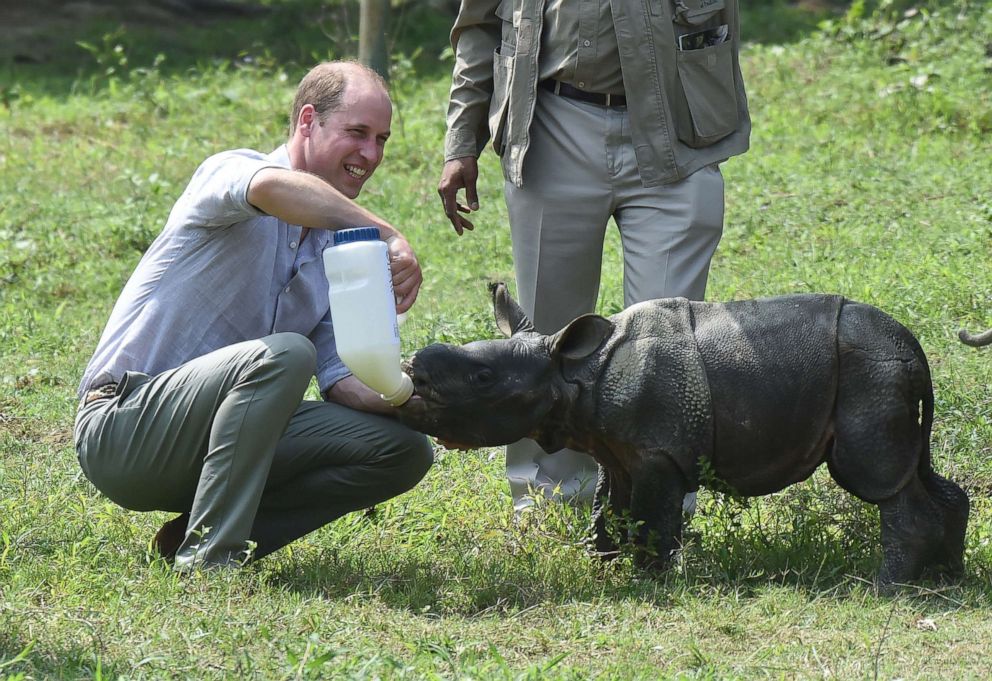
spacer
-
-
Author: Veuer
Sep 16, 2026 · Watch Prince William Joins UN Secretary-General to Accelerate Climate Action – Veuer on …
-


Why Prince William’s Urgent Call for action on Climate Change in the Independent is Critical Now.
Monday 14 September 2026 06:42 BST
- Prince William has warned that global efforts to combat climate change must be rapidly accelerated by 2030 to prevent further environmental catastrophe.
- Writing exclusively for The Independent, the Prince of Wales highlighted recent devastating UK and international wildfires as alarming evidence of extreme weather risks.
- He argued that technological solutions already exist through initiatives such as his Earthshot Prize, but they urgently need global funding and scaling up.
- Launched in 2020, the Earthshot Prize awards five winners £1m annually to help turn promising environmental projects into global solutions.
- The prince made his call to action ahead of the launch of The Independent Climate 100 list in New York on 22 September. source: Prince William: Ramp up climate efforts by 2030 to save planet | The Independent
Prince William strongly advocates urgent, systemic action on climate change, emphasizing “urgent optimism,” rapid deployment of existing solutions, and large‑scale environmental innovation through initiatives like the Earthshot Prize. He consistently calls for faster global efforts, highlights the dangers of extreme weather such as wildfires, and urges world leaders to show courage and commitment in transforming economies and protecting nature.
Overview of His Position
Prince William frames climate change as an immediate global crisis requiring accelerated action. He argues that current “inch‑by‑inch” progress is insufficient and that the world must deploy proven solutions at scale before 2030. AOL
spacer
COP28 – CLIMATE AGENDA to CONTROL EVERYTHING
There is a very important meeting coming up in November; COP28. Hang on to your hats because they are about to cut loose with all kinds of changes, demands, upheavals. The World will be quite different in just a matter of months. In this post you will see how we all became slaves to the … Click Here to Read More
Here it is – Clearly Laid Out for YOU
When God first inaugurated my mission and plunged me into this crazy endeavor of uncovering and sharing TRUTH with a lost world, there was not much available information and not many people sharing the truth. It was difficult to find evidence of all the things that God was revealing to me. Without evidence to present, … Click Here to Read More


spacer
Their ties between the Arab/Muslim/Islamic world and the British Royal family. I have covered some of that in my past posts. There are financial/business and political ties as well but in this post, we will focus on the religious ties between them.
spacer


Prince William praises Muslims, calling Islam a faith of peace …

spacer
Why Prince William Promotes Islam Over Christianity?

Many people in Britain are asking the same question today: Why Prince William promotes Islam over Christianity? As the future king, he should stand up for his country’s Christian faith. Instead, he often praises Islam in ways that worry ordinary citizens who see problems in their daily lives.
Prince William’s Controversial Mosque Speech
In 2019, after the terrible shooting at two mosques in Christchurch, New Zealand, Prince William visited the Al Noor Mosque. He told the Muslim community that Islam is a “religion of peace and understanding.” He said people of all faiths could learn a great deal from how Muslims responded to the attack.
These warm words came after a tragedy, so many understood the need for comfort. But for the future head of the Church of England, the speech raised bigger questions. Britain is traditionally a Christian nation. The king or queen is called “Defender of the Faith.” Many wonder why the focus seems to shift away from Christianity toward Islam.
What Should Other Religions Learn from Islam?
This is the uncomfortable part. If other religions are told to learn from Islam, we must ask honestly: which parts?
Islamic texts contain rules that shock many modern people. For example, some interpretations allow a divorced woman to remarry her first husband only after marrying and sleeping with another man first — a practice called halala. Many find this unfair to women.
Other issues include harsh punishments for leaving the faith, for homosexuality in some strict Muslim countries, and historical acceptance of child marriage based on early Islamic accounts. There are also verses about fighting non-believers and rules from old times about captives in war.
Christianity had strict rules in the Old Testament, too, but over the centuries — through the Reformation and Enlightenment — it changed and came to accept modern human rights. Many critics say Islam has not gone through the same big reforms. That is why some practices continue in parts of the Muslim world.
Prince William did not talk about these difficult topics. He only highlighted the positive side. This one-sided praise makes people question his message.
The Royals and Their Christian Roots
This brings us back to the royal family. King Charles has long said he wants to be “Defender of Faith” — meaning all faiths — instead of just the Christian faith. He shows great interest in Islam and has spoken warmly about it for decades.
Prince William follows a similar path. The royals seem more worried about being seen as tolerant than defending Britain’s Christian heritage. They stay mostly quiet about grooming scandals, rising knife crime in certain communities, and the rapid demographic changes happening in the country.
Britain has changed fast because of high immigration and different birth rates. Some polls show that parts of the Muslim community hold views on Sharia law, women’s rights, and loyalty that do not fit easily with British values. Yet the establishment response is usually more praise and more silence on the problems.
The working people — those living in the affected towns — feel the royals are out of touch. They see their streets changing while the elite attend interfaith events and give polite speeches.
Why This Matters for Britain’s Future
A country needs honest leaders. Prince William will one day be king. His job is not just to comfort after attacks but to protect the culture and faith that built Britain. Christianity shaped our laws, our freedom, and our sense of right and wrong. When royals downplay that and lift another religion without balance, it feels like betrayal to many.
We are not against individual Muslims who live peacefully and respect British ways. Many do. Reformers who want change inside Islam also deserve support. The problem is ideas that clash with modern life — and leaders who refuse to face those clashes.
Britain needs courage, not more careful diplomacy. We need to protect free speech, women’s rights, and children’s safety without fear of offending anyone. We need to remember our Christian roots while welcoming those who truly integrate.https://www.mlive.com/
The question remains: Why Prince William promotes Islam over Christianity? Is it political correctness? A genuine belief? Or simply the safe choice for a modern royal? Whatever the reason, many British people are losing trust. They want leaders who put their own country and its traditions first.Unite the Kingdom May 16 2026: A Rally for National Unity in London
It is time for the royals to speak plainly about the real challenges Britain faces. Empty praise will not fix knife crime, grooming scandals, or divided communities. Only truth and courage can.
spacerspacer
WAKE UP – MUSLIM BRITISH ROYALS
Video Link: Queen of Islam: Elizabeth II related to Prophet Muhammad In light of what we have discovered has been happening, it is important for us to take a look at the forces behind the events. This is just another article in a series. The truth is very complicated and there are so many layers. … Click Here to Read More
“You might be a Domestic Terrorist If”
They are taking aim at EVERY SINGLE LIVING BEING that is resistant to or rebelling against their NEW WORLD ORDER. The ruling elite have created and established all the tools that they need to force compliance upon the masses. They have weapons and enforcers to assure no one escapes. You can kiss good-bye all of … Click Here to Read More


SPACER


Kate Middleton & Prince William’s Middle East Visit Context


 Prince William recently made a solo three‑day official visit to Saudi Arabia in February 2026, while Kate Middleton stayed at home in the UK with their children — but the couple have a strong personal link to the Middle East through Kate’s childhood in Jordan.
Prince William’s Saudi Arabia Trip
From February 9–11, 2026, the Prince of Wales undertook his first official visit to Saudi Arabia, arranged at the UK government’s request and timed to mark the near‑century of diplomatic ties between the UK and the Kingdom The Independent. The trip included meetings with young female soccer players at MISK Sports City in Riyadh, where a girl asked if “Princess Kate” was joining him. William replied, “No, she’s not here, sadly,” before noting that his family would “love it here” on his next visit InStyle+1.
Kate Middleton’s Connection to the Middle East
Although she was not on this trip, Kate has a deep personal link to the region. She moved with her family to Amman, Jordan, at age two when her father, Michael Middleton, worked for British Airways HOLA.com+1. She lived there for almost three years, attending nursery school in Amman, and has said she loves the Middle East because it is familiar to her from childhood HOLA.com.
The couple and their children have visited Jordan together on multiple occasions, including a 2021 family holiday Town & Country Magazine. In 2018, William noted that “Kate loved it here” during a speech in Jordan HOLA.com.
spacer
You may not be aware, but the British Royals have a dark history. The blood of Vlad the Impala aka Dracula runs through their veins. Their are other dark secrets in their family which should shock you.
From Vlad the Impaler to the British Crown: King Charles III’s Ancestral Ties
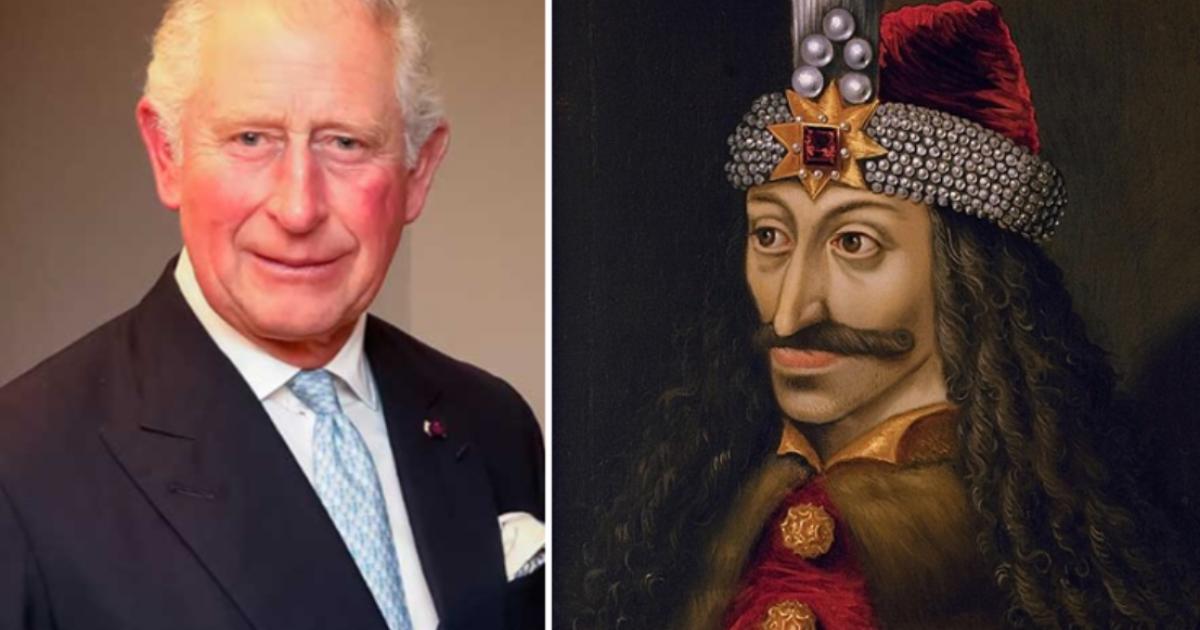
King Charles III, the current monarch of the United Kingdom, is a figure of significant interest not only due to his contemporary role but also because of his fascinating ancestral lineage. Among his many notable ancestors is Vlad III, more commonly known as Vlad the Impaler or Vlad Tepes. This connection intertwines the modern British monarchy with the historical figure who inspired the legend of Dracula. This article explores the genealogical link between King Charles III and Vlad the Impaler, delving into the historical context and the royal lines that connect them.
spacer

112 subscribers
 The British royal family has a rich and complex ancestry that spans centuries and crosses multiple European royal houses. King Charles III, born Charles Philip Arthur George on November 14, 1948, ascended to the throne on September 8, 2022, following the death of his mother, Queen Elizabeth II. His lineage includes connections to many European monarchs and nobility, reflecting the interwoven nature of European aristocracy.
left: The former Prince of Wales became King Charles III upon the death of his mother, Queen Elizabeth II (Palácio do Planalto / CC BY 2.0)

Vlad the Impaler: A Brief Overview
Vlad III, known as Vlad the Impaler, was born in 1431 in the principality of Wallachia, present-day Romania. He ruled Wallachia intermittently between 1448 and his death in 1476-77. Vlad earned his notorious nickname due to his preferred method of punishing his enemies: impalement. Despite his brutal reputation, he is also celebrated as a national hero in Romania for his resistance against the Ottoman Empire’s expansion into Europe.
Vlad’s father, Vlad II Dracul, was a member of the Order of the Dragon, an order of chivalry founded in 1408 to defend Christianity in Eastern Europe against the advancing Ottoman Turks. The name “Dracula” means “son of Dracul” and has since become synonymous with Bram Stoker’s fictional vampire, first introduced in his 1897 novel “Dracula.”
The Genealogical Connection
The connection between King Charles III and Vlad the Impaler is traced through Queen Mary of Teck, the wife of King George V and the grandmother of Queen Elizabeth II. Queen Mary was of German descent, belonging to the House of Württemberg, which has historical ties to various European royal families, including those of Hungary and Transylvania.
The House of Württemberg and the Habsburgs
The House of Württemberg, a German dynasty, intermarried with many European royal families, including the Habsburgs, one of the most influential royal houses in the history of Europe. The Habsburgs ruled over vast territories, including parts of modern-day Romania, where Vlad the Impaler once reigned.
 Through these intermarriages, the bloodlines of many European nobles and royals became entwined. Queen Mary’s ancestry includes connections to the Hungarian and Transylvanian nobility, which in turn links her bloodline to Vlad the Impaler.
left: Coronation portrait of Queen Mary of Teck. (Public Domain)
Queen Mary of Teck’s Ancestry
Queen Mary of Teck’s lineage can be traced back to Princess Claudia Rhedey von Kis-Rhede, born in Transylvania in 1812. Princess Claudia’s ancestry includes connections to the Hungarian nobility and, through these connections, can be linked to the Basarab dynasty, the ruling family of Wallachia to which Vlad the Impaler belonged.
The Basarab Dynasty

right:Woodcut from the title page of a 1499 pamphlet published by Markus Ayrer in Nuremberg. It depicts Vlad the Impaler dining among the impaled corpses of his victims. (Public Domain)
The Basarab dynasty was the founding dynasty of the principality of Wallachia, which emerged as a distinct political entity in the late 13th century. Vlad II Dracul and his son, Vlad III (the Impaler), were notable members of this dynasty, known for their fierce resistance against the Ottoman Empire’s expansion into the Balkans.
Vlad the Impaler’s reign was marked by a brutal and uncompromising approach to maintaining control over his territory. His reputation for impaling his enemies, including Ottoman soldiers and Wallachian nobles who opposed him, earned him his infamous moniker. However, his actions were also driven by a desire to protect Wallachia’s independence and safeguard the principality from Ottoman subjugation.
How Distant is the Connection?
The relationship between King Charles III and Vlad the Impaler is indeed distant. Vlad the Impaler is a 16-times great-granduncle to King Charles III through Queen Mary of Teck’s lineage. This means that Vlad is not a direct ancestor but rather a distant uncle many generations removed.
Historical Context and Significance

left: 17th century painting of Vlad III, also known as Vlad the Impaler.
Understanding the genealogical connection between King Charles III and Vlad the Impaler offers a unique glimpse into the interconnected nature of European royal families. These connections were often forged through strategic marriages designed to strengthen political alliances and consolidate power across the continent.
The marriage of Queen Mary of Teck to King George V was one such union, bringing together various European bloodlines and further intertwining the histories of multiple royal houses. This interconnectedness underscores the complex web of relationships that characterize European aristocracy and highlights the deep historical roots of modern-day monarchs.
Moreover, the connection to Vlad the Impaler adds a layer of intrigue and fascination to the British royal family’s narrative. Vlad’s legacy as a brutal yet defiant ruler, coupled with his association with the Dracula legend, has captivated the public imagination for centuries. This ancestral link provides a unique window into the complex tapestry of European history, where the lines between heroism, cruelty, and legend often blur.
Modern Implications
While the connection between King Charles III and Vlad the Impaler is primarily of historical and genealogical interest, it also adds a layer of intrigue to the British royal family’s narrative. This ancestral link to one of history’s most infamous figures provides a fascinating talking point and underscores the diverse and often surprising heritage of the British monarchy.
King Charles III has occasionally acknowledged this connection with a sense of humor, demonstrating an awareness of the public’s fascination with his ancestry. This acknowledgment highlights the enduring appeal of exploring our historical roots and the unexpected connections that can emerge from such investigations.
Moreover, this connection illustrates the broader theme of interconnectedness among European royal families. It serves as a reminder of the historical alliances and conflicts that have shaped the modern political landscape of Europe. The intricate web of relationships among European nobility is not just a matter of historical curiosity but also a testament to the complex dynamics of power, diplomacy, and family ties that have influenced the course of history.
Conclusion
The genealogical link between King Charles III and Vlad the Impaler is a testament to the intricate and far-reaching connections within European royal families. Tracing this connection through Queen Mary of Teck and the House of Württemberg reveals a fascinating web of historical relationships that span centuries and cross-national boundaries. This connection offers a unique perspective on the lineage of the British monarchy, adding depth and intrigue to its rich history.
Understanding these ancestral ties not only highlights the interconnectedness of European nobility but also underscores the enduring legacy of historical figures like Vlad the Impaler. While primarily of historical and genealogical interest, this connection adds a layer of human interest and fascination to the story of the British royal family. King Charles III’s acknowledgment of this link, often with a sense of humor, demonstrates the enduring appeal and relevance of exploring our past, even as we look towards the future. https://www.ancient-origins.net
References
Fryde, E.B., et al. 1986. Handbook of British Chronology. 3rd ed., Cambridge University Press.
Florescu, R., and McNally. 1989. Dracula, Prince of Many Faces: His Life and His Times. Little, Brown.
Holborn, H. 1982. A History of Modern Germany: 1648-1840. Princeton University Press.
Ingrao, C. 2000. The Habsburg Monarchy, 1618-1815. Cambridge University Press.
Iancu, L. 2018. The Basarab Dynasty and the Principality of Wallachia: Between Myth and Reality. Revue des Études Sud-Est Européennes, vol. 56, no. 1-4, pp. 145–170.
Sălăgean, T. 2004. The Order of the Dragon: Roots, Symbolism and Reality. Revue Roumaine d’Histoire, vol. 43, no. 1-4, pp. 41–64.
Unknown. 1935. Battenberg, Princess Victoria Alice Louisa Julia. Queen Mary: A Life and Intimate Study. Longmans, Green and Co.,
|
|

spacer
The secret life that King Charles leads in Transylvania: Romania is part of his existence
Charles first visited Romania in 1998, a difficult year after Princess Diana’s death, and has returned almost every year since.
For decades, Charles has periodically returned to Romanian villages lost in time, where cattle clog the streets and horse-drawn carts still march the roads. This is the king’s preferred pace.
His property in Viscri was renamed “The King’s House”…Viscri, with a population under 500, is probably the most famous village in Transylvania, hosting a UNESCO-listed fortified church, a restaurant featured by HBO, and, thanks to Charles, a certain royal prestige.
 |
 |
spacer
The King’s House, located in the village center, sells local honey and ceramics and hosts a student-tended organic garden. Over 35,000 people visited it last year.
Charles’s influence extends beyond the Zălan and Viscri Valleys. Eugen Vaida, who leads Ecologic Transylvania, the company that owns Charles’s two properties in Romania, says the king’s idea of “sustainable villages” has spread to other Saxon communities and UNESCO heritage sites. It has also attracted young urban professionals, people eager to restore old houses while leaving their structures intact.
For a quarter of a century, he has periodically returned to Romanian villages “lost in time,” where cattle clog the streets and horse-drawn carts still march the roads.
“Romania is part of his life,” said Count Tibor Kálnoky, a distant relative and friend of the king, in an interview.
“He finds many of the things he has experienced (…) all his beliefs that he tries to convey and fight for, he finds them here,” the count said. “The fact that he has been coming for over 25 years speaks for itself.”
…Romania reveals something about the man behind the crown.
Charles likes to joke that he carries a part of Romania within him — he is a descendant of Vlad the Impaler, the inspiration for Bram Stoker’s “Dracula.”
But his true attraction to Romania runs deeper.
Biographers say that rural Romania offers the king both a refuge and a living laboratory for his long-standing concerns about land, agriculture, and biodiversity. Here, small-scale agriculture is a way of life, and the landscape is rich in plants and animals that are lost or rare in Northern Europe.
Bears, wolves, and lynx – long gone from Britain due to hunting, deforestation, and habitat loss – still roam here. An information panel at one of his properties mentions that there are 1,200 species of higher plants just in this corner of Transylvania. Another quotes the king, stating that there are “over 200 species of butterflies in Romania, compared to just 40 in the United Kingdom.”
In a 2014 speech at the University of Bucharest, Charles warned against modernization, mentioning that Britain made the “horrible mistake“ of damaging its own rural heritage and biodiversity.
Once ridiculed in his country, being labeled as a quirky prince who talks to plants; now many of Charles’s views have become mainstream. While his carbon footprint has drawn criticism, he continues to express his passion for what he calls – with a capital N – Nature.
“I have come to love Romania,” said Charles during a visit in 2023 – his first trip abroad after being crowned. “Romania has preserved in its ancient forests the untouched rural landscape and, through some remarkable examples of sustainable agriculture, an incomparable wealth of nature,” he explained then.
Why King Charles comes to Romania over and over again ❤️💛💙
And it is mutual, he is much loved at home. He has helped us see our country with different eyes, the good one.
Thank you, Your Majesty ! @RoyalFamily pic.twitter.com/wdcNp7B7Eg— Maria Luciana Axente (@maria_axente) June 4, 2023
spacer
spacer
‘Dilapidated’ prison & a Transylvania B&B: What Prince William now owns

Prince William is now the landlord of some Transylvania guesthouses and Dartmoor Prison.NY Post photo composite
The $42 billion portfolio of the British royal family’s riches include sumptuous palaces, glittering jewels, priceless works of art — and a bed-and-breakfast in Transylvania.
The Prince of Wales’ Guesthouses, a private “nature retreat … nestled amongst the meadows and hills of Zalán Valley” in Romania now belongs to King Charles III’s elder son, William, the new Prince of Wales.
The retreat, which features horseback riding and visits to local craft studios in the Carpathian foothills, is administered by the Prince of Wales’ Charitable Fund. The nonprofit also oversees Duchy Organic, the UK’s largest organic food brand, which markets hundreds of products including strawberry preserves, cookies and olive oil.
 |
 |
| The Prince of Wales’ Guesthouses in Transylvania is just one of Prince William’s new holdings.Mr Kristo Gothar Hunor | The nature retreat is “nestled amongst the meadows and hills of Zalán Valley” in Romania.The Prince of Wales’s Guesthouse |
spacer
Proceeds from both enterprises generate more than $3.4 million a year for the fund’s charitable projects, which include supporting sustainable farming throughout the United Kingdom — long a focus of King Charles III’s interests since he founded the charity in 1979.spacerW
spacer
END TIMES: SEAT OF SATAN – CERN – ROME’S RESURRECTION – GIANTS RETURN
Whether you want to believe it or not, WE ARE LIVING IN THE END TIMES. God created this Earth with an expiration date… THANK HEAVEN!! What a merciful God we serve. There is evidence all over the world that there was a GREAT FLOOD. A time when God had had enough of humans and was … Click Here to Read More

spacer
spacer
We have learned that the ruling elite (Monarchs) believe they are descended from the ancient gods and goddesses whom we have also uncovered were the Fallen Angels and their progeny. So, they are the bloodline of the fallen who swore an oath. We have also discovered that these same ancient ones were GIANTS!
In previous posts I have discussed the two Giants held in high esteem and upheld as the guardians of LONDON. They are known as GOG and MAGOG.
spacer
Gog and Magog — The Two Giants of Britain

Gog and Magog are legendary giants from the “Matter of Britain” who, according to medieval lore, were the last of a race of giants said to have inhabited Albion (Britain) before the arrival of Brutus of Troy, and whose effigies are now celebrated in London’s Guildhall and the Lord Mayor’s Show Wikipedia+1.
Origins in Legend
The story comes mainly from Geoffrey of Monmouth’s Historia Regum Britanniae (c.1136), which says Albion was once home to giants, including Gogmagog, the largest and most powerful Wikipedia+1. In the tale, Brutus of Troy and his companion Corineus defeated the giants; Corineus wrestled Gogmagog, broke his ribs, then lifted and threw him from a cliff into the sea — the spot became known as Gogmagog’s Leap Wikipedia+1. Corineus was later granted the land of Cornwall.
|
King Charles III was Duke of Cornwall, a position automatically given to the eldest son of the reigning monarch since 1337 Wikipedia+1. When Queen Elizabeth II died in September 2022, Charles became King Charles III, and Prince William automatically became Duke of Cornwall as heir apparent Express+1. This title, along with other Scottish titles Charles had held, passed to William by royal law, not by personal bequest Express. |
|
Monarchic Land and Property Holdings in Cornwall The Duchy of Cornwall is the principal royal estate in Cornwall, and it is the main source of the monarch’s heir apparent’s income. It is a private Crown body established in 1337 by King Edward III to provide an independent income for the heir to the throne Wikipedia. Scale and Scope
Specific Cornish Properties and EstatesWhile the Duchy does not own all of Cornwall, it holds notable properties and estates in the county, including:
Legal Rights in CornwallThe Duchy has special legal privileges in Cornwall, including the right to bona vacantia — ownerless property in the county passes to the Duchy rather than the Crown Wikipedia. Management and UseThe Duchy manages its Cornish lands through agriculture, conservation, historic preservation, and sustainable housing projects Visit Cornwall+1. It also operates commercial ventures such as Duchy Holiday Cottages and the Duchy Nursery House Beautiful. |
Later tradition split the name into Gog and Magog, sometimes described as brothers or companions, and linked them to the biblical Gog and Magog Wikipedia+1. In some versions, they are descendants of Albina, a figure tied to the founding of Albion alondonmiscellany.blog.
The Two Giants in London
In English pageantry, the giants’ effigies became guardian statues of the City of London. By the reign of Henry V (15th century), wooden giants guarded Guildhall gates folklorefinder.uk. They appeared in the Lord Mayor’s Show from at least 1554, and were destroyed in the Great Fire of 1666 and the Blitz of 1940 folklorefinder.uk. The current carved pine statues, made in 1953 by Captain Richard Saunders, still stand at Guildhall and are carried in the November procession folklorefinder.uk. (This being 10/2/26 means that Gog and Magog will be paraded through London next month.)
|
Gog and Magog in the 2026 Lord Mayor’s Show In 2026, the “Gog and Magog” parade is the traditional Lord Mayor’s Show in the City of London, taking place on Saturday 14 November 2026, starting at Mansion House at 11 am Lord Mayor’s Show. Well, what do you know about that? “Prince William is set to be crowned on his birthday, November 14th, 2026” Gog and Magog representing the armies of the Anti-Christ will be marching around London on the day that they have chosen for William to be crowned!! |
Cultural Significance
- Mythic role: Represent the last survivors of Britain’s prehistoric giants, defeated by Brutus’s Trojans Wikipedia+1.
- Symbolism: Guardians of the City of London, linking modern civic tradition to medieval and legendary history folklorefinder.uk+1.
- Public display: Featured in the Lord Mayor’s Show, on Guildhall statues, and even on the clock at St Dunstan’s in the West alondonmiscellany.blog.
In short: Gog and Magog are both a medieval British legend and a living part of London’s ceremonial life — two giants whose story bridges myth, history, and civic identity.
Gog and Magog in the 2026 Lord Mayor’s Show

The Guildhall Statues

Magog (left) and Gog (right). The easiest way to tell them apart is that Gog carries a spiky ball on a chain, known as a flail. Images: Matt Brown
The current statues at Guildhall are the latest incarnation:
- 1666: Original papier‑mâché figures lost in the Great Fire folklorefinder.uk.
- 1709: New pair carved by Captain Richard Saunders, based on earlier traditions Wikipedia+2.
- 1940: Destroyed in the Blitz www.londonmuseum.org.uk+1.
- 1953: Replaced by a pair carved by David Evans, gifted by Alderman Sir George Wilkinson www.londonmuseum.org.uk+1.
These giants are still carried in the Lord Mayor’s Show each November, linking modern London to its medieval and mythological heritage folklorefinder.uk.
Cultural Significance

Gog and Magog flank a flaming Guildhall, with the phoenix (Prominent in Freemasonry and Rosicrucianism) of rebirth beneath. Image: Matt Brown
Gog and Magog are not just decorative; they are seen as the City’s protectors, embodying the legend of Britain’s “giants of Albion” and the heroic struggle between Brutus’s Trojans and the native giants Lord Mayor’s Show+1. Their presence in the show and at Guildhall is a living link to centuries of London’s ceremonial and folkloric tradition.
Representations of Gog and Magog were noted at the Coronation preparations of Elizabeth I in 1558. Four years earlier, they’d greeted Queen Mary and Philip of Spain upon their post-nuptial arrival at London Bridge. Another pair stood on a triumphal arch, which greeted the restored Charles II to Cheapside in 1660. Meanwhile, the official website for the Lord Mayor’s Show claims that the giants have been part of the Lord Mayor’s procession since the reign of Henry V (1413-1422), though as far as I can tell, that’s based on tradition and citation is very much needed. London’s Giants: Who Were Gog and Magog? – by Matt Brown
In short: Gog and Magog are mythic giants whose story blends Welsh, English, and biblical elements, and whose effigies have been a central feature of London’s most famous civic pageant for over 500 years Wikipedia+3.
In the Book of Ezekiel, Gog is described as the chief prince of Magog, leading a coalition of nations against Israel in the last days (Ezekiel 38:2–3) Bible Study Tools+1. This alliance includes Persia, Cush, Put, Gomer, and Beth Togarmah, among others, forming a vast army that attacks a peaceful Israel (Ezekiel 38:5–8) Bible Study Tools. God is said to supernaturally intervene, destroying Gog’s forces with earthquakes, torrential rains, hailstones, fire, and sulfur, demonstrating His power and holiness to the nations (Ezekiel 38:22–23) GotQuestions.org. This prophecy emphasizes that Israel will ultimately be preserved and that God’s sovereignty will be recognized globally.
New Testament: Revelation 20:7–8
In Revelation, Gog and Magog appear again in a different context, representing nations deceived by Satan after the thousand-year reign of Christ. Satan gathers them for a final battle against the saints and the beloved city, but fire comes down from heaven to consume them, and the devil is cast into the lake of fire (Revelation 20:7–10) OpenBible.info. This event occurs thousands of years after Ezekiel’s prophecy, highlighting that the same names are used symbolically for end-time opposition rather than referring to the same historical people (Ezekiel 38–39 vs. Revelation 20) GotQuestions.org.
spacerspacer
Gog and Magog are prophetic figures in the Bible representing forces of chaos and opposition to God, appearing in Ezekiel as a coalition against Israel and in Revelation as nations deceived by Satan in the end times.
Old Testament: Ezekiel 38–39
Every year, at its London City Pride Parade, the city of London literally celebrates the Biblical armies of the devil: “Gog and Magog” –

Gog and Magog, in the Hebrew Bible, are the prophesied invaders of Israel and the land from which they come, respectively; or, in the Christian Scriptures (New Testament), they are the evil forces opposed to the people of God.
Gog, the chief prince of the tribes of Meshech and Tubal in the country of Magog, is mentioned in 1 Chronicles 5:4 as a descendant of the prophet Joel. In Ezekiel 38–39, God calls on him to subjugate the land of Israel. Gog and his whole army will invade Israel “like a cloud covering the earth” (38:16) with a vast coalition of armies from all over the world, and they will pillage and loot the cities. But Gog and his army will be destroyed by the dreadful natural disasters that God sends. Gog’s defeat will show off God’s majesty and holiness and mend the strained relationship between God and his people.
In the Book of Revelation, Gog and Magog are mentioned briefly in a symbolic context. In Revelation 20:7-10, they are described as nations from the four corners of the earth that gather together for battle at the end of the Millennium, the thousand-year reign of Christ. In this final battle, their names are used to refer to the malevolent powers that will join Satan. After being shackled and chained for a millennium, Satan will be freed and rebel against God. He will then go out and trick the nations of the globe, including Gog and Magog, assembling them in large numbers to attack the saints and Jerusalem, the city that God loves. After destroying them with fire from heaven, God will oversee the Last Judgement.
The Giants of Ancient Albion & the Legendary Founding of Prehistoric Britain
Giants are at the heart of national folklore concerning the founding of Britain, and archaic traditions state they have inhabited the country since deep antiquity. This article investigates not only the origins of Britain. It also uncovers a lost legacy of extremely tall and powerful individuals who once ruled this part of the world.
Prehistoric giant king
|
|
|


The earliest traditions agree that the first inhabitants of Britain were of the tall persuasion. Some say they were descendants of Noah’s son Ham, and came from Africa about 4000 years ago.Other versions state that Noah’s son Japeth, had arrived even earlier. Noah’s lineage is often said to be giants. Britain’s oldest acknowledged name is thought to be taken from a prehistoric giant king called ‘Albion’ who made his way to the island after being banished from his homeland of Greece. “He was begotten by the sea-god whom the Greeks called Poseidon, the Romans Neptune.” In Chronicles of England, Scotland and Ireland, by Raphael Holinshed, Albion and the giants were said to have gradually consolidated their position in Britain, ruling the land for hundreds or possibly thousands of years.
Albion Versus Hercules
After a long reign, Albion went to the south of France (Called Gaul at the time) to help his army defeat Hercules. To ensure winning, Hercules summoned his father Zeus and a shower of stones fell from the sky. These were used as weapons against Albion and he was defeated. However, the giant race of Britain continued for hundreds more years, although their numbers decreased and ended up at southwestern tip of Cornwall, until the arrival of Brutus after the Trojan wars. However, Britain’s original name could also be from a Greek giantess called ‘Albina’:
“The Chronicles of Britain, written by John de Wavrin between 1445 and 1455, relate that in the time of Jahir, the third judge of Israel after Joshua, Lady Albine and her sisters came to, and settled in, an island which they named Albion after her, and which afterwards got the name of Britain. While they were living there the devil assumed the shape of a man, and dwelt among the wicked women, and by they had issue great and terrible giants and giantesses, who afterwards much increased and multiplied, and occupied the land for a long time, namely, until the arrival of Brutus, who conquered them.”
Lady Albina

Albina and other daughters of Diodicias (front). Two giants of Albion are in the background, encountered by a ship carrying Brutus and his men.
French Prose Brut, British Library Royal 19 C IX, 1450-1475
The story of Albina has variations. One version says she was taller than average, so had ‘giant genes’. Her father Diocletian was either a Roman Emperor or possibly the King of Syria. Most versions agree that her father had thirty-three wicked daughters, but he managed to find thirty-three husbands to curb their unruly ways. The daughters were displeased and under the leadership of their eldest sister Alba (also Albina, or Albine) they plotted to cut the throats of their husbands as they slept.
“For this crime they were set adrift in a boat with half a year’s rations, and after a long and dreadful journey they arrived at a great island that came to be named Albion, after the eldest. Here they stayed, and with the assistance of demons they populated the wild, windswept islands with a race of giants.”
“Assistance” really meant, “mated with” and with their offspring a new ruling giant elite were founded. These giants are evidenced in the story by huge bones that were said to be unearthed in the country during the 1400s. This echoes the story of the Grigori (or Watchers) of the Bible, who mated with human women and birthed the mighty Nephilim giants, who have remarkably similar traits to their British counterparts.
History of the Kings of Britain
Geoffrey of Monmouth’s influential 12th century Historia Regum Britanniae (History of the Kings of Britain) has caused one of the biggest controversies regarding the founding of Britain. Thousands of years after the giants had populated the island, Brutus and other warriors fleeing the Trojan wars landed on the coast of Albion and legend states that the modern name of Britain comes from Brutus. Geoffrey asserts that he translated the Historia into Latin (in about 1136) from “a very ancient book in the British tongue,” that was loaned to him by Walter, Archdeacon of Oxford. What this book was, has had scholars debating for centuries, but it could have been the Historia Brittonum (History of the Britons) from the ninth century, written by Nennius, a monk from Bangor, Wales. This is likely, as he covered many Arthurian myths, including the giants of ancient Albion. An important section of Geoffrey’s text has Brutus and his men realizing that Albion was already partly populated by unexpectedly tall foes: “It was uninhabited except for a few giants…. they drove the giants whom they had discovered into the caves in the mountains.”
After scaring off the giants and launching attacks on the titans, the land was then divided up and Corineus was given the southwest area of Cornwall to rule, named after the great warrior.
“Corineus experienced great pleasure from wrestling with the giants, of whom there were far more there than in any of the districts which had been distributed among his comrades. Among the others there was a particularly repulsive one, called Gogmagog, who was twelve feet tall.”
Attack of the Giants!
Other chroniclers state that he was in fact twelve cubits tall, so this would have made him 18 feet (5.5 meters) tall. Gogmagog was described as being so strong that he could uproot an oak tree and shake it like a hazel wand. Anyway, the ferocious giant attacked Corineus’ camp with twenty of his kin. This turned into an all-out battle and Corineus and his men called on their local allies and eventually defeated them in a bloody conflict. Brutus chose to keep one of the giants alive, as he wanted to witness a wrestling match between Gogmagog and Corineus. During the tightly fought match, Gogmagog broke three of Corineus’ ribs, and he was so enraged, he hoisted Gogmagog up on his shoulders with superhuman strength and ran to the cliff where he threw him off to his death. His body smashed into many pieces after hitting sharp rocks and stained the water red, that “was so discolored with his blood as to continue tinged with it for a long time.”
The cliff from which he was thrown became known as Langnagog or ‘The Giants Leap’. It was on Plymouth Hoe that became the legendary place that the wrestling occurred because it was recorded in 1486 that a giant turf-cut figure was carved depicting two figures, one of them being Gogmagog.
Gog and Magog

Artist’s impression of what the chalk-hill figures on Plymouth Hoe may have looked like.
Wherever it was, the names of Gog and Magog first appear in the Hebrew Bible with reference to Magog, son of Japheth in the Book of Genesis, then Gog, the king of Magog, appears in the Old Testament in Ezekiel (38:2) as the instigator of a terrible battle. Gog was referred to as being a person and Magog was the land he was from. Similar stories are echoed in the Book of Revelation and the Qur’an. The tradition is sparse and confused as Gog and Magog are presented as men, supernatural beings (giants and demons), national groups or lands, and appear widely in other folklore and mythology. For example, Gogmagog and Gogmaegot are identified with giants in Spencer’s Faerie Queen (1590) and in the medieval legends of Alexander. The names even reached Cambridge in Eastern England where the hilly area became known as the ‘Gog Magog Hills’, where interestingly, some taller than average skeletons were unearthed in the 1800s.
After defeating the giants, Brutus travelled all over the country to find a suitable spot to rule from. He decided on the River Thames and founded the city of Troia Nova, or New Troy, which became Trinovantum, we now know as London, with his captured giant in tow.
Another, later version of the story describes how the giants Gog and Magog were two people and were taken prisoners and forced to become porters at the Royal Palace, now the London Guildhall. The effigies of Gog and Magog have remained at the Guildhall since the reign of Henry V. In The Gigantick History of the Two Famous Giants of Guildhall (1741) it proclaims that Gogmagog and Corineus were in fact two giants:
“Corineus and Gogmagog were two brave giants who richly valued their honour and exerted their whole strength and force in the defence of their liberty and country; so the City of London, by placing these, their representatives in their Guildhall, emblematically declare, that they will, like mighty giants defend the honour of their country and liberties of this their City; which excels all others, as much as those huge giants exceed in stature the common bulk of mankind.”

Gog and Magog being paraded through London in the Lord Mayor’s Show every November. (Image via author)
The defeat of Gogmagog by Corineus was the beginning of the end for the remaining giants, and the few that remained turned up again the tales of Jack-the-Giant-Killer and Cormoran (mainly based in Cornwall), while others were said to have fled to Dartmoor and the mountains of Wales.
Jack the Giant Killer
Before we leave the confines of Cornwall, the stories of Jack-the-Giant-Killer are worthy of a mention. The violent chronicles of Britain’s most famous giant hunter stretch far back into prehistory, to the times when the giants and humans were attempting to co-exist, before the arrival of Brutus. Mainly based in Cornwall, his exploits lingered across the whole of Britain. He was presented as a clever young man who often outwitted his gargantuan foes.

Jack kills Cormoran with a pick-axe.
The most famous story is that he defeated the terrible Cormoran on St Michael’s Mount. By blowing a horn loudly, he caused the giant to come rushing out, but it fell into a deep pit that Jack had prepared and covered with twigs. Cormoran was then hacked to death by Jack. The other stories continue in this vein, and it was only when the printing press was developed in the Victorian age that the story was toned down, and it transformed into the children’s classic Jack and the Beanstalk.
Even though there are thousands of legends of giants throughout Britain, there are a surprising amount of accounts of large and powerful people in the archaeological and historical record. Their physical strength and stature became exaggerated as their deeds pass into legend, but in a strange twist, it is often in the same locations that actual giant skeletons and bones were reportedly unearthed. Here are a few intriguing examples:

St. Michael’s Mount photographed in 1903 with added color.
CORNWALL
St. Michael’s Mount: A prehistoric eight-foot (2.4 meter) skeleton was unearthed from a dungeon on the island 250 years ago, that may well be the giant that Jack was said to have slayed.
Tregoney: “The Annual Register for 1761 tells us that in March of that year, as a miner was working at Tregoney, in Cornwall, in a new mine, he accidentally discovered a stone coffin, on which were some inscribed characters. Within it was the skeleton of a man of gigantic size, which, on the admission of the air, mouldered into dust. One tooth, two inches and a half long, and thick in proportion, remained whole. The length of the coffin was eleven feet three inches, and its depth was three feet nine inches.”

News report from The Age – Jan 24, 1955 p.2 (Public Domain)
DEVONSHIRE
This is the area where Gogmagog was thrown off the cliff by Corineus: “A stone coffin in Devonshire contained a thigh-bone belonging to a man eight feet nine inches high.”
WALES
Mold, Flintshire: “He found by the remains, (of a tumuli), that the person interred was above the common size of men.”
|
|

The Mold cape made of gold now on display in the British Museum. (Image via author)
STONEHENGE
Later in Histories giants reappear in the stories of the Welsh wizard, Merlin. He tells the King that in a distant epoch, giants transported huge trilithons from North Africa to Killarus in Ireland, where “The Giant’s Dance” was positioned. Later, they were transported to Salisbury Plain by mysterious means. However, huge skeletons have also been discovered in the mounds in the local landscape. In Journey into South Wales (1802) George Lipscomb reported: “a skeleton which measured fourteen feet ten inches in length.”
In A Theological, Biblical, and Ecclesiastical Dictionary (1830), it describes a nine foot four inch (284.48 cm) skeleton unearthed near Salisbury in 1719. It also recounts a mound named ‘Giant’s Grave’ next to St Edmunds Church, just a few miles from Stonehenge.
spacer

The tallest members of the royal family revealed
We often see the likes of Prince William and King Charles on engagements, but when it comes to height, how do these royals measure up?

As arguably the most photographed family in the world, royal fans alike would recognise their favourite members of the British royal family under any circumstance.
But despite what one thinks they know about the physical appearance of their favourite royals, one thing that may come as a surprise is their height. The late Queen Elizabeth II was famed for her petite stature, and Princess Kate for her model-like height, but a number of these royal heights may surprise you.
Keep scrolling as we reveal who the tallest members of the British royal family are, and how they measure up to their family members…
When the Royal Family are photographed together, height differences are often striking – particularly with Prince William, who visibly towers over many around him.

William stands as the tallest royal
Prince William 6’3″
The future King of England, Prince William, is the tallest member of the royal family and will be the second tallest King in 300 years. The tallest British monarch was Edward IV at 6 ft 4½ in (194cm). When suited and booted in armour, the King would have stood at roughly 6 ft 7 in.
However, Prince William may not be in the top spot for long, as his eldest son, Prince George, appears to have inherited William’s whopping height.

Harry is nearly as tall as his brother
Prince Harry 6’2″
William isn’t the only tall royal from his generation as younger brother Harry stands just an inch shorter than the heir to the throne.

Edward’s son overtakes him
Prince Edward 6’0”
Taking after his late father Prince Philip, Prince Edward is 6’0″ tall. However, it appears that the Duke of Edinburgh’s son, James, Earl of Wessex, has already grown taller than his dad.
spacer

The monarch is considerably shorter than his sons
King Charles 5’10”
Unlike his colossal sons, King Charles measures 5’10”, the same as his ex-wife Princess Diana.

The Princess of Wales doesn’t quite match her husband
Princess Kate 5’9″
Known for her Giselle-like physique, it may not come as much of a surprise that Princess Kate is currently the tallest royal lady in the British royal family. She measures, 5’9″ the perfect height for her towering beau.

Camilla towered over her late mother-in-law
Queen Camilla 5’8″
Queen Camilla’s height may surprise you as the Queen measures at a respectable 5’8″ making her the second tallest royal lady.
SPACER

Princess Diana 5′ 10″
spacer

394 Views – 3 days ago
spacer

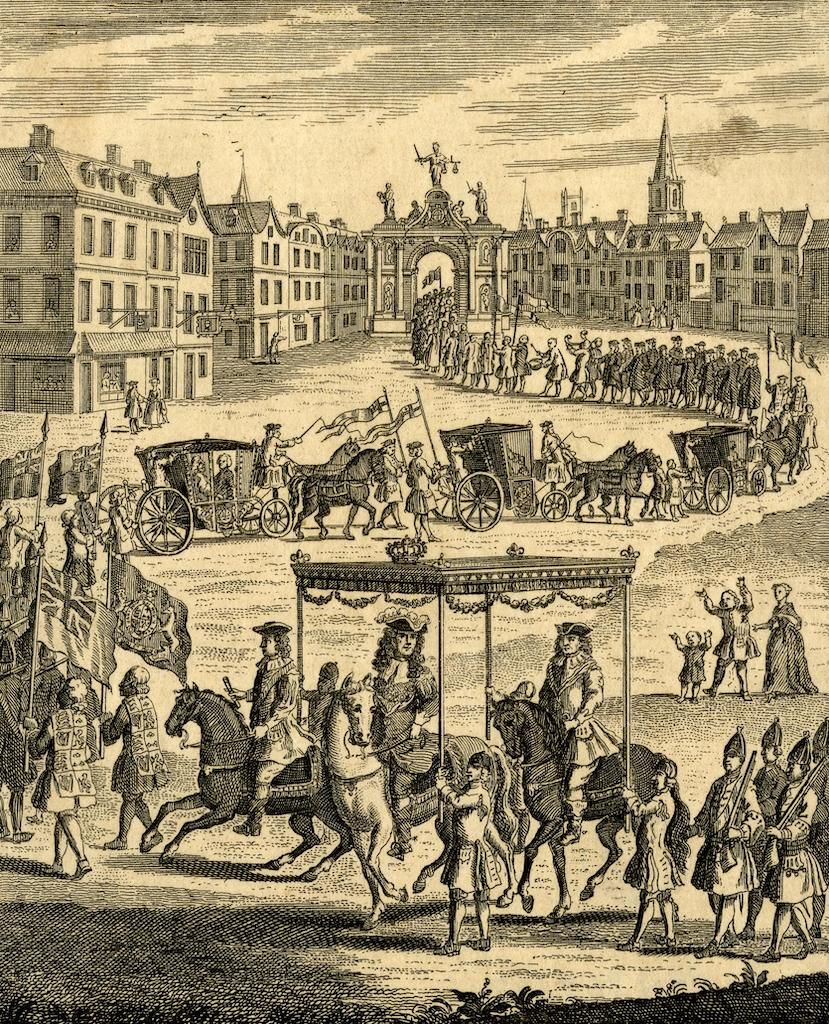
429 Views – 2 years ago
spacer