I was appalled when I saw several articles linking our Constitution with the LYCIANS! What a horrendous insult to our Loving Creator! I just had to get to the bottom of this. They are so confident they have dumbed down the populace to the point where they have no knowledge of history and no basis for discerning truth from lies. Sadly, turns out they are right. Most people today are clueless. But, I am so happy to see that there are still those among us who not only recognize truth from lies, but are standing up for truth and speaking out.
As you view this post you should be able to discern that they are very actively promoting the following agendas:
Promotion of BAAL/BULL WORSHIP and human/child sacrifice; animal sacrifices have already become accepted
Promotion of Sun Worship; Sun Deities; how ridiculous to worship a ball of light rather than our loving Creator
Blending of Eastern and Western Culture; just another area where they are pushing DUALITY a pagan teaching
Promotion of Lucifer as LIGHT BRINGER; turning people from the knowledge that Christ is the LIGHT of the World!
Denial of the Christian roots of the USA; For Centuries the USA has been KNOWN as a Christian Nation
Promotion of pilgrimage/tourism; (this is merely to bring people back to pagan sites and renew pagan spirituality)
Promotion of Mammon as trade and commerce/greed and riches; Love of money adds to itself love of self – PRIDE
Complete erasure of the True and living God from the minds of humanity; KNOWING that He is Coming Soon
Acceptance and even glorification of LYCANTHROPY – Shapeshifting – for all those SUPER POWER craving TECHIES!
What does a Mediterranean civilization that thrived during the Bronze Age have in common with the United States Constitution? Quite a lot, actually. It was in Lycia, an ancient maritime republic located in what is now Turkey, where the world’s first representative democratic federation was created: the Lycian League.The Lycian system of government was adopted by the founding fathers in Philadelphia as they sought to fashion a more inclusive way of determining the political direction of their fledgling nation. So effective was the Lycian model that it became a source of inspiration for later democratic institutions. But who exactly were the Lycians, and how did they inspire US democracy?
spacer
Just like Obama told us the USA was built Muslims, these folks want to claim that our Constitution was based on a form of government out of TURKEY! They are removing every semblance of our History and writing their own version which includes no reference to the God of the Bible, Christ our Redeemer, or Christian pilgrims/refugees who established this great nation. They new school books teach that pilgrims are just people who like to travel.
Well, I am telling you that our government is based on the BIBLE. The Tribes of ISRAEL were organized and committed to each other, though they were each self-governing. They had one set of Laws given by GOD, they had elders and priests, and they had JUDGES as GOD commanded.
The Declaration of Independence clearly states that we have inalienable RIGHTS given to us BY GOD! This nation was DEDICATED to the GOD of the Bible, by people of faith in Christ who were persecuted by the ROMAN CATHOLIC Church, witches, Satanists and other pagan religions.
Lycia is a gentle peninsula that lies along the southern coast of Turkey, on the Mediterranean Sea. In addition to being one of the most scenic landscapes of Turkey, Lycia in ancient times was the home of a famous league of republics.
“state in which supreme or executive power rests in the people via representatives chosen by citizens entitled to vote,” c. 1600, from French république (15c.), from Latin respublica (ablative republica) “the common weal, a commonwealth, state, republic,” literally res publica “public interest, the state,” from res “affair, matter, thing” (see re) + publica, fem. of publicus “public” (see public (adj.)).Applied to particular states so constituted by 1630s. The notion of “community in which there is a certain equality of members” is behind such expressions as republic of letters “collective body of those engaged in literary pursuits,” attested from 1702.
Understanding Democracy
Democracy is a system where ultimate power resides with the people, exercised directly or through elected representatives. Key principles include popular sovereignty, where the people are the source of authority, and political equality, ensuring each citizen’s vote carries equal weight.Majority rule is fundamental, with decisions based on the greater number of citizens. Two primary forms are: direct democracy,where citizens directly participate in lawmaking, and representative democracy, where citizens elect individuals to make decisions on their behalf.
Understanding a Republic
A republic is a government where the country is a “public matter,” not the private property of a ruler. Power is held by the people and their elected representatives, who govern according to established laws. A defining characteristic is that government operates under the constraint of a constitution or body of laws,limiting arbitrary power. The rule of law is paramount, meaning all individuals, including those in power, are subject to the same laws.This structure prioritizes the protection of individual rights and liberties, often enshrined in a written constitution.
Core Distinctions
The fundamental differences between a pure democracy and a republic lie in their source of authority and mechanisms for protecting individual rights. In a pure democracy, authority stems directly from the popular will,where the majority’s decision can be immediately enacted. Conversely, a republic derives its authority from a body of law, typically a constitution, which limits governmental power even from the majority. A key feature of a republic is its design to protect minority rights against the potential for a “tyranny of the majority,”a risk not inherently mitigated in a pure democratic system. The rule of law in a republic ensures laws apply equally to all citizens and that governmental power is constitutionally limited. While democracies operate with laws, a republic places a stronger emphasis on constitutionalism and legal constraints on power. SOURCE
When James Madison appealed to Lycia in 1787, it was part of the Ottoman Empire,but he was referring to this much earlier era in its history, to the Lycian civilization that flourished there in the 5th Century BC. Among the various civilizations that lived in Anatolia through the ages, the Lycians always held a distinctive place. Locked away in their mountainous country, they had a fierce love of freedom and independence, and resisted all attempts at outside domination. An advanced civilization, the Lycians had their own language and alphabet.
Library of Congress
James Madison, May, 1787. Ancient & Modern Confederacies [April-June?]. OF ANCIENT & MODERN CONFEDERACIES.1 MAD. MSS. 1 This memorandum is written on small sheets of paper, which, put together, formed a compact little book, suited to be carried in the pocket. There are 39 pages, and it would seem Madison intended extending it, for an extra page is headed “Gryson Confederacy.”
Lycian Confederacy. (Only one of multiple examples of Confederacies included in this document. You can view the Full DocumentHERE.)
In this confederacy the number of votes allotted to each member was proportioned to its pecuniary contributions.The Judges and Town magistrates were elected by the general authority in like proportion. See Montesquieu2 who prefers this mode. 2 L’Esprit des Lois (1748).
The name of a federal republic may be refused to Lyciawhich Montesquieu cites as an example in which the importance of the members determined the proportion of their votes in the general Councils. The Gryson3 League is a juster example. Code de l’Hum.4 Confederation.
The republic of the Lycians was an association of twenty-three towns; the large ones had three votes in the common council; the medium-sized ones, two; the small ones, one. The towns of Lycia paid the costs in proportion to their votes. In Lycia, the judges and magistrates of the towns were elected by the common council in that proportion. From the evidence unearthed by archeologists, we now knowthat the governing executive was called the “Lyciarch” and that the common council met in the building called the bouleuterion.
late 14c., “contract between two or more persons, states, etc., for mutual support or joint action,” from Anglo-French confederacie (Old French confederacie), from stem of Latin confoederare “to unite by a league,” from assimilated form of com “with, together” (see con-) + foederare, from foedus “a league” (from suffixed form of PIE root *bheidh- “to trust, confide, persuade”).Also late 14c. as “an aggregation of persons, states, etc., united by a league, a confederation.At first in reference to leagues of classical Greek states (Aetolian, Delian, Achaean, etc.), later of the Netherlands. In 17c.-18c. often in a bad sense, especially “a conspiracy against a superior.”The word was used of the United States of America under (and in) the Articles of Confederation (1777-1788). In reference to the national organization of the seceding Southern states (1861-1865, also Southern Confederacy) from 1861, in the constitution of the Confederate States of America, formed by constitutional convention at Montgomery, Alabama, March 11, 1861.
Confederacy nowusually implies a looser or more temporary association than confederation, which is applied to a union of states organized on an intentionally permanent basis. [OED]
A confederation(also known as a confederacy or league) is a political union of sovereign states united for purposes of common action.[1]Usually created by a treaty, confederations of states tend to be established for dealing with critical issues, such as defence, foreign relations, internal trade or currency, with the central government being required to provide support for all its members.Confederalism represents a main form of intergovernmentalism, defined as any form of interaction around states that takes place on the basis of sovereign independence or government.
The nature of the relationship among the member states constituting a confederation varies considerably. Likewise, the relationship between the member states and the general government and their distribution of powers varies. Some looser confederations are similar to international organisations while other confederations with stricter rules may resemble federal systems. These elements of such confederations, the international organization and federalist perspective, has been combined as supranational unions.
Since the member states of a confederation retain their sovereignty, they have an implicit right of secession. The political philosopher Emmerich de Vattel said: “Several sovereign and independent states may unite themselves together by a perpetual confederacy without each, in particular, ceasing to be a perfect state.… The deliberations in common will offer no violence to the sovereignty of each member”.[2]
Under a confederation, compared to afederal state,the central authority is relatively weak.[3]Decisions made by the general government in a unicameral legislature, a council of the member states, require subsequent implementation by the member states to take effect; they are not laws acting directly upon the individual but have more the character of interstate agreements.[4] Also, decision-making in the general government usually proceeds by consensus (unanimity), not by the majority.Historically, those features limit the union’s effectiveness.Hence, political pressure tends to build over time for the transition to a federal system of government, as in the American, Swiss and German cases of regional integration.
spacer
In summary, the Lycian confederacy made three contributions to the American Constitution. First, it was a model of a federal union the strength of whose parts in the national councils is proportionate to their size. Second, it showed the possibility of popular government that was representative. Third, it offered the example of a strong national government with its own strong officers and the power to make laws that applied directly to individual citizens.
We recognize Professor James Muller of the University of Alaska Anchorage for increasing public awareness on Lycia’s influence on the United States and Professor Gul Isin of Akdeniz University and her colleagues for their painstaking work in excavating Lycia,which is deepening our understanding of the antecedents of the American Constitutionand the historical bonds between two friendly republics, Turkey and the United States.
The Lycian Confederacy and the American Constitution
On June 30, 1787, in Independence Hall in Philadelphia, a crucial day at America’s Constitutional Convention, James Madison, who is rightly considered the father of our Constitution, gave a speech in which he appealed to the Lycian confederacy. This was a crucial moment for the Convention, because they had rejected the New Jersey Plan for a more modest revision of the Articles of Confederation, America’s earlier constitutional frame, and had therefore resolved to try to reach agreement on a new national constitution, but they were deeply divided on what its features should be.
They want you to believe that James Madison particularly addressed Lycia. I have found no evidence to support this claim. I could not even find a copy of Madison’s speech, let along the particular reference to Lycia at the Convention. I did find multiple sources of the Notes Madison wrote on in respect to many different Confederacies throughout history which included Lycia. As I showed above.
Why was there suddenly this attention to ancient Lycia almost two millennia later and many thousands of miles away, in the New World?
For months before the Constitutional Convention, Madison had made a comprehensive study of confederated governments. Madison was replying that day to a speech by Oliver Ellsworth, a delegate from Connecticut, who was arguing for the old principle of the Articles of Confederation that states had to be equal in the national councils. Ellsworth had asked, “Where is or was a confederation ever formed, where equality of voices was not a fundamental principle?” It had been a fundamental principle under the Articles of Confederation, under which every state, large or small, had one vote. Big states like Virginia and Pennsylvania were loath to cede power to a federation in which they had no more say than Rhode Island and Delaware, but the equal power of these little states kept the bigger ones from making any change under the Articles.
Now listen to Madison’s reply to Ellsworth on June 30:
Notwithstanding the admirable and close reasoning of the gentleman who spoke last, I am not yet convinced that my former remarks are not well founded. I apprehend he is mistaken as to the fact on which he builds one of his arguments. He supposes that equality of votes is the principle on which all confederacies are formed—that of Lycia, so justly applauded by the celebrated Montesquieu, was different.
The different political weights of cities in the common assembly of the Lycian confederacy showed the possibility of a federation in which members of different sizes came together in a way that reflected their real strength. This was the idea for Congress in James Madison’s Virginia Plan, which proposed a bicameral legislature—two houses—both of which gave states representation in proportion to their population, as in Lycia. Madison had to compromise with his opponents and accept the equality of states in the Senate, but the American House of Representatives, where states have representation in proportion to their population, is founded, as Madison urged, on the principle of the Lycian confederation.
This is the first of the three great contributions of the example of Lycia to the American government—the possibility of a larger republic that would gain support from its component parts because they were represented in it in proportion to their real strength.
The second contribution of the example of Lycia to the American Constitution is representative government.Hamilton’s criticism of the ancient republics was partly based on their aptitude to be ruled by faction when the people ruled directly, a claim that was echoed by Madison in Federalist no. 10:
…such democracies have ever been spectacles of turbulence and contention; have ever been found incompatible with personal security or the rights of property, and have in general been as short in their lives as they have been violent in their deaths.
The trouble was, as Hamilton had said, that when the people ruled directly, the result was either tyranny or anarchy. But Madison argued that this defect in popular government could be remedied by delegating the government “to a small number of citizens elected by the rest.” He had learned this argument from Montesquieu, who argued in Book XI of The Spirit of the Laws that
the great advantage of representatives is that they are able to discuss public business. The people are not at all appropriate for such discussions…The people should not enter the government except to choose their representatives…
The common council of the Lycian confederation offered an example of this representation.
The third contribution of Lycia to American government is a strong national government. In the Federalist, Hamilton and Madison refer to the Lycian confederacy three times, in nos. 9, 16, and 45. Hamilton, in Federalist no. 9, explains that in Lycia, the common council had the power to appoint all judges and magistrates for the confederated cities. Under the Articles of Confederation, there was not much of a federal executive or judiciary, but the Lycian confederacy was a model for strong new national offices established by the American Constitution. Then, in Federalist no. 16, Hamilton explains that in Lycia, federal laws applied directly to individuals, not just to cities. The fact that under the Articles of Confederation the laws of the confederation applied only to states and not to individuals was considered by Hamilton in Federalist no. 15 to be the “radical vice” of the confederation. It was remedied by the proposed new Constitution, in which federal laws applied to individuals as well as states. Finally, in Federalist no. 45, Madison refers to the “degree and species of power” of the national government in Lycia, which he cites approvingly as a model for the stronger national government established by the Constitution.
In summary, the Lycian confederacy made three contributions to the American Constitution. First, it was a model of a federal union the strength of whose parts in the national councils is proportionate to their size. Second, it showed the possibility of popular government that was representative. Third, it offered the example of a strong national government with its own strong officers and the power to make laws that applied directly to individual citizens.
Excerpted from remarks by James W. Muller, University of Alaska Anchorage delivered to the American Friends of Turkey and the Patrons of Patara gala on March 27, 2006. To receive full text, please send email to info@turkishcoalitionofamerica.org.
spacer
first Settlers coming to the American colonies were considered religious pilgrims searching for refuge from abuse, torture and deathin the old country due to their Faith the TRUTH of the Bible
Many of the British North American colonies that eventually formed the United States of America were settled in the seventeenth century by men and women, who, in the face of European persecution, refused to compromise passionately held religious convictions and fled Europe. The New England colonies, New Jersey, Pennsylvania, and Maryland were conceived and established “as plantations of religion.” Some settlers who arrived in these areas came for secular motives–“to catch fish” as one New Englander put it–but the great majority left Europe to worship God in the way they believed to be correct. They enthusiastically supported the efforts of their leaders to create “a city on a hill” or a “holy experiment,” whose success would prove that God’s plan for his churches could be successfully realized in the American wilderness. Even colonies like Virginia, which were planned as commercial ventures, were led by entrepreneurs who considered themselves “militant Protestants” and who worked diligently to promote the prosperity of the church.
European Persecution
The religious persecution that drove settlers from Europe to the British North American colonies sprang from the conviction, held by Protestants and Catholics alike, that uniformity of religion must exist in any given society. This conviction rested on the belief that there was one true religion and that it was the duty of the civil authorities to impose it, forcibly if necessary, in the interest of saving the souls of all citizens. Nonconformists could expect no mercy and might be executed as heretics. The dominance of the concept, denounced by Roger Williams as “inforced uniformity of religion,” meant majority religious groups who controlled political power punished dissenters in their midst. In some areas Catholics persecuted Protestants, in others Protestants persecuted Catholics, and in still others Catholics and Protestants persecuted wayward coreligionists. Although England renounced religious persecution in 1689, it persisted on the European continent. Religious persecution, as observers in every century have commented, is often bloody and implacable and is remembered and resented for generations.
Crossing the Ocean to Keep the Faith: The Puritans
Puritans were English Protestants who wished to reform and purify the Church of England of what they considered to be unacceptable residues of Roman Catholicism. In the 1620s leaders of the English state and church grew increasingly unsympathetic to Puritan demands. They insisted that the Puritans conform to religious practices that they abhorred, removing their ministers from office and threatening them with “extirpation from the earth” if they did not fall in line. Zealous Puritan laymen received savage punishments. For example, in 1630 a man was sentenced to life imprisonment, had his property confiscated, his nose slit, an ear cut off, and his forehead branded “S.S.” (sower of sedition).
Beginning in 1630 as many as 20,000 Puritans emigrated to America from England to gain the liberty to worship God as they chose. Most settled in New England, but some went as far as the West Indies. Theologically, the Puritans were “non-separating Congregationalists.” Unlike the Pilgrims, who came to Massachusetts in 1620, the Puritans believed that the Church of England was a true church, though in need of major reforms. Every New England Congregational church was considered an independent entity, beholden to no hierarchy. The membership was composed, at least initially, of men and women who had undergone a conversion experience and could prove it to other members. Puritan leaders hoped (futilely, as it turned out) that, once their experiment was successful, England would imitate it by instituting a church order modeled after the New England Way.
The Bible Commonwealths
The New England colonies have often been called “Bible Commonwealths” because they sought the guidance of the scriptures in regulating all aspects of the lives of their citizens. Scripture was cited as authority for many criminal statutes. Shown here are the two Bibles used in seventeenth-century New England and a seventeenth-century law code from Massachusetts that cites scripture.
spacer
Before, During, and After the English and Spanish Inquisitions
Published: November 17, 2017Last Updated: May 28, 2025
The Inquisition was a powerful office set up within the Catholic Church to root out and punish heresy throughout Europe and the Americas. Beginning in the 12th century and continuing for hundreds of years, the Inquisition is infamous for the severity of its tortures and its persecution of Jews and Muslims. Its worst manifestation was in Spain, where the Spanish Inquisition was a dominant force for more than 200 years, resulting in some 32,000 executions.
Catharists
The Inquisition has its origins in the early organized persecution of non-Catholic Christian religions in Europe. In 1184 Pope Lucius III sent bishops to southern France to track down heretics called Catharists.These efforts continued into the 14th Century.
During the same period, the church also pursued the Waldensians in Germany and Northern Italy. In 1231, Pope Gregory charged the Dominican and Franciscan Orders to take over the job of tracking down heretics.
The Job of Inquisitors
Inquisitors would arrive in a town and announce their presence, giving citizens a chance to admit to heresy. Those who confessed received a punishment ranging from a pilgrimage to a whipping.
Those accused of heresy were forced to testify. If the heretic did not confess, torture and execution were inescapable. Heretics weren’t allowed to face accusers, received no counsel and were often victims of false accusations.
Bernard Gui wrote the influential guidebook for Inquisitors called “Conduct of the Inquisition into Heretical Depravity” in the early 14th Century. Gui himself pronounced over 600 people guilty of heresy and was featured as a character in Umberto Eco’s novel The Name of the Rose.
There were countless abuses of power.Count Raymond VII of Toulouse was known for burning heretics at the stake even though they had confessed. His successor, Count Alphonese, confiscated the lands of the accused to increase his riches.
In 1307, Inquisitors were involved in the mass arrest and tortures of 15,000Knights Templar in France, resulting in dozens of executions. Joan of Arc, burned at the stake in 1431, is the most famous victim of this wing of the Inquisition.
Conversos
In the late 15th Century, King Ferdinand II and Queen Isabella of Spain believed corruption in the Spanish Catholic Church was caused by Jews who, to survive centuries of anti-Semitism, converted to Christianity.
Known as Conversos, they were viewed with suspicion by old powerful Christian families.Conversos were blamed for a plague and accused of poisoning peoples’ water and abducting Christian boys.
Ferdinand and Isabella feared that even trusted Conversos were secretly practicing their old religion; the royal couple was also afraid of angering Christian subjects who demanded a harder line against Conversos—Christian support was crucial in an upcoming crusade against Muslims planned in Granada.
Ferdinand felt an Inquisition was the best way to fund that crusade, by seizing the wealth of heretic Conversos.
Torquemada
In 1478, under the influence of clergyman Tomas de Torquemada, the monarchs created the Tribunal of Castile to investigate heresy among Conversos. The effort focused on stronger Catholic education for Conversos, but by 1480, the Inquisition was formed.
That same year, Jews in Castile were forced into ghettos separated from Christians, and the Inquisition expanded to Seville. A mass exodus of Conversos followed.
In 1481, 20,000 Conversos confessed to heresy, hoping to avoid execution. Inquisitors decreed that their penitence required them to name other heretics.By the year’s end, hundreds of Conversos were burned at the stake.
Spanish Inquisition
Hearing the complaints of Conversos who had fled to Rome, Pope Sixtus proclaimed the Spanish Inquisition was too harsh and was wrongly accusing Conversos. In 1482 Sixtus appointed a council to take command of the Inquisition.
Torquemada was named Inquisitor General and established courts across Spain. Torture became systemized and routinely used to elicit confessions.
Sentencing of confessed heretics was done in a public event called the Auto-da-Fe. All heretics wore a sackcloth with a single eyehole over their heads. Heretics who refused to confess were burned at the stake.
Sometimes people fought back against the Inquisition. In 1485, an Inquisitor died after being poisoned, and another Inquisitor was stabbed to death in a church. Torquemada managed to round up the assassins, burning at the stake 42 people in retaliation.
Torquemada’s downfall came when he investigated members of the clergy for heresy. Complaints to Pope Alexander VI convinced him that Torquemada needed tempering. Torquemada was forced to share leadership with four other clergymen until he died in 1498.
Inquisitors General
Diego de Deza took over as Inquisitor General, escalating the hunt for heresy within cities and rounding up scores of accused heretics, including members of the nobility and local governments. Some were able to bribe their way out of imprisonment and death, reflecting the level of corruption under de Deza.
After Isabella’s death in 1504, Ferdinand promoted Cardinal Gonzalo Ximenes de Cisneros, the head of the Spanish Catholic Church, to Inquisitor General. Ximenes had previously made a mark in Granada persecuting the Islamic Moors.
As Inquisitor General, Ximenes pursued Muslims into North Africa, encouraging Ferdinand to take military action. Upon seizing African towns, the Inquisition became established there. Ximenes was dismissed in 1517 after pleas from prominent Conversos, but the Inquisition was allowed to continue.
Roman Inquisition
Rome renewed its own Inquisition in 1542 when Pope Paul III created the Supreme Sacred Congregation of the Roman and Universal Inquisition to combat Protestant heresy.This Inquisition is best known for putting Galileo on trial in 1633.
In 1545, the Spanish Index was created, a list of European books considered heretical and forbidden in Spain, based on the Roman Inquisition’s own Index Librorum Prohibitorum. In other nods to Rome’s concerns, the Spanish Inquisition focused on the rising population of Spanish Protestants in the 1550s.
In 1556, Philip II ascended the Spanish throne. He had previously brought the Roman Inquisition to the Netherlands, where Lutherans were hunted down and burned at the stake.
Inquisition in the New World
As Spain expanded into the Americas, so did the Inquisition, established in Mexico in 1570. In 1574, Lutherans were burned at the stake there, and the Inquisition came to Peru, where Protestants were likewise tortured and burned alive.
In 1580 Spain and Portugal ruled jointly by the Spanish crown and began rounding up and slaughtering Jews that had fled Spain. Philip II also renewed hostilities against the Moors, who revolted and found themselves either killed or sold into slavery.
The Spanish queen regent María Cristina de Borbón issued a decree abolishing the Spanish Inquisition on July 15, 1834.
spacer
The establishment of the Thirteen Colonies and the subsequent formation of the United States was a gradual
process that unfolded over several decades. This timeline highlights the key events that shaped the early American colonies and the eventual formation of the United States.The colonies’ development was influenced by various factors, including the interactions with Native Americans, European rivalries, and the desire for self-governance.
A 540km trail along Turkey’s Mediterranean coast introduces hikers to the rich heritage of Lycia, an ancient maritime republic that’s recognised as the world’s first democratic union.
“The Lycians? But who were they?” said Iskender. “When we Turks came here, all we saw was ruins, and – how do you call them? Where the dead people lie?” the old boatbuilder added, setting down his bottle of Efes beer and making a horizontal gesture with his hands.
“Tombs?” I offered. He adjusted his grubby skipper’s cap and nodded.
It was only May, but the afternoon heat already weighed heavy in Simena, a remote village on the Teke Peninsula on Turkey’s Mediterranean coast, a region historically known as Lycia. I was two weeks into a hike along the Lycian Way, a 540km trail (760km including alternative routes) linking the cities of Fethiye and Antalya, and had met Iskender after seeking refreshment in a roadside cafe near a boatyard.
Fethiye is a Turkish name primarily used for girls, carrying the meaning of “victory” or “triumph.”It originates from the Turkish word “fetih,” which signifies conquest or victory, often associated with military or significant achievements. The name embodies a sense of accomplishment and success. Associated or derivable names are Fetih, Fethi, and Fethan.
While the name Fethiye may not be globally associated with numerous famous figures, it is recognized in Turkey, with Fethiye being a prominent city known for its natural harbor, blue waters, and historical significance.The city was named in honor of Fethi Bey, an early aviator. SOURCE
Fethiye is most popular in the following countries: Turkey, Germany, Netherlands, Algeria, Saudi Arabia
Fethiye has its origins in ancient times. During the ancient period, the Lycians, meaning “the people of the Light Homeland,” inhabited this region and named it Telmessos. SOURCE
The name “Antalya” actually has ancient roots. It means “Land of Attalos,” named after King Attalos II of Pergamon. He was the one who founded the city during his reign. Originally, the city was called Attaleia in his honour.
Over the centuries, the name evolved through different forms—Adalia, Antalia—and eventually became what we now know as Antalya. Each version reflects the different cultures and powers that influenced the region through time.
A City of Strategic Importance
After the fall of the Pergamon Kingdom in 133 BC, Attaleia remained independent for a brief period before falling into the hands of pirates. This didn’t last long. In 77 BC, it was captured by the Roman commander Servilius Isauricus and officially became part of Roman territory.
By 67 BC, it had become a naval base for Pompey’s fleet, and in 130 AD, the Roman Emperor Hadrian visited the city.His visit left a lasting legacy—Hadrian’s Gate, also known as Üçkapılar (The Three Gates), was built in his honour and still stands as one of the most iconic landmarks in the city.
Through Byzantium and Into the Turkish Era
During the Byzantine era, Attaleia became an important centre for Christianity and served as a bishopric. But its most transformative period came after it came under Turkish rule. From then on, the city began to thrive, expanding its role in trade, culture, and governance.
Modern Antalya: From Historic Town to Tourism Capital
Thanks to its natural beauty, long coastline, and ideal climate, Antalya began to gain attention as a travel destination in the 1970s. Since then, it has grown into Turkey’s tourism capital, welcoming millions of visitors every year.
From a kingdom’s vision to a global vacation hotspot, Antalya’s journey through time is as rich and colourful as the city itself.
Revelation 2:13 I know where you live—where Satan has his throne. Yet you remain true to my name. You did not renounce your faith in me, not even in the days of Antipas, my faithful witness, who was put to death in your city—where Satan lives.
The seven churches of Rev. chapt. 1 – 3 were located in and surrounded the capital city of Asia Minor, the “seat of Satan” in Pergamos(var. Pergamum) (Rev. 2:13.) The “seat of Satan” was a reference to the center of idolatry, as Pergamos practiced sun worship,which originated from Babylonian idolatry, and their priests used the same vestments and title of “pontiff.”
Their people were called “The Temple-keepers of Asia.”They had several gods, the chief of which was Zeus. The last leader of Pergamum gifted his title of Pontifex Maximus to Rome in 133 BC.The rulers and emperors of Rome used the title until 382 AD, when Emperor Gratian refused it as being un-Christian. But, it is interesting to note that it is still used today by the Pope.
Excerpt from Studies in Revelation by Hamption Keathly III, 1997, p. 63:
“Pergamum was very wealthy, the center of emperor worship with many temples devoted to idolatry.This was the place ‘where Satan’s throne is’ (Rev. 2:13). The phrase has been applied to the complex of pagan cults, of Zeus, Athena, Dionysus and Asclepius (Esculapius), established by the Attalid kings,that of Asclepius Soter (the ‘saviour,’ ‘healer’) being of special importance. These cults are illustrative of the religious history of Pergamum, but “Satan’s throne” could be an allusion to emperor worship. This was where the worship of the divine emperor had been made the touchstone of civic loyalty under Domitian.
Here was the magnificent temple of Esculapius, a pagan god whose idol was in the form of a serpent.The inhabitants were known as the chief temple keepers of Asia. When the Babylonian cult of the Magians was driven out of Babylon, they found a haven in Pergamum. “
And:
“The title of the Magian high priest was “Chief Bridge Builder” meaning the one who spans the gap between mortals and Satan and his hosts.In Latin this title was written “Pontifex Maximus,”the title now used by the Pope.This title goes all the way back to Babylon and the beginnings of the mother-child cult under Nimrod of Genesis 10 and his wife Sumerimus. Later, Julius Caesar was elected Pontifex Maximus and when he became Emperor, he became the supreme civil and religious ruler and head of Rome politically and religiously with all the power and functions of the Babylonian pontiff.” Source: “The Message to Pergamum” here
From The Seven Golden Candlesticks by Henry Baker Tristram. p. 63
“Like Ephesus, it boasted on its coins and in inscriptions to be a temple-keeper, and like other Asiatic Greeks, we may be certain that the Pergamenes were devoted to a sensuous and licentious worship….The tutelary diety of Pergamu was AEsculapius, the god of healing..…In his honor, a living serpent was kept and fed in the temple, while the serpent-worship was so marked a character of the place, that we find this reptile engraved on many of its coins.” Source: here
The seven churches of Asia had to be strong, and fight to resist temptation, to remain faithful to Christ, and not mix with pagan idolatry. That was one of the reasons for the constant encouragement in all of the letters of the apostles / disciples for the people to continue in their belief in the Lord and the gospel of Christ.
Satan’s main tool was to deceive the people to turn them away from our heavenly Father, to worship anything / anyone other than our Creator,and places of idol worship were the work of Satan, thus the seat of Satan.
ADDENDUM:
Excerpt from Acropolis of Pergamum:
Pergamum inscription on white stone The people of Pergamum were known as the “Temple-keepers of Asia.” The city had three temples dedicated to the worship of the Roman emperor, another for the goddess Athena, and the Great Altar of Zeus, the king of the Greek gods. Many scholars believe this altar is the “Throne of Satan” mentioned in the book of Revelation.“That word ‘throne’ was used in a personal private residence, and it was a chair for the lord of the house, the master of the house,” says Renner. “The very fact that Jesus would use this word means that Satan felt at home there. He sat on a throne there. It was his territory. He was the master of that house.”
The city also had a healing center called the Asklepion, built in honor of Asklepios, the Greek serpent-god.In the first century, this was a cross between a hospital and a health spa,where patients could get everything from a mud bath to a major surgery. Even the emperors came all the way from Rome to be treated here, but this was no ordinary doctor’s visit.” Source: here
The title assumed by the bishop of the RCC is pagan in origin, and predates Augustus’ resurrection of it as part of the Roman Imperial titles.
Excerpt from Anchoring Pontifical Authority:
Augustus, the first Roman in history to combine the novel position of emperor with that of pontifex maximus, recalled in his Res Gestae: “By the passage of new laws I restored many traditions of our ancestors which were then falling into disuse, and I myself set precedents in many things for posterity to imitate.” 59 Augustus’ words capture antique Roman society well, where conservatism and innovation proved a winning combination. Similarly, the earliest pope in history to have himself presented as pontifex maximus understood the synergy of old and new joined together, and the necessity to have the innovative use of this title embedded or anchored in tradition in order for it to meet with approval from the various groups in society. Thus, the title pontifex maximus as appropriated by popes of the past was anchored in the tradition of imperial Roman titulature.” Source: here
The pagan title was picked up by the Roman bishops and then transferred to the Pope later.
Excerpt from The Title Pontifex Maximus:
“Of course Christ didn’t appoint Peter to be the Pontifex Maximus. And of course the early Church Fathers spoke of the Pontifex Maximus in such derogatory, paganistic ways. Because when the early Fathers were writing, the Pontifex Maximus was the head of the Roman pagan religion, and the Roman Empire itself was pagan.As any student of Roman history knows, the Pontifex Maximus was an imperial office, usually held by the Emperor himself, which made one the “chief priest” of the Roman “state cult.”‘ Source: Biblical Catholic
Excerpt from The Title Pontifex Maximus:
“The papal title Pontifex Maximus can be traced back in different forms to the ancient Chaldean times.When Medo-Persia conquered Babylon, the Babylonian religion was maintained, but after a revolt of the priesthood, the priests of Babylon were driven out of Medo-Persia, and established themselves at Pergamum, taking with them their titles and vestures.
The last pontiff king of Pergamum was Attalus III,who bequeathed his title to the emperor of Rome in 133 BC. In the fourth century AD, Christian emperor Gratian refused the title, and in the year 431 AD, the title was taken over by Damascus, bishop of Rome.” Source: hereThe last king of Pergamum, Attalus III bequeathed the territory and treasure of Pergamum to Rome to avoid a civil war.Thereafter, Pergamum became a province of Rome. Source: Livius
The seat of Satan in the book of Revelation was the seat of idol worship in Asia Minor where the letter to the church at Pergamum was sent. The title Pontifex Maximus was the title used by pagan idol worshipers,and taken up by the emperors of Rome to combine all authority under the emperor for both cult worship and political rule.
He gestured towards the crenellated walls of Simena Castle, riding up a rugged ridge. “Those tombs you saw near the castle… How did they move these enormous stones, thousands of years ago?” he asked. “Even five men couldn’t carry those tomb lids.” Iskender shook his head, as if struggling to reconcile himself to an impossible idea.
* From the Greek name Σιμαινα (Simaina), derived from σιμος (simos) meaning “flat-nosed”.*Also associated with the Greek word σημα (sema) meaning “sign” or “omen”.* Some sources suggest a connection to the Hebrew name Simcha, meaning “joy”.
Detailed Insights on Simena
Origins: Greek – It also carries influences from Hebrew.
Symbolic Representation: * Simena is associated with the concept of “omen” or “sign”.* It symbolizes the presence of fate or destiny in one’s life.* The connection to the Greek word for “flat-nosed” may suggest qualities of determination and resilience.
The ancient city of Simena, now known as Kaleköy, is located between the districts of Kaş and Demre in Antalya. It is located on the peninsula directly opposite Kekova Island. Simena is one of the rare settlements in Turkey that can be reached by sea.
Although the name of the ancient city of Simena was first mentioned by Pilinius in the 1st century AD, the history of the city dates back to the 4th century BC, as can be understood from the inscription written in Lycian script and the silver coin found in the city of Aperlai. Simena was represented by Aperlai in the Lycian league. It is known that after the regionjoined the Roman Empire, it continued its existence as an independent city.
Today, the first striking structure in the ruins is the castle, which also reflects the strategic importance of the city. The Simena castle was used in the Middle Ages. The city was damaged by earthquakes in ancient times and was partially submerged in water. Stairs, Lycian type sarcophagi, breakwater and building ruins can be seen in the water on the shore.
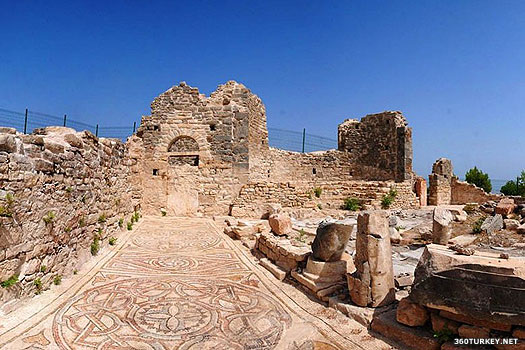
There are also building remains belonging to a Roman bath complex thought to have been built in 79 BC on the shore. The inscription of the dilapidated bath reads, “It was gifted to Emperor Titus by the people and council of Aperlai and the other cities of the union.” The first ruin that catches the eye when you reach the castle is the theater carved into the rock, with seven rows of seats and a capacity of approximately three hundred people. Water cisterns, rock tombs and traces of the religious building, which was first used as a temple, then as a church and finally as a mosque, are among the other ruins of the castle. To the northeast of the castle lies a large necropolis area consisting of sarcophagi and rock tombs. The inscription in the Lycian language found in one of the house-type tombs is remarkable
From the fortress, I had seen the Lycian sarcophagi with their Gothic vault-shaped lids, littering the hillside in dozens.Earlier, in nearby Kaleüçağız, I had climbed a hillock overlooking the marina to find a vast necropolis of weed-choked tombs, while just metres away, traders noisily set up their stalls. The Turkish presence seemed fragile beside these eerie relics, a reminder that others had once called this land home.
Lycian sarcophagi are scattered along the Lycian Way, including around Simena Castle (Credit: Alastair Gill)
Immortalised in the Iliad as the land of the “swirling river Xanthos”,named after its original capital, ancient Lycia was a mountain stronghold peopled by a fiercely independent seafaring race whose origins remain a matter of speculation.
The ancient Greek historian Herodotus claimed that the forebears of the Lycians, the Trm̃mili, “sprang originally from Crete”, though modern-day scholars believe they were an Anatolian people who became Hellenised after Alexander the Great seized the region from the Persians in 333 BCE. And although the Lycians vanished into oblivion long ago, assimilated by Byzantines and Turks, their political legacy lingers on, thanks to a curious historical connection.
The Lycian Way
In June 1787, future US president James Madison gave a speech at the Constitutional Convention in Philadelphia.The forum had been convened to identify a more effective system of government for the fledgling nation, where a lack of proportional representation was hampering effective policymaking.
Responding to delegate Oliver Ellsworth’s assertion that equality of voices had always been a fundamental principle in confederations, Madison cited the example of Lycia. The Lycian League, he argued, was different. After hearing Madison explain why, lawmakers signed the Constitution on this day, 12 September, in 1787.
Formed in the 2nd Century BCE and composed of 23 city-states, the Lycian League was the world’s first democratic union, a model of a strong confederacy based on popular and proportional representation. Six cities – including the capital Patara – wielded three votes in the Lycian Council,medium-sized cities commanded two, and small settlements had one.
The 540km route winds along Turkey’s Teke Peninsula and traces the area’s rich history (Credit: Alastair Gill)
The circumstances surrounding the League’s creation are unclear, but it was probably a response to the tyranny of Rhodes, which was briefly assigned control of Lycia in 190 BCE by Rome.The League could not determine foreign policy, but elected a governing executive, a Lyciarch, as well as local judges, and collected taxes.The 18th-century French philosopher Montesquieu called it “the most perfect constitution of antiquity”,
Professor Anthony Keen, an expert on Lycia from the University of Notre Dame, describes the system as “a meeting of Greek ideas about democracy with pre-existing Lycian ideas about how a community of individual urban settlements works together”.
Many of the paths I was walking were once roads, millennial arteries connecting the cities of Lycia, whose story ended after Roman emperor Claudius annexed the region in 43 CE. It was an interest in these ancient byways that spurred Kate Clow to create the Lycian Way in the 1990s after moving to the region.
“I wasn’t inspired to make a trail; I was inspired to collect old roads,”she said.
Clow continues to expand the route and support local communities: this year a volunteer group transformed a building in the village of Sidyma into a cultural centre.
Hikers were few on the Lycian Way, but the trail was full of life: shaggy-haired goats, ponderous tortoises and, more alarmingly, the black snakes that occasionally darted across the path.
Many parts of the route follow ancient Lycian roads and paths to remote mountain settlements (Credit: Alastair Gill)
In mountain villages spangled with poppies and wildflowers, women in baggy şalvar trousers brought me goat cheese, fresh honey and gozleme flatbread, washed down with glasses of tea. During the hottest hours I plunged into the sea, sheltered in forested canyons or stretched out in thyme-scented groves of oak, wild olive and dogwood. After dusk, a thick silence enveloped the land, and my campfire trembled beneath the whispering pines, as if urging me to remember the people who built these roads.
Indeed, on the Lycian Way, memory is such a pervasive presence that you walk, rest and sleep in the company of phantoms. For despite its dramatic beauty, this is a land of ghosts. In The Lycian Shore, an account of a journey along the peninsula by sea in the 1950s, the explorer Freya Stark called it “the most haunted coast in the world“. Empty tombs lie in every thicket and grove, like mute envoys sent down from a vanished embassy.
An ostentatious part of Lycia’s urban fabric, tombs were an expression of the central role of ancestor worship and the afterlife. Strangest of all were the tower-like pillar tombs found in the ruins of Xanthos, capital of Lycia under the Persians.The Lycian Way diverts inland to the site, which sits on a rocky outcrop surrounded by greenhouses and orange plantations.Two pillar tombs dominate the acropolis: the Harpy Tomb, adorned with reliefs of female winged figures; and the Xanthian Obelisk, a giant stele covered in Lycian script that has not yet been fully deciphered.
Xanthos’ greatest pillar tomb, the Tomb of Payava, with its bas-reliefs and Lycian inscriptions, was removed in 1841 by British archaeologist Sir Charles Fellows, who carted off all he could to London on the HMS Beacon.Today the tomb stands in the British Museum, alongside the original friezes from the Harpy Tomb, and theNereid Monument, a spectacular sculptured tomb in the form of a Greek temple.
sea-nymph, in Greek mythology, late 14c., Nereides (plural), via Latin from Greek Nēreis (genitive Nēreidos), daughter of the ancient sea-god Nēreus, son of Pontus and Gaia, husband of Doris, whose name is related to naros “flowing, liquid, I flow” (see Naiad). In zoology, “a sea-centipede” (1840).
The most famous among them were Amphitrite, Thetis, and Galatea. The Nereids were beautiful maidens helpful to voyagers, and constituted the main body of the female, as the Tritons did of the male, followers of Poseidon or Neptune. They were imagined as dancing, singing, playing musical instruments, wooed by the Tritons, and passing in long processions over the sea seated on hippocamps and other sea-monsters. Monuments of ancient art represent them lightly draped or nude, in poses characterized by undulating lines harmonizing with those the ocean, and often riding on sea-monsters of fantastic forms. [Century Dictionary]
Tower-like pillar tombs can be seen in the ruins of Xanthos, capital of Lycia under the Persians (Credit: Alastair Gill)
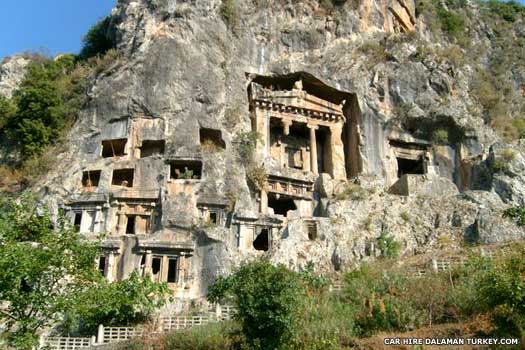
From the 4th Century BCE onwards, the Lycians built rock-hewn “house” tombs– often funeral chambers carved into cliffs, with the rock face around the doorway cut to imitate the façade of a wooden Lycian house, complete with “timbers” and protruding “joists”. Most common are the sarcophagi, oblong tombs cut from Lycian limestone, typically sitting atop a lower sepulchre.
Dr Catherine Draycott, an archaeologist from Durham University, explained that in Lycian tombs the deceased would be buried in the upper sarcophagus, while relatives or slaves were interred in the chamber beneath. “There is this idea in Lycia of literally elevating important people in death,” she said. “So, in that sense, they’re heroising whoever is put in there.”
While the ubiquitous tombs have given archaeologists an understanding of the Lycians’ elaborate burial rituals,the picture of everyday life is sparse: finds of personal items or jewellery are incredibly rare. “The difficulty is that a lot of the hard evidence is Roman. There’s so little from the earlier periods,” said Draycott. Plundered long ago, the tombs are inevitably empty – even the bones are gone.
Two days on from Xanthos, the trail brought me back to the coast bythe ruins of Patara, capital of the Lycian League. Once a thriving port, Patara was gradually abandoned after its river silted up. The colonnaded main street now disappears into a pool, and the walls of the shops that once lined the avenue have long since collapsed. The most significant building here is the Council Chamber, or bouleterion.Containing a semi-circular auditorium with 20 rows of stone benches, this recently restored assembly house was the political centre of the Lycian League.
Patara was the capital and political centre of the Lycian League (Credit: Berk Ozdemir/Getty Images)
Sitting high up in the bouleterion,it wasn’t hard to imagine hundreds of robed delegates discussing public affairs while the Lyciarch conducted proceedings,and my thoughts drifted from Patara to distant Philadelphia, and Madison’s invocation of the Lycian League.
It is thanks to Madison that today the US House of Representatives is founded on the Lycian principle, with the 435 seats apportioned among the 50 states in proportion to their population. Of all the Lycians’ attempts to defy the passage of time and preserve themselves for the next world, the one that turned out to have a true afterlife was the most intangible of things – an idea.
This story was originally published in 2023 and has since been updated.
The Lycian settlements refer to a group of ancient cities located in the region of Lycia, which lies along the southwestern coast of modern-day Turkey, between the Mediterranean Sea and the Taurus Mountains. Lycia was known for its unique culture, language, and political organization, which set it apart from other regions in the ancient world.
Key Features and Aspects of Lycian Settlements
Geographic Location
Southwestern Anatolia: Lycia was situated in southwestern Anatolia, characterized by its rugged mountainous terrain and picturesque coastal areas. The region’s natural beauty and strategic location contributed to its historical significance.
Natural Harbors: Many Lycian cities were located near natural harbors, facilitating trade and maritime activities. The coastal location also provided protection and made these cities important centers for commerce.
Historical and Political Context
Lycian League: One of the most remarkable aspects of Lycia was its political organization. The Lycian League was a confederation of city-states that shared political power and decision-making processes. Each city, or deme, sent representatives to the league’s council, with voting power based on the city’s size and importance.
Persian, Greek, and Roman Influence: Lycia came under the influence of various empires throughout its history, including the Persian Empire, Hellenistic kingdoms following Alexander the Great, and eventually the Roman Empire. Despite these influences, the Lycians maintained a distinct cultural identity.
Notable Lycian Settlements
Xanthos: Xanthos was the capital of ancient Lycia and one of its most important cities. It is known for its impressive tombs, including the Nereid Monument, and its extensive ruins, which include a theater, acropolis, and city walls. Xanthos is a UNESCO World Heritage Site.
Patara: Patara was a significant port city and the birthplace of St. Nicholas, the historical figure behind the legend of Santa Claus. The city was also known for its oracle of Apollo and its well-preserved ruins, including a theater, baths, and a triumphal arch.
Myra: Myra was famous for its rock-cut tombs and its large amphitheater. The city’s necropolis features tombs carved directly into the cliffs, showcasing intricate Lycian artistry. Myra was also an important center for early Christianity.
Tlos: Tlos is one of the oldest and most important Lycian cities, featuring an acropolis with stunning views, rock-cut tombs, and ruins of a Roman-era stadium, baths, and an agora. It was believed to be the home of the mythological hero Bellerophon
1590s, “open assembly place, chief public square and marketplace of a town; popular political assembly held in such a place,” from Greek agora “an assembly of the People” (as opposed to a council of Chiefs); “the place of assembly; a marketplace” (the typical spot for such an assembly), from ageirein “to assemble” (from PIE root *ger- “to gather”).
Bellerophonwas the son of Poseidon and Eurynome, wife of Glaucus. He was raised by Glaucus who thought Bellerophon was his own son. Poseidon and Glaucus were interested in horses, it is not surprising that Bellerophon quested after Pegasus. After many failures, he asked the seer Polyeidus for help. Following Polyeidus’ instructions, he spent the night in a temple of Athena. There, he had a dream that the goddess offered him a magical, golden bridle. He awoke and found the bridle he dreamt about in his hands. He sensibly made a sacrifice to both Athena and Poseidon. Afterwards, he went to the meadow Pegasus was grazing at, and was able to bridle and tame the horse without difficulty. Bellerophon killed the terrible Chimaera. Bellerophon. In his arrogance, he decided that he could ride Pegasus to Mount Olympus and visit the gods. Zeus quickly put an end to his trip by sending the gadfly to sting Pegasus and dismount Bellerophon. He survived his fall, but was crippled. He spent the rest of his life wandering the earth. No man would help him because of his offense to the gods. He died alone with no one to record his fate.
Kekova: The island of Kekova and the surrounding settlements are known for their sunken ruins, which can be seen through the clear waters of the Mediterranean. The area includes the ancient city of Simena, with its well-preserved castle and rock-cut tombs.
Cultural and Architectural Features
Rock-Cut Tombs: Lycian settlements are renowned for their distinctive rock-cut tombs, often carved into cliffs and mountainsides. These tombs were typically elaborately decorated and designed to resemble wooden houses or temples.
Lycian Script: The Lycian people developed their own script (written language),which has been found on numerous inscriptions and monuments. This script was used for writing the Lycian language, which is an Indo-European language related to Luwian and Hittite.
Blend of Styles: Lycian architecture and art exhibit a blend of local, Greek, and Persian influences. This fusion is evident in the design of their tombs, temples, and public buildings.
Economic Activities
Trade and Maritime Commerce: The coastal location of many Lycian cities facilitated trade with other Mediterranean regions.They traded goods such as timber, olive oil, wine, and textiles.
Agriculture: The fertile valleys and favorable climate supported agriculture, including the cultivation of olives, grapes, and various grains. Agriculture was a key component of the Lycian economy.
Archaeological Significance
Extensive Ruins: The ruins of Lycian settlements are well-preserved and provide valuable insights into the region’s history, culture, and architectural achievements. These sites attract archaeologists and tourists alike.
UNESCO World Heritage Sites: Several Lycian sites, including Xanthos and Letoon, have been designated UNESCO World Heritage Sites, highlighting their historical and cultural importance.
In summary, the Lycian settlements were a group of ancient cities in southwestern Anatolia known for their unique political organization, distinctive rock-cut tombs, and blend of cultural influences. The Lycian League exemplified a sophisticated form of regional governance, and the well-preserved ruins of these cities continue to offer insights into the ancient world. The legacy of Lycia is evident in its impressive archaeological sites and its contributions to the broader history of the Mediterranean region.
History begins with the Flood. For at the end of the last Ice Age Northern Asia, North America and Europe was released from the grip of a vast glacial super-continent, releasing torrential rivers, changing the weather for the wetter which produced a dramatic rise in sea level. This was the period when such islands as Britain, Cyprus, Sicily and Sardinia were cut off from the mainland and ‘foam-born from the sea.
It was also the time when the surging waters of the Mediterranean cut their way through the mountains of Spain and Morocco to meet the Atlantic in the far west.In the East they sliced a passage through Anatolia, cutting the Dardanelles and the Bosphorus channels so that a floodtide of water drowned a vast agricultural plateau to create the Black Sea. This environmental catastrophe was repeated in the south, where the rains, monster rivers and rising sea drowned another fertile, low-lying coastal plateau to create the Persian Gulf. Civilization seems to have been kick-started by this double catastrophe as the refugees fled inland and were forced to rapidly create new forms of subsistence. So that in the highlands of Turkish Anatolia a worldwide revolution was fostered, as the old wild grasses gleaned by hunter-gatherers were now farmed as crops of wheat and barley. The wild animals of these hills were gradually domesticated by gifts of fodder and transformed into meek herds of sheep and goats. The fact that grain could be safely stored for many years allowed this agricultural revolution to endure and prosper. Porridge and pottery were soon followed by bread and beer. There could be no turning of the clock back once these inventions became widespread.
The process by which these inventions were spread is still not fully understood though each new archaeological dig into the early settlements of central Anatolia seems to extend by another thousand years the chronicle of our Neolithic civilization. From these excavations, we can however watch mankind’s cultural evolution as the crude circular huts of the first hamlets grow into tightly packed villages of rectangular houses out of which emerge the first walled cities. Courtyard-like house-shrines evolve into temples and palaces, the architectural mirror to the advance of high-priests into a form of Kingship.By the time that Bronze was being smelted the first Empires had been formed. They were at first based on the triumph of a single city which sat beside one the ever-flowing great rivers which watered an agricultural hinterland be it in China, Egypt, Mesopotamia, Syria, India or Anatolia.
The Empire that ruled over central Anatolia from around 2000 to 1000 BC is known as the Hittite. Their walled fortresses and sanctuaries have been well excavated, and so we can now look at the faces of many of their Kings and their deities which were carved from an enduring – if undeniably abrasive – black volcanic stone.The Hittiteslike most agricultural Empire-builders, worshipped an all-powerful mother-goddess, ruler of the earth, life and death who was associated with a number of male consorts. Two of the most important of her sacrificial lovers were Tesub and Habat who were envisaged as sky gods, associated with the sun, moon and the storm-clouds, whose role was to fertilise the great mother with rain, semen and sacrificial blood. We see these Gods depicted as warrior-monarchs, bearing thunderbolts, war-axes and spears, as they stand on the backs of sacrificial, bulls.Nothing of the Hittite language survives (though it is known to have been Indo-Aryan) but we can yet read much about them for they were locked in a super-power rivalry with their neighbours, the Assyrian Empire of Mesopotamia and that Empire of Egypt which was ruled by Rameses II.From the writings of their enemies we know that the Hittites managed to extend their authority over south-west Turkey.The Lukka, as the people of Lycia were known, were conquered by the Hittite King Suppiluliamus but it seems clear that they subsequently rebelled and recovered their liberty. Later the ships of the Lycians began to raid the Syrian and Egyptian coasts. For they are listed amongst the component elements of the sea-peoples (that international fleet of pirate-settlers) that very nearly brought down the old Bronze Age Empires around 1200 BC. This was the period when the sea peoples were established on the coast of Palestine – as the Philistines (Modern Palestinians)–while other sea-peoples were planted in central Italy where they created the Etruscan federation. spacer
Genesis 15 / The Lord’s Covenant With Abram
18 On that day the Lord made a covenant with Abram and said, “To your descendants I give this land, from the Wadi[e] of Egypt to the great river, the Euphrates—19 the land of the Kenites, Kenizzites, Kadmonites,20 Hittites, Perizzites, Rephaites,21 Amorites, Canaanites, Girgashites and Jebusites.”
“You must drive out all the inhabitants of the land before you. Destroy all their carved images and cast idols, and demolish all their high places”
Deut.7:1-3
After Joshua became leader the new generation of Israel entered in to the new land of Canaan as our Lord promised. God gave them an important commandment “When the LORD your God brings you into the land you are entering to possess and drives out before you many nations—the Hittites, Girgashites, Amorites, Canaanites, Perizzites, Hivites and Jebusites, seven nations larger and stronger than you—and when the LORD your God has delivered them over to you and you have defeated them, then you must destroy them totally. Make no treaty with them, and show them no mercy. Do not intermarry with them. Do not give your daughters to their sons or take their daughters for your sons”.
The spiritual capital of the Lycians, where they worshipped the mother goddess and her consorts was Tlos,whose ruins can still be found tucked away in a high mountain valley through which the sacred Xanthus river flows.
In mythology, it was the city inhabited by heroBellerophon and his winged horse Pegasus.It is known that the king-type tomb in the necropolis is dedicated to Bellerophon.[citation needed]
According to a user from New York, U.S., the name Tlou is of African origin and means “King or elephant”.
According to a user from South Africa, the name Tlou is of African origin and means “Elephant/ king”.
A submission from South Africa says the name Tlou means “King /Elephant” and is of African origin.
Tlou is a Southern African given name and surname most closely associated with the Sotho-Tswana languages (Sepedi/Northern Sotho, Setswana, Sesotho), where tlou means “elephant.”As a name, it carries connotations of strength, dignity, endurance, and leadership, reflecting the elephant’s cultural status as a wise, protective elder. In many communities, naming a child Tlou invokes ancestral presence and resilience, and the name appears both as a first name and a clan-linked surname. Common diminutives and nicknames include Lou, T, and Tlo, while affectionate forms in Sepedi/Setswana may shorten to Tlo or adopt praise-name structures referencing the elephant’s traits. Across the region, related forms appear in sister Bantu languages: Shona nzou, Zulu and Xhosa indlovu (often seen in names like Ndlovu), and Ndebele indlovu, all meaning “elephant” and used as surnames or praise-names with similar symbolic weight. Farther afield in Bantu, cognates include Swahili ndovu and Kinyarwanda inzovu. Although phonetics differ, these variations share a common semantic core tied to the elephant’s might and wisdom.
The name Tlou originates from the Tswana language, spoken primarily in Botswana, South Africa, and parts of Namibia, where it carries the powerful meaning of “elephant.” In Tswana culture, elephants are revered as symbols of strength, wisdom, memory, and leadership, making Tlou a name that bestows significant cultural weight and positive attributes upon its bearer.
While Tlou is primarily found in its original Tswana form, variations appear across different Bantu languages in the region. In some Sotho dialects, similar elephant-derived names exist with slight phonetic variations, though Tlou remains the most recognized form. T
Tags: Tower of Babel, Sasquatch, Elephant Intelligence, Pagan Worship, Links to the Past, Land of Shinar, UN Agenda, Animal Rights Have I got a TALE for you!! You will most likely find this post to fantastic to believe. There is shocking evidence of the truth of these reports. You will have to shake off the … Click Here to Read More
The name Xanthus finds its roots in ancient Greek. Derived from the Greek word “Xanthos,” it translates to “yellow” or “blonde.” As an adjective in the Greek language, “xanthos” also carried connotations of brightness and brilliance, traits that were highly valued in ancient Greek culture. Revered in myth and legend: In Homer’s epic, “The Iliad,” Xanthus is the name of one of Achilles’ horses, gifted with the power of speech by the gods. This portrayal highlights the name’s association with strength and divine favor. Another notable bearer is the ancient historian Xanthus of Lydia, who documented the history and culture of Lydia, an important ancient civilization in modern-day Turke Xanthus is as a river, referred to in multiple ancient texts.The modern-day Koca River in Turkey was known as Xanthus in antiquity, mentioned prominently in the context of the Trojan War. Source
spacerspacer
The ancient Lycians were an extraordinarily enlightened people. For they governed themselves in federations of twelve cities that met to elect a leader (the Lycian Lysiarch), a federal treasurer, lesser officials and a board of judges. The number twelve has a strong relationship to the sacred, for not only are the hours of the day assessed into units of twelve but so is the solar year.This allowed for an easy division of responsibilities, for each unit within a twelve-strong federation could take responsibility for a central shrine and exercise the priestly powers for a lunar month before passing both the power and the expense onto a neighbour.But not all cities can be equal so the Lycian Federation later created a constitutional adaption which ranked their influence into either one, two or three votes at the Federal assembly depending on their wealth and population. Local magistrates and officials were elected by each individual city who continued to govern their own affairs but agreed to abide by the decision of the federal assembly on all matters to do with peace, war and foreign affairs. The formal name they gave themselves was the Termilae even though the rest of the world knew them as Lycia.
But they were clearly used to double standards, for in something of a similar manner, they continued to trace their ancestry, names and cousin-age through their mothers and grandmothersbut also maintained a separate paternal identity for political life and formal inscriptions.The Lycians had their own language and their own alphabet which seems to have been a halfway house between Greek and the original Phoenician alphabet. They tolerated, and even welcomed, the presence of foreigners in their land. Though the bustling trading ports that were established on the Lycian shore such as Miletus (which had a strong connection to Crete) and Pheaselis (which had an even stronger link with nearby Rhodes)were treated as independent city-states allied to Lycia rather than as intimate members of the league.The Etruscans were aware of their ancient link to their Asian homeland and maintained many of the traditions of Lycia, such as their own celebrated league of twelve federated cities. The Lycians were recorded by Homer as coming to the aid of Troy, their generals Sarpedon and Glaucus fighting against the invading fleet of Menelaus and Agamemnon. Yet clearly the Lycians also felt some innate kinship with the Greeks, for that most Hellenistic of all the deities, Apollo and his virgin sister Artemis, were born on Lycian soil (at the sanctuary of Letoon) while one the gods most celebrated temple-oracles was also sited in Lycia (at Didyma – a brood sister to Delhi and Delos).
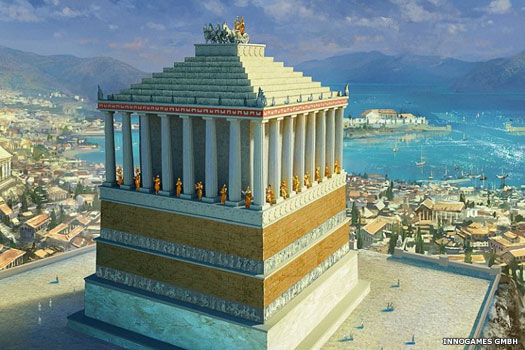
The Lycians managed to maintain their independence against the emerging Anatolian super-power of Lydia(based on the city of Sardes) though they were forced to concede a dependent and tributary alliance in 540 BC when a Persian army under General Harpagus pushed its way into their mountains. Providing the Lycians paid the annual tribute and sent regiments to join the Persian Emperor when he went to war, they were however left to run their affairs under the ancient traditions of their federation. The Persian yoke proved light enough that the Lycian federation refused to ally themselves with a dynamic new state that was being created by a dissident governor. For Mausolos the satrap (the governor of the region) tried to create his own dynastic kingdom from a fusion of Greek and Anatolian cultures. The monster tomb that his sister-wife Artemisia created for the two of them seems to have an act of genuine grief which also commemorated their father and grandfather (Hyssaldomus and Hecatomnos) who had also ruled as proud satraps of this most western part of the Persian Empire.
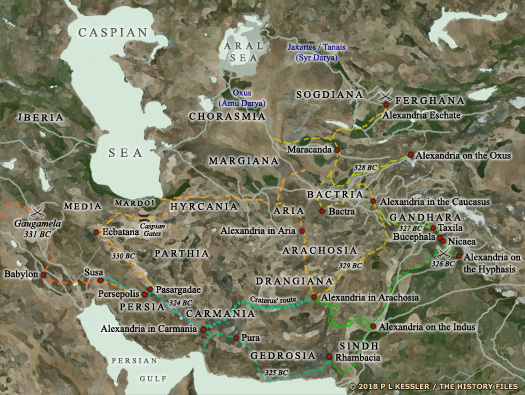
In 333 Alexander the Great, on his way to confront the army of the Persian Empire at Ipsus, marched his army through the Lycian mountains. Having first destroyed the power of the city of Hallicarnassus he was everywhere greeted as a liberator, and offered golden crowns as the restorer of Lycian freedom. It was this victory march, which passed through some thirty cities including Telmessus, Pinara, Tlos, Xanthus and Phaselis which Freya Stark had such fun tracing back in the 1950’s. After Alexander’s death, the Lycian federation passed under the suzerainity of the Ptolemaic dynasty of Egypt. The Ptolemys were great codifiers of the constitutions of the various city-states over which they ruled and it was during this period that the Lycian language (and alphabet) was at last superseded by the lingua franca of Greek which was in common use from Afghanistan to Sicily. Towards the end of the second century BC, Lycia found itself unwittingly on the disputed frontier between the Seleucid’s (another one of the dynasties founded by one of Alexander’s generals) and the Ptolemies. This rivalry allowed Rome to start meddling in the high politics of Asia, and the Lycian federation found itself locked in a tenacious struggle to retain independence against Rhodes – the chosen regional ally of Rome – who then at the height of her maritime power. But the ancient freedoms of the Lycian League were maintained and so they remained immune from the chaos of the Asian revolt against Rome and the brutal destruction inflicted during the Mithridatic wars. It was a curious irony of history that those who most valued the Republican freedoms of Rome (and who murdered Julius Caesar in 44BC to preserve them) were to be responsible for the end of the freedom of Lycia. For it was the Roman republican army led by Brutus and Cassius that invaded the territory of the Lycia League and in 42 BC encircled the ancient city of Xanthus. Xanthus did not surrender but chose to burn down the surrounding farmhouses and prosperous suburbs rather than let them fall into the hands of the enemy. They encircled their city in a moat and earthen wall, and when driven from these defence fell back on the temple-studded citadel.When this too was stormed by the discipline legions, the Xanthians gathered all their possessions on great communal fires, slaughtered their unresisting families and then finally cast themselves onto the flames. Plutarch records the story of a Lycian mother hanging from a noose with her dead child slung around her neck, a burning torch strapped to her arm with which she intended to set fire to her house. They preferred death to the loss of their ancient liberties.
Later that year Brutus and Cassius were themselves destroyed at the battle of Philippi by the army of Antony and Octavian. In the share-out of the Roman empire that followed this victory, Antony received all the provinces of the East. He delighted in reversing the actions of his Republican enemies by restoring the ancient liberties of Lycia. So that when he visited the Lycian Federation he came ashore as an honoured guest and a liberator, while in the rest of the eastern Mediterranean, he was saluted as ruler and a latter-day Dionyosus (and a highly unpopular one who insisted on collecting an ‘accession’ donative rated at ten years worth of tax). According to a cherished local legend it was during this time that the Lycian League prepared the island of Cedre (Sedir Adasi) for the arrival of Queen Cleopatra to meet Antony on neutral territory. To make their honoured guest feel welcome they transported galleys full of the golden sand of Egypt which was strewn on the shore of Cedrae so that Cleopatra would feel at home. It worked, Antony and Cleopatra loved the sandy beach and the temporary escape from their royal cares. They sailed south together to rule their joint dominions from Alexandria. After Octavian had buried them both Lycia became just another province within the Roman Empire.Romance was over but replaced by good governance which saw the region’s population grow to exceed 200,000 divided amongst some thirty flourishing towns and cities. But the legend of ancient liberties lived on, a role model that was cherished by both the ideologues of the French Revolution and another tide of sea-peoples transplanted onto a foreign shore, the United States of America – even if the numerology of thirteen rebel colonies does not quite the sacred twelve of Lycia.
Lycia, an ancient region in southwestern Anatolia, is historically associated with Livonia, particularly through its connections to Greek and Roman civilizations.
e
𐊗𐊕𐊐𐊎𐊆𐊖, Λυκία, Lykia, Likya – as written in Lycian, Greek and Turkish languages.
Along the Mediterranean coast of south-western Turkey, the ancient lands of Lycia lay bare under the hot summer sun. A region bordered by the Gulf of Fethiye to the West, the Gulf of Antalya to the east, and lined by the glorious Taurus Mountainsin the north. With ancient cities of Xanthos, Patara, Myra, Pinara, Tlos, Olympus and Phaselis calling you to explore.
In Lycia you’ll find proof of ancient life in places you’d least expect: carved into caves and steep mountains, rugged coastlines, and stone fortresses jutting out of the sea. One could think Lycia didn’t want to be found – or at the very least, not easily. No Lycia was not meant to be found. It was wiped away for a reason.
Excavations by archeologists in the 1960’s discovered examples of earthenware pottery of the Early Bronze Age, revealing a thriving Lycian civilisation dating back to 3,000 BCE.From ancient Egyptian, Hittite and Ugaritic texts, we know that those from Lycia (or “Lukka”) were involved in acts of piracy against Cyprus in the 1400’s BCE, and fought against Egypt during the battle of Kadesh in 1295 BCE. Thanks to Homer’s ‘Iliad’ we know Lycians battled heroically alongside the Trojans in the Trojan War, and thanks to historians, we know Lycia’s founded name “Lukka” means land of the light. From the same root as LUCIFER
Over the years many foreign forces tried (and often succeeded) to claim Lycia as their own, and it’s easy to understand why. With valuable land and sea boarders, direct trade routes to the Middle East and Europe, and warm Mediterranean waters- Lycia was a coloniser’s paradise. During ruling by the Greeks, Romans and Persians, much of the Lycian language was lost. During the Christian, Byzantine and Ottoman empires, many Lycian ruins were transformed into places of worship. And naturally, with each new wave of foreign influence on culture, language and architecture, the Lycian way of life was slowly forgotten.
Geographically, Lycia lies on one of the most tectonically active areas in the eastern Mediterranean region, with both onshore and offshore faults indicating several earthquakes and tsunamis present throughout Lycian history. In 141 AD much of Lycia was levelled by a large earthquake, with a second earthquake to follow in 240 AD. Lycian cities were further reduced to ruins and rubble, or sunk into the sea completely. By the hand of God!
The ancient town of Simena, known today as the Sunken City, is perhaps the greatest example of Lycia’s resilience. Archeologists believe the foundations of Simena date back to 554 BCE, with a catastrophic earthquake causing the city to sink several meters into the sea. As you sail above these waters today you can glimpse stone stairs, fragments of statues, and ancient tombs – transporting you back in time. The neighbouring island of Kekova and its medieval fortress stands tall above, offering views of the expansive blue sea and the village’s local fishermen who reside there today. spacer
Perhaps it’s the Lycian’s relationship with the sea that I align with so deeply that keeps me coming back, or the tastes of the fresh honey, olives and sea bass. Perhaps it’s the powerful presence of Greek Mythology in the region, including the Lycian ‘Letoon’, an ancient sanctuary dedicated to the goddess Leto.Perhaps it’s the fact that Lycia is still largely unknown to the world, with much of its history and secrets still remaining a mystery. So much so that you feel you are walking on un-marked territory, slowly revealing its archeological layers.
It is no surprise that Lycia was described as “the most haunted coast in the world” by explorer Freya Stark in the 1950’s. In writer Alastair Gill’s words, “on the Lycian Way memory is such a pervasive presence that you walk, rest and sleep in the company of phantoms. For despite its dramatic beauty, this is a land of ghosts... Empty tombs lie in every thicket and grove, like mute envoys sent down from a vanished embassy.”
After three weeks traveling along the coast of Lycia by both land and sea, I am already itching to return again. I wonder if next time more will be known of Lycia, if the history of ancient tombs that sit buried in cliff-faces will be marked on the tourist trail? Or if, like it has always been, Lycia will remain a mystery to all but the very few who dare to dive deep enough.
The kingdom of Commagene, with its capital Samosata (Samsat),lay in today’s south-east Turkey on the upper course of the Euphrates. It never came under Parthian rule but reflects clear Parthian influence. The history of Commagene is characterised by its dependency on the Assyrians, the Babylonians, the Achaemenids and the Seleucids. Secluded from the usual theatres of war between the Romans and the Parthians, Commagene formed a sort of buffer region between the two great empires. It is a small, geographically favoured region known for its abundance of water, fertile valleys and rich mineral and ore resources, such as coal, iron, gypsum, silver and gold. In addition to these raw materials, it was above all its situation at the crossroads of numerous trade routes that established the wealth of Commagene. Thus, Commagene was connected by land and water with Edessa, Palmyra and Dura-Europos and, in turn, with the Silk Road.
The kingdom of Commagene reached its peak during the reign of Antiochus I.Construction activities and art reached their highest level in this period. Archaeologically and art-historically significant, the magnificent tombs for the members of the royal family (hierothesia) also date from the time of Antiochus I. These embody figures of gods and Dexiosis reliefs – Dexiosis: to give someone the right hand.The most famous tomb is that of Antiochus I on the mountain of Nemrud Dagh (Figs. 5.2 and 5.3). Significantly, in a first phase, the gods depicted here received only their Greek names: Zeus, Apollo and Artemis.In a second phase, from c. 65/64 BC, the god figures then received Graeco-Iranian double names.Thus, Zeus is equated with Ahura Mazda – Oromasdes (also written Oromazdes). Heracles received his Iranian counterpart – Verethragna.Mithra found its Greek equivalent in the sun god Helios as well as in Apollo and in the god Hermes. In inscriptions, all four names are set in parallel: Mithra-Apollo-Helios-Hermes.5 With the introduction of Ahura Mazda, Mithra and Verethragna, the influence of the Zoroastrian faith emerges
On the reliefs, King Antiochus I is depicted in Parthian-influenced clothing, while the gods wear different garments: Heracles-Artagnes is naked,Mithra-Apollo-Helios-Hermes, however, is dressed in oriental clothing. The archaeological finds from Commagene thus provide a picture of the fusion of Hellenistic, Oriental and Iranian-Eurasian ideas. From 72 AD, Commagene became an integral part of the Roman province of Syria, with which Rome’s eastern border was secured against the Parthian Empire.
The Taurus Mountains are named after the Latin word “taurus,” meaning “bull,” reflecting the cultural significance of bulls in ancient Mediterranean societies.
In my research for this post, I came across dozens of articles claiming that the BULL represents ALMIIGHTY GOD OF the BIBLE and demonstrates the CHARACTER OF CHRIST!!! HOLY COW POOP BATMAN!! YOU HAVE GOT TO BE KIDDING ME! This is a perfect demonstration of how the clergy has sold out the people and they are working to promote the AGENDA OF THE ELITE. What an OFFENSE to ALMIGHTY GOD! THE BULL is an idol to PAGANS. It represents all that is sin. It represents worship of the creation instead of the CREATOR. WHY on EARTH would people who know GOD associate Him or His name with the PAGAN SACRED COW/BULL??
Do you not see that you are being brainwashed, programmed, indoctrinated to prepare you to receive the ANTICHRIST?
Mount Nemrut, or Nemrud, (NIMROD) is a mountain in southeastern Turkey measuring around 2,134 meters (7,000 feet) high.Atop its summit, lies several statues suspected to be the guardians of a royal tomb dating all of the way back to the 1st century BC.
It is one of the highest peaks in the Taurus Mountains,a remote and inaccessible place to construct such atomb, let alone one so large. The tomb structures on top of the mountain encompass an area of 145m (475 feet) in diameter with a 50 meter (165 feet) funerary mound.
It is thought to have been built by the late Hellenistic King Antiochus I of Commagene, but it also seems to have been a monument to himself. To date, it is one of the most ambitious constructions visible from the Hellenistic period and remains almost unrivaled in the ancient world. However, many of its secrets still remain undiscovered.
More than a Tomb?
The mountain itself lies around 25 miles (40 km) north of Kahta, near Adiyaman. In 62 BC, King Antiochus I of Commagene ordered this tomb/sanctuary flanked by monumental statues measuring 8-9 meters (26 to 30 feet) high.
These statues depicted himself, two eagles, two lions, and a variety of Gods from both Greek and Iranian cultures. These included Heracles, Ares, Zeus, Oromasdes, Mithras, Helios, and Hermes.
The statues depict mythical figures and are influenced by both Persian and Greek culture (onur kocatas / CC BY-SA 2.0)
Whilst he was constructing this magnificent pantheon, Antiochus was heavily influenced by the local Armenian and Parthian traditions by which he hoped to rejuvenate the religion of his ancestors. Originally these statues were enthroned and had their names inscribed upon them but at some point, in history, their heads were removed and scattered across the site.
The nature of the damage to the statues indicates that there was likely a deliberate attack on them during a period of iconoclasm. The statues were never restored. Additionally, the site also preserves many stone reliefs of different figures, that scholars have concluded could be pieced together to create a large frieze.
It is suspected that these images relate to Antiochus’s heritage through both his Greek and Persian ancestors. The statues that exist on the site can also be found at the grave mound that exists in the area.
Likely this was placed here to protect the tomb from any robbers. Any attempt to begin excavating the site would lead to the mound caving in on itself. The statues found here follow a Grecian design for their face but a Persian one for the clothing and hairstyles.
Along the Western Terrace, there is a large slab that depicts alionwith an arrangement of stars and planets. These have been identified as Jupiter, Mercury, and Mars. It may be a star chart of the astronomy that could have been visible in July 62 BC which is the likely composition date of the monument.
The portion of the Eastern side is composed of several layers of rock and has a path that follows the base of the mountain. The path also indicates that there was a walled passageway linking the East and the West terrace. Possible uses for this site have been indicated as religious ceremonies due to the astronomical and religious nature of the statues and the monument.
King Antiochus I
Antiochus I was the son of Queen Laodice VII Thea of Commagene and Mithridates I Callinicus. He was half Iranianand through this was part of the Orontid Dynasty from Armenia and half Greek. Mithridates was the son of King Sames II Theosebes Dikaios of Commagene and was possibly related to the kings of Parthia.
The most prominent connection that Antiochus has is the dynastic link to Diadochi who were very close to Alexander the Great. Antiochus was raised to rule and took the throne of his father when he died in 70 BC. He later married Isias, the daughter of King Ariobarzanes I of Cappadocia, and had five children: Mithridates II of Commagene, Laodice, Prince Antiochus II, and Antiochis.
It is important to understand that Commagene was a minor kingdom located in Northern Syria’s highlands, along the border of Cappadocia. Initially, it served as a vassal state of the Seleucids, a center of Hellenistic culture, which massively influenced Commagene.
In the 1st century BC however, Iranian culture began to experience a resurgence and popularity. This was massively supported by Commagene to highlight its own claims of ancient ancestors and reinstate its rights over its own territory against the Seleucid, Parthian, and Roman powers.
Antiochus I of Commangene, for whom the tomb was built (Classical Numismatic Group, Inc. / CC BY-SA 2.5)
Unfortunately, during Antiochus’ reign, Commagene faced hardships as the Roman War began to spill over into it. Antiochus chose to side with the Romans when Pompey declared war on him. Antiochus was treated distrustfully by the Romans and was sieged in 38 BC. His life becomes obscure after this but according to Cassius Dio, he was killed by the Parthian king Phraates IV.
The Dedication on Mount Nemrut
The impressive monument and sanctuary on Nemrut were begun by Antiochus in order to build a royal cult following for himself and for him to be worshipped after his death. It was inspired by the Greek form of the religion Zoroastrianism.
Antiochus left many inscriptions which revealed a lot of details about the religion and explained his own purpose. He hoped to be buried in a high place that would be closer to the gods whom he would hope to be numbered. Antiochus hoped to be preserved for eternity and to be placed amongst the Greek and Iranian Gods.
The enormous funeral mound behind the temple façade (Acar54 / CC BY-SA 4.0)
Antiochus practiced a very esoteric kind of astrology and laid a foundation for a calendricalreform. He linked the Commagernian year, which had been based on the moon’s movements, and the Star of Sirius. It indicated that Antiochus was knowledgeable to at least some extent about Egyptians and Hermeticism.
The tomb was constructed in a way that religious festivities could be held there. Every month he had two feast days. Despite this being a religious space, it was forgotten for centuries until German archaeologists found it in 1883. Through the inscriptions they found, it is clear that Antiochus was heavily pious and thought himself a generous spirit.
spacer
beginning of the end, the return of paganism, UN World Heritage was created to bring a fresh new batch of pilgrims to the ancient pagan altars.
Mount Nemrut may be the single best spot to watch the rising and setting of the sun, in Adıyaman, Türkiye. (Shutterstock Photo)
Enriched with ancient history, Mount Nemrut, standing at a height of 2,134 meters (7,000 feet), in southern Türkiye’s Adiyaman might just be the most perfect spot to relish the rising and setting of the sun.
Enthusiasts agree. The mountain, listed as a UNESCO World Heritage Site since 1987, has always been an extremely popular spot for tourists. The site looks dazzling with historical texture, featuring 10-meter high, seated statues of the Commagene’s ruler, King Antiochus, whose statue is surrounded by ancient gods, including Zeus and Apollo, which were discovered in 1881 by a German engineer. Commagene is a kingdom founded north of Syria and the Euphrates after the breakup of Alexander the Great’s empire.
The statues are believed to have been commissioned by King Antiochus I for his own tomb during the first century B.C. at the site, which has been under protection for decades with the Mount Nemrut National Park established in 1988.
“ancient burial mound,” especially one raised over the distinguished dead or those slain in battle, early 15c., from Latin tumulus “hillock, heap of earth, mound” (see tomb).
spacer
“The mausoleum of Antiochus I (69-34 B.C.) is one of the most ambitious constructions of the Hellenistic period,” the U.N. agency said.
“The syncretism of its pantheon, and the lineage of its kings, which can be traced back through two sets of legends, Greek and Persian, is evidence of the dual origin of this kingdom’s culture.”
From January to October 2022 alone, the mountain has hosted 222,000 visitors, with the mound, measuring 50 meters in height and 150 meters in diameter, and the 180-meter-long ceremonial road continuing to attract thousands of history enthusiasts every month.
spacer
If the nameAntiochussounds familiar to you… it certainly should. It is very relevant to the End Times and the AntiChrist!
Matthew 24:14-16 14And this gospel of the kingdom shall be preached in all the world for a witness unto all nations; and then shall the end come. 15 When ye therefore shall see the abomination of desolation, spoken of by Daniel the prophet, stand in the holy place, (whoso readeth, let him understand:) 16 Then let them which be in Judaea flee into the mountains:
The landscape of southwestern Turkey, ancient Lycia, is dominated by the fact that in this region, a part of the African Plate collides with the Eurasian Plate. The southern slopes of the Western Taurus rise almost directly from the Mediterranean Sea, making the country almost inaccessible and the coast dangerously rocky. However, over the ages, the little rivers flowing down from the mountain range have laid down fluvial sediments: plains that can be cultivated.
The country, or at least a part of it, is almost certainly identical to the land of the Lukka people, who are mentioned in Hittite sources. There are no known treaties and Lukkan kings are not mentioned, which suggests that these people were not organized as a real state. This is more or less confirmed by the absence of monumental architecture, which suggests that the inhabitants of Lycia were nomads, living in a tribal society. There was no state apparatus.
Officially, the Lukka people were subject to the great king in Hattusa, but just as often, we read about the Lukka as allies of the western enemies of the Hittites. They are also mentioned as pirates, and perhaps this is confirmed by Homer‘s Iliad, in which the Lycians are mentioned as valiant warriors.note Indeed, it is not impossible that in the Late Bronze Age, Lycian pirates were active in the Aegean Sea, and that Homer remembered this.
In the Iliad, the commanders of the Lycians are Glaucus and Sarpedon. The latter was a son of Zeus and Europa, and a brother of king Minos of Crete, who had sent him into exile. This ancient story was explained by later generations as evidence that the Lycians were, originally, Cretans.
Megiste, Bellerophon sarcophagus.
The Iliad contains another story about Lycia’s early history: the tale of Bellerophon, who killed a monster called Chimaera. It is a traditional legend about a dragon slayer, and is situated in the eastern part of the country, where future generations knew a place called Chimaera. Although the story from the Iliad may be a much older Lycian myth, Bellerophon’s Corinthian ancestry was later taken as evidence for a Greek origin of the Lycians. Iit must be noted, though, that one of the first authors to record this story, the Greek researcher Herodotus of Halicarnassus, adds that the Cretans were no Greeks.note
In reality, the Lycians were autochthonous. Their language, known from a corpus of less than 200 fifth- and fourth-century texts, is not well understood, but is clearly related to Luwian, the dominant language of Anatolia in the Bronze Age. For example, the Luwian storm god Tarkhunt was venerated by the Lycians as Trqqas (who was later identified with Zeus). Another example of religious continuity is the cult of the “mother of the gods” of the ancient Luwians; she was to become identified with Leto, the mother of Apollo and Artemis.
It’s no wonder Artemis is thought to have wolves in her compendium of animal guardians and helpers, as Artemis’ mother in Greek mythology was Leto.Leto was born on the island of Kos and her parents were Titans.Leto had relations with Zeus and gave birth to Artemis and Apollo. She was a goddess of womanhood and motherhood, and thus the birth of Apollo and Artemis are significant to the Leto myth. The legend says that Leto labored for days to deliver the twins Artemis and Apollo – this is related to wolves’ difficult delivery of their young. The journey that Leto took from the Hyperboreoi to Delos took twelve days, which is the time it took for wolves to deliver their young in Greek mythology.This made her one of the Greek wolf goddesses. She might have been the original Greek wolf goddess!
Leto the She-Wolf
Leto was also believed to have had the ability to shift into the form of a wolf. Sometimes she was said to have been a she-wolf and so is linked to Lycia a.k.a. wolf-country. Leto honored and adored wolves because they were thought to have provided her assistance in her times of need. Source
Sep 24, 2025 · Information about the Roman province of Lycia. The ancient coastal region of southwest Turkey known as Lycia was bordered on all sides by massive mountain ranges, …
GREEK MYTHOLOGYWRITTEN
BY: The Editors of Encyclopaedia BritannicaHephaestus, Greek Hephaistos, in Greek mythology, the god of fire. Originally a deity of Asia Minor and the adjoining islands (in particular Lemnos), Hephaestus had an important place of worship at the Lycian(associated with Lycanthropy?)Olympus(Associated with the Olympics). His cult reached Athens not later than about 600 BCE (although it scarcely touched Greece proper) and arrived in Campania (root word for Company)not long afterward. His Roman counterpart was Vulcan.
VULCAN – GOD OF FIRE IN ITS DESTRUCTIVE ASPECTS
Vulcan, in Roman religion, god of fire, particularly in its destructive aspects as volcanoes or conflagrations. Poetically, he is given all the attributes of the Greek Hephaestus. His worship was very ancient (meaning from the beginning), and at Rome he had his own priest (flamen) (from whence we get the word flame). His chief festival, the Volcanalia, was held on August 23 and was marked by a rite of unknown significance: the heads of Roman families threw small fish into the fire. Vulcan was invoked to avert fires, as his epithets Quietus and Mulciber (Fire Allayer) suggest. Because he was a deity of destructive fire, his temples were properly located outside the city. In Roman myth Vulcan was the father of Caeculus, founder of Praeneste (now Palestrina, Italy). His story is told by Servius, the 4th-century-AD commentator on Virgil. Vulcan was also father of the monster Cacus, who was killed by Hercules for stealing his cattle, as Virgil relates in Book VIII of the Aeneid.
According to myth, Hephaestus was born lame and was cast from heaven in disgust by his mother, Hera, and again by his father, Zeus, after a family quarrel. He was brought back to Olympus by Dionysus and was one of the only gods to have returned after exile. A blacksmith and craftsman,Hephaestus made weapons and military equipment for the gods and certain mortals, including a winged helmet and sandals for Hermes and armour for Achilles.
As god of fire, Hephaestus became the divine smith and patron of craftsmen; the natural volcanic or gaseous fires already connected with him were often considered to be his workshops. In art Hephaestus was generally represented as a middle-aged bearded man, although occasionally a younger, beardless type is found. He usually wore a short sleeveless tunic and a round close-fitting cap on his unkempt hair.
Athens: temple of Hephaestus
Hephaestus? That was the patron god of metal workers, craftsmen, and all who were dealing with fire. As you can expect, potters’ and metal-working shops have been discovered by archaeologists around the temple.
The Temple of Hephaestus or Hephaisteion or earlier as the Theseion, is a well-preserved Greek temple; it remains standing largely as built. It is a Doric peripteral temple, and is located at the north-west side of the Agora of Athens, on top of the Agoraios Kolonos hill. Wikipedia
Apr 2, 2025 · Ancient Lycia was a land of pirates,who roamed free and were feared throughout the Mediterranean. In this episode, we go through Lycian history in the Bronze Age, a time when many empires knew …
LEGEND OF THE LYCANTHROPE (WEREWOLF) The word lycanthrope–Greek lykanthropos, meaning “wolf-man” or “werewolf”–has its origins in the cult of Zeus on Mount Lykaion …
Greek Name: Λυκαων
Transliteration: Lykaôn
Latin Spelling: Lycaon
Translation: Wolf (lykos)
LYKAON (Lycaon) was an early king of Arkadia who lived in the time before the Great Deluge.He sought to test the divinity of Zeus by serving the god a slaughtered child–either his son Nyktimos (Nyctimus), his grandson Arkas (Arcas), or a Molossian captive. Zeus was furious and overturning the table, destroyed the fifty sons of Lykaon with lightning-bolts, and transformed the king into a wolf.
CHRONOLOGY OF MYTH
In the chronology of myth Lykaon was a contemporary of Deukalion (Deucalion), king of Thessalia, and Kekrops (Cecrops), king of Athens. His fifty sons founded and gave their names to the towns and villages of Arkadia.Lykaon was succeeded on the throne by his youngest son Nyktimos or grandson Arkas.Some say that Nyktimos was preserved by Gaia (the Earth) when his brothers were struck down by the lightning-bolts of Zeus,others that he was the child sacrificed by Lykaon who was afterwards resurrected by the gods(cf. the story of the sacrifice and resurrection of Pelops).
Photo Credit From the photo above, you can probably guess that what lead me to this subject was a link to JANUS which was the topic of another article I was working on this week. I have to tell you, the more I research, the more I find that EVERYTHING all ties together. Every topic … Click Here to Read More
RESTORED 11/9/23 If you watched the Super Bowl half time and felt that it appeared to be totally innocuous, WRONG!!! This Halftime, like all the rest is chuck full of symbolism and messaging. Messages for the mindless masses and messages for the controlling elite. First of all, let me ask you to consider this: WHY … Click Here to Read More
For most of my life, the sight of a ball of fire moving through the sky above us was a rare event. Haley’s Comet was known and predictable. Halley’s Comet Halley’s Comet or Comet Halley, officially designated 1P/Halley, is a short-period comet visible from Earth every 75–79 years. Halley is the only known short-period comet … Click Here to Read More
In this post we turn our focus on NASA. What can I say? NASA is just full of news and surprises and threats from space these days. Between the time they “went to the moon” in the 60’s to 2012 we did not hear to much from them. Now, EVERYDAY it seems they have a … Click Here to Read More
WOW!! WHAT A RIDE! I had no idea what was opening up to me. There are so many links, ties and revelations in this post it is not even funny. I hope you get to see it before tomorrow’s CORONATION. No matter if you do or not, whenever you view what is posted here you … Click Here to Read More
FOLKS, whether you want to believe it or not… WE ARE LIVING in the TIME OF THE END. The world is about to run into its expiration date. There is an awful lot of jockeying and wrestling for position as the various forces seek to gain control of whatever they can an hold onto. Man … Click Here to Read More
Lately there is a lot of chatter about the “Dire Wolf Pups” recently created by Colossal. Now, if you follow any of the truthers online you know that this is nothing new. Scientists have been creating Clones, Hybrids, and Chimeras for some time. So, why all the fuss at this time? What is it they … Click Here to Read More
The area surrounding the Bay of Pamphylia in the Western Mediterranean takes its name from the peoples who inhabited the area many years ago. An imaginary line proceding north from the Gulf to Fethiye (Ancient Telmessos) in the west delineates a boundary of the region known as Lycia.
There are several theories about the origin of the word Lycia.The most accepted theory is that it comes from the word “Lux” meaning light.Lycia would then be understood as the land of light. The fact that Apollo, known as the god of light, was believed to come from Lycia is one of the most convincing validations of this theory. In his Iliad, Homer writes that this god of guidance and revealer of mysteries was Lycian. The inhabitants of Lycia were known as the Lukkans. According to Herodotus, the Lukkans came to Lycia from Crete. Some also believe that these people were among the indigenous inhabitants of Anatolia.
There are no significant islands along the Anatolian shores of the Mediterranean. The geographic monotonony of this part of the Mediterranean coast changes abruptly as it reaches the shores of Lycia with its twisting shores and bays.The winding coastline of Lycia heralds the labyrinthine coasts of the Aegean.
Lycia can be separated into three regions: East Lycia, Central Lycia and West Lycia. spacer
Long before there were basketballs to be dunked by teenage versions.
I will admit that for me, the werewolf is very close to the top of my own Mount Olympus of monsters. Vampires, ghosts, witches, sure, they’re all interesting enough, but there is something about a man turning into a wolf that is just unimpeachably cool as hell. While vampires are slowly rising out of their coffins to walk dramatically across the room, werewolves are bounding across rooftops and through forests until colliding with an unfortunate victim like a Looney Tunes dust cloud of blood and bone. Someone turning into a vampire or zombie is slow, basically the equivalent of watching someone get the flu and then start biting people. Someone turning into a werewolf, on the other hand? You get claws erupting from hands, teeth sharpening to points, and usually some amount of broken chains and chairs are involved. Thoroughly metal. So, as a fan, I naturally got curious about when and how the legend of the werewolf began. Zombies and vampires are fairly clear, especially when the latter has some convenient publishing dates to go along with the growth of the legend. Werewolves, on the other hand, are a much cloudier affair. Frequently, though, searches for the OG lycanthrope lead you to a name that couldn’t be more clearly linked: that of the tale of King Lycaon, from Greek mythology.
King Lycaon, in these tales, was the ruler of Arcadia, which at that time was known as Pelasgia, named after his own father Pelasgos. Most of Lycaon’s rule was, according to legend, very prosperous, with the lands he ruled over thriving. As you might guess from the tone of this article and the energy with which Lycaon is mentioned, his stellar leadership skills are not the most enduring tale about him. If the whole story was “he was a pretty good king and then he died,” it would be a whole lot more boring for everyone, including Lycaon himself, though I’m sure he would have preferred boredom.
The thing about Lycaon and his sons, of which there were A LOT (most commonly listed as 50, the man’s vas deferens was in absolute overdrive) was that they were also known for being overly prideful. Being overly prideful in Greek mythology is like having sex in a horror movie: it very rarely results in your continued good health. They also had a reputation for lacking respect for the gods themselves, maybe feeling pretty invincible from their good fortune. If being prideful in Greek mythology is like ill-timed sex, being prideful AND disrespecting the gods is like saying “I think we’re finally safe” while standing with your back directly to a closed shower curtain. You’re done for, my man.
Hearing all these rumors, Mr. Big Beard And Barrel Chest himself, Zeus, decided to head down to Pelasgia himself to do a little bit of Undercover Bossing.He disguised himself as a thoroughly normal citizen and went about Pelasgia, seeing if these character failings were accurately reported. I assume this just meant walking around, asking people “Do you think Zeus is strong, and his lightning bolts sexy? Would you kiss him and rub his feet as a god deserves?” or whatever. Even though Zeus tried to keep a low profile while undercover as a mortal, it ended up being about as effective as an A-list celebrity throwing on a baseball cap and dark glasses. Basically, as retold, Civilian Zeus couldn’t completely stop some godly stuff from happening around him, and people pretty quickly were like, “I am 90% sure that is Zeus, man.”
As people are wont to do when in the presence of a God, they started worshiping this mysterious, new, and I assume, at least faintly glowing new stranger, which pissed Lycaon off to no end. So, Lycaon decided that it was time to call the bluff, and figure out whether this new arrival was man or god.
Now, here is where, as the great poets of the time never said, shit started to go completely off the rails. Beginning with the plan Lycaon cooked up to verify Zeus’ immortal status. I feel entirely comfortable saying that, if you are not already familiar with the story, it would take well upwards of a dozen guesses before you even got close to what he decided to do. You might imagine some sort of witch test type thing, where we find out that gods float, or some other strange detail. Incorrect. You might also expect some strange test of strength, where the god is tricked into picking up some massive boulder. Again, wrong. You might finally think, “hey, let’s just try to kill the immortal guy and see if he dies”. A high-risk strategy to be sure, and one that Lycaon, according to some sources, also planned to try, but he started with a separate test.
Lycaon decided to kill a child, chop him up, and mix the kid-meat in with the food at a feast he invited Not Zeus to. And now you know just how horrible of a joke “cooked up” was in the above paragraph. The plan, I guess, was that if it was a god, naturally he would be omniscient, and know that there were kid pieces in his food? Look, man, it’s a weird plan, and I didn’t come up with it. It sounds more like something out of one of the bad Hellraisers than anywhere near what Plan A should be, but you’ll have to take it up with Lycaon.
Of course, the man WAS Zeus, and as such DID know that they made kid stew, and immediately denounced Lycaon with whatever the ancient Greek form of “Are you f**king kidding me?” is. After which, he, predictably, went absolutely buckwild on the whole family. All of Lycaon’s sons were killed with his preferred ammunition of lightning bolts, but Lycaon wasn’t so lucky.He fled to the wilderness, where he suddenly found himself getting noticeably more hairy. He, as a reflection of his horrific nature, was turned into a wolf with the consciousness of a man. The poet Ovid describes:
When he had come to the deserted reaches of the countryside, he howled and tried in vain to speak. As a result of his own nature his appearance took on a kind of madness and he exercised against the flocks the lust for slaughter to which he had become accustomed. He began to take pleasure in blood. His clothes became fur and his arms turned into legs. He became a wolf, but he kept vestiges of his former self. There was the same grayness and the same fury about his face; the same eyes shone in his head; he had the same appearance.
So, with a little bit of divine vengeance, and one particularly poor choice of main course, the King Lycaon had become the first werewolf. Later details like full moons might be missing, but we do have ourselves a man-wolf hybrid, complete with a classic transformation scene.
Lycanthropy, the transformation of a human into a wolf or wolf-like creature, has fascinated cultures across the globe for centuries. This phenomenon is encapsulated within the broader category of mythological beings known as lycanthropes. The cultural significance of lycanthropy transcends mere superstition; it reflects deep-seated fears, moral lessons, and the complexities of human nature.
Throughout history, werewolves have appeared in various mythologies, from ancient civilizations to contemporary folklore. Each culture has its unique interpretation, drawing on local customs, beliefs, and fears. This comparative study seeks to explore the multifaceted world of werewolves, examining their origins, variations, and the common themes that unite these diverse narratives.
II. Historical Origins of Werewolf Myths
The origins of werewolf myths can be traced back to ancient civilizations,where early references to shape-shifting beings often emerged in the context of religious and spiritual beliefs. For instance, in ancient Greece, the legend of Lycaon, who was transformed into a wolf by Zeus, illustrates the intersection of divine punishment and transformation.
As time progressed, lycanthropic legends evolved, influenced by socio-political changes, religious transitions, and cultural exchanges. The medieval period saw a rise in the association of werewolves with witchcraft and the supernatural, leading to widespread fear and persecution during the witch hunts.
Cross-cultural influences also played a significant role in shaping werewolf mythology. For example, the spread of European werewolf tales influenced by travelers and colonizers often merged with indigenous beliefs, resulting in unique hybrid legends.
III. Werewolves in European Folklore
European folklore is rich with werewolf narratives,particularly within the Germanic and Norse traditions. In these cultures, werewolves were often viewed as tragic figures, embodying the struggle between humanity and the wild instincts within.
The Germanic and Norse Traditions: In Norse mythology, the tale of the hero Sigmund, who dons a wolf skin to gain strength, illustrates the duality of human nature and the allure of the primal.
Slavic Werewolf Myths: The concept of the “vurdalak” in Slavic folklore depicts a vampire-like werewolf, blurring the lines between predator and prey.
The witch hunts of the 16th and 17th centuries further shaped the narratives surrounding werewolves. Accusations of lycanthropy were often leveled against those deemed socially deviant, intertwining the themes of fear, superstition, and societal control.
IV. Lycanthropes in African Mythology
In various African cultures, shape-shifting holds significant spiritual importance.The ability to transform into an animal is often associated with power, protection, and a connection to ancestral spirits.
Notable Figures: The “Werehyena” is a prominent figure in several African myths, often depicted as a malevolent shape-shifter that exploits human vulnerabilities.
Intersection with Local Spirituality: Werewolf myths in Africa frequently intersect with local spiritual beliefs, where transformation is seen as a means to harness supernatural abilities or communicate with the spirit world.
V. Asian Perspectives on Lycanthropy
In Asia, lycanthropy manifests in various forms, with unique interpretations based on cultural values and mythological frameworks.
The Chinese “Wolf Spirit”: In Chinese folklore, the wolf spirit embodies both ferocity and loyalty, often serving as a protector of the land.
Japan’s “Jinmenken”: The Jinmenken, or “human-faced dog,” reflects the fear of the unknown and the grotesque, symbolizing the blurred lines between humanity and animality.
Comparatively, Asian werewolf legends often emphasize harmony with nature, contrasting with the more conflict-driven narratives found in Western folklore.
VI. The Americas: Indigenous and Modern Interpretations
In the Americas, indigenous cultures have rich traditions of shape-shifting, with the Skinwalker being one of the most notable examples.Skinwalkers are often depicted as malevolent witches who can transform into various animals, reflecting deeper fears of betrayal and loss of control.
Colonial influences significantly altered werewolf narratives, infusing them with European elements while also diminishing indigenous interpretations. Today, modern popular culture has revived interest in werewolves, with movies, literature, and television portraying lycanthropes in diverse ways.
VII. Common Themes and Variations Across Cultures
Despite their varied representations, several common themes can be identified across werewolf myths worldwide:
Motifs of Transformation: Transformation serves as a metaphor for the duality of human nature, exploring the struggle between civility and primal instincts.
The Role of Curses and Magic: Many cultures attribute lycanthropy to curses or magical rituals, emphasizing the consequences of human actions.
Fear and Fascination: The allure of lycanthropes often lies in their embodiment of fear, serving as a reflection of societal anxieties and moral dilemmas.
VIII. Conclusion
This comparative study reveals the rich tapestry of werewolf mythology across cultures, highlighting both unique interpretations and shared themes. The enduring legacy of werewolves in modern culture speaks to their relevance in exploring the complexities of human nature.
Understanding these narratives offers insights into human psychology, societal fears, and the cultural significance of myth-making. As long as humanity grapples with its primal instincts, the legend of the werewolf is likely to endure, continually evolving to reflect contemporary concerns. CLICK HERE TO VIEW THE FULL ARTICLE AND STUDY
Inhabited since prehistory, by the fifteenth century BC the southern coast of western Anatolia was home to the Lukka (or Luqqa). With Arzawa to the north and Tarhuntassa to the east, they apparently formed a minor Near East state (or vassal region) of Arzawa, but may have been little more than a confederation of tribes or minor states (see map link).
The region had no political power – no treaties with the Hittites are recorded – and no Lukka king is ever named. However, they may have been expert seafarers who made yearly attacks along the coast of Alashiya, as well as frequently being involved in land-based attacks inside Anatolia. The nearest relative to their language and that of their later Lycian descendants was Indo-European Luwian, which was generally spoken throughout Anatolia, but they left very few inscriptions. Most of the region’s settlements were along the coastline, away from the extremely rugged interior (although some scholars doubt this location for them and refuse even to link Lukka with later Lycia).
According to Herodotus, later Classical Lycia was so-named because of Lycus, the son of Pandion II of Athens after the kingdom was founded by Sarpedon of Crete, implying a Cretan connection to the settlement of western Anatolia. The Greeks give the earliest Lycians (or Lukka) Greek names which of course they did not possess at this time, but perhaps these people existed anyway, to be later altered by oral tradition and changing languages. Either way, the Greek information on Lukka-period kings should be used with caution.
c.2000/1700 BC
Kukunnis
Son of Lukka.
The name of Kukunnis (also the name of a king of Troy in the late fourteenth century BC) can be found in hieroglyphs on the ‘Byblos obelisk’ found in that city and dating from either 2000 BC or 1700 BC. It has been identified (by Albright) as an authentic Lukkan name, but just who Kukunnis is remains a mystery, although the Lukka are often to be found operating as mercenaries.
c.1430s BC
To the north of the Lukka, and regularly defeated by the Arzawan king, a Hittite army is moved into Zippasla to provide a permanent garrison. With the kingdom at last secure against Kupanta-Kurunta of Arzawa, King Madduwattas apparently now decides that he is never again going to suffer such indignities as his many defeats. When Dalawa (Tlawa of the Lukka, classical Tlos) and Hinduwa rebel, Madduwattas suggests to the Hittite army commander, Kisnapili, that he takes Hinduwa while Madduwattas takes Dalawa. But while Kisnapili is on his way to Hinduwa, Madduwattas allies himself to Dalawa and, with its help, he ambushes and kills Kisnapili.
c.1375 BC
The Kaskans suffer the loss of their grain to locusts so, in search of food, they join up with Hayasa-Azzi, Ishuwa, and the Lukka, as well as other Hittite enemies. The devastation to the grain crops may also have been suffered by others, making it not only easy to get them all to unite but highly necessary, and the Hittites may be taken by surprise by the sheer forcefulness of the attack. Recent Hittite resurgence suffers a knock when their fort of Masat is burned down, but then the capital, Hattusa, is itself attacked and burned. This disaster personally weakens the position of the Hittite king but seemingly does little to set back the Hittites themselves.
c.1370s BC
The Lukka are mentioned in the Amarna letters from Egypt, in which they are accused of attacking the Egyptians in conjunction with the Alashiyans.
fl c.1300 BC
Lycus
King, and son of Pandion II of Athens in Greek mythology.
According to Greek mythology, Sarpedon conquers the region after leaving Cilicia. The name of Lycia comes from his successor. He is the brother in Greek legend of Minos ‘the Great’ of Crete, with both of them having been fostered by the island’s King Asterios.
The brother of Lycus, son of Pandion II of Athens in Greek mythology, was King Aegeus of Athens who is shown here consulting the Oracle at Delphi for advice
fl c.1280s BC
Iobates / Amphianax
King of Lycia in Greek mythology.
Iobates is the host of the exiled Bellerophon, and sends the latter to kill the Chimera in Caria. The successful Bellerophon marries the king’s daughter and succeeds his father-in-law.
A body of Lukka take part in the Libyan-led attack on Egypt which includes various Sea Peoples. Two hundred casualties are recorded for the Lukka, a very small part of the overall number. Families had accompanied the warriors, showing that this was not just a normal raid, that they had been intent on settling there instead.
Lukka in this period are more generally to be found as mercenaries in various armies, recruited from their home in southern Anatolia where the confederation of uncultured and hard-fighting Lukka people has already been identified by the Hittites.
c.1200 BC
The Hittite empire collapses, and the Lukka apparently re-emerge as the Lycians.
Lycia / Lykia
Lying to the west of Pamphylia, the ‘bump’ of Lycia juts out into the Mediterranean Sea, almost literally pointing towards the island of Cyprus. A Lycian state emerged here in the twelfth century BC (according to legendary stories) and certainly by the sixth century BC (according to historical sources). The state was bordered by Caria to the west and north-west, and Pisidia to the north-east.
Known as Trm̃mis to the Lycians themselves, the name comes from the region of Trm̃mili or Trimili (the modern village of Dirmil stands in the same region). It may have been the Turmiriya of the Persepolis tablets, the Tarmilaa of Babylon, and the Termilae of the Greeks, while today it is Likya in modern Turkish. Lycia should not be confused with its more powerful northerly neighbour, Lydia, Historically-speaking, Lycia probably emerged during or following the twelfth century dark age as a neo-Hittite state which was (almost certainly) a direct descendant of the Lukka and retained its structure as a tightly-knit confederation of fiercely independent minor states. According to Homer, the state was led in the Trojan War by one Sarpedon, but little is known of any Lycian rulers.
Lycia’s main cities were Xanthos, Patara, Myra, Pinara, Tlos, and Olympos (each of these was entitled to three votes in the later Lycian League), plus the city of Phaselis. With deep valleys between forested mountains that rise to three thousand metres, Lycia had the benefit of good harbours and seclusion. It also had a settlement at Zeleia in the Troad, although that city’s forces fought under their own account in support of Troy.
The Lycian League is perhaps the earliest democratic union in history. The Lycians always had an instinct for collaboration with a strong regional-cultural identity and Lycia is famous for its tradition of independent city states that joined together under the strong Lycian League that was in many ways a model political organisation.
Grandson of Bellerophon. King of Lycia in Greek mythology.
c.1193 – 1183 BC
Lycia is traditionally an ally of Troy during the Trojan War against Mycenae and the collected forces of the Achaean kingdoms (as frequently mentioned by Homer). The Lycian troops are led by Sarpedon and Glaucus, descendants of Glaucus of Corinth, but the former is killed by Patroclus. Pandarus, skilled with the bow, leads the separate Lycian contingent from Zeleia.
The attempt in 547 BC by the kingdom of Lydia to invade Anatolian lands which now belonged to the Persian empire saw an appropriate Persian response. Cyrus the Great invaded Lydia and crushed it, and then proceeded to capture the rest of Anatolia too. The kingdom of Phrygia and the minor city states of Caria also fell between 549-546 BC, as did the region of Lycia which had its own state in the twelfth century BC (according to legendary stories) and certainly by the sixth century BC (according to historical sources). Following that, a Persian layer of administration was introduced to replace lost kingships.
Lying to the west of Pamphylia, the ‘bump’ of Lycia (or Lykia without the classical Greek influence) juts out into the Mediterranean Sea, almost literally pointing towards the island of Cyprus. The state was bordered by Pisidia to the north-east, and by the satrapy of Karkâ (Caria) to the west and north-west. As a minor satrapy itself, Lykia was attached to Caria in terms of oversight. With that too a minor satrapy (although of a higher status than Lycia), it was overseen by the great satrapy of Sparda. In general terms, the more minor the level of administration, the greater extent was any native governance. Lycia was no exception, with native rulers (or governors) being evident during the Achaemenid period – possibly both rulers and governors as Lycia seems to have been formed of various principalities that may have witnessed a continuation of pre-Persian rule but now under Persian oversight (although this can only be conclusively proven at the end of Achaemenid rule). Native names shown below usually include Greek and native versions in that order, plus Iranian versions in parenthesis.
Lycia’s main cities were Xanthos, Patara, Myra, Pinara, Tlos, and Olympos (each of these was entitled to three votes in the long-lasting Lycian League), plus the city of Phaselis. With deep valleys between forested mountains that rise to three thousand metres, Lycia had the benefit of good harbours and seclusion, but like other mountainous regions of Anatolia probably made Persian governance quite hard work.
Principal author(s):P L KesslerPage created:31/05/2008Page last updated:24/12/2020
(Information by Peter Kessler, with additional information from The Persian Empire, J M Cook (1983), from The Histories, Herodotus (Penguin, 1996), from Alexander the Great, Krzysztof Nawotka (Cambridge Scholars Publishing, 2009), from A Political History of the Achaemenid Empire, M A Dandamaev, and from External Links: Encyclopaedia Iranica, and Lives of Eminent Commanders, Cornelius Nepos (1886 Edition), and The Government of Syria under Alexander the Great, A B Bosworth (The Classical Quarterly Vol 24, No 1, May, 1974, pp 46-64, Cambridge University Press on behalf of The Classical Association (available at JSTOR)), and Livius.)
549 – 546 BC
The Persian defeat of the Medes opens the floodgates for Cyrus with a wave of conquests, beginning with Cilicia in 549 BC. Harpagus, a Median of the royal house and the main cause of the defeat of the Medes, commands Cyrus’ army in Anatolia, conquering it between 547-546 BC. Taken during this campaign are Caria, Lykia, Lydia, Paphlagonia, Phrygia, and Tabal (Cappadocia), and Harpagus and his descendants reign thereafter in Karkâ (Caria) and (sometimes) Lykia as satraps of the empire, normally within the satrapy of Karkâ. Khilakku (Cilicia) would also appear to be under his control.
Cyrus the Great freed the Indo-Iranian Parsua people from Median domination to establish a nation which is recognisable to this day, and an empire which provided the basis for the vast territories which were later ruled by Alexander the Great
As mentioned in the introduction, even during the Persian empire period Lykia continues to enjoy some level of autonomy under native dynasts. Its seclusion behind high mountains makes it difficult to administer directly anyway, and it seems to chop and change between independence and alliances with various powers. Kybernis of about 480 BC is certainly known, while others strike their own silver coins. According to Isocrates, no Persian ever gains control of Lykia, although dynastic inscriptions of Xanthos show that several of the regional satraps often vie against each other for mastery of it.
Son. Commanded the Lykians of Xerxes’ fleet 480 BC.
c.480 – 468 BC
Invading Greece in 480 BC, the Persians subdue the Macedonians and the Thracian tribes (except for the Satrai, precursors to the Bessoi). Then the vast army of Xerxes (which includes Lykians under the command of Kybernis – the Cyberniscus, son of Sicas, of Herodotus) makes its way southwards and is swiftly engaged by Athens and Sparta in the Vale of Tempe.
The Persians are subsequently stymied at Thermopylae by a mixed force of Greeks – which includes Athenians, Corinthians, Helots, Mycenaeans, Thebans, and Thespians – led by Sparta under King Leonidas. (These events are depicted somewhat colourfully – but no less impressively for that – in the 2007 film, 300.) The Persian army is held up long enough for the Athenians to prepare their navy for a seaborne engagement with the Persian fleet. Subsequently the Persians are utterly defeated both at sea (presumed to include the death of Kybernis) and on land, and the Lykians quietly withdraw from any alliance with them to go their own way for a generation (until 468 BC).
480 – ? BC
Kosikas / Kheziga (II)
Son. Nominally independent.
468 – 387 BC
Athens wrests control of Lykia away from any possible remaining Median ‘occupier’ kings and Persian control. The number of Greek-speakers in the region is already starting to outnumber that of the native Lykians, with the eventual result that, by the Argead period in the late fourth century and its subsequent Hellenic phase, the native language disappears completely in the face of full Hellenisation.
The rock-cut Lycian tombs, near Dalyan, were created around 400 BC, as part of the still-mighty remnants of the ancient port city of Kaunos, founded in the tenth century BC as a port city
By this time many Lykian cities have stepped back from their membership of the Athenian League following the gradual decline of Athens during the Peloponnesian Wars of 431-404 BC. The city is undergoing a period of transition as the archons fade in importance in favour of the strategoi. Only Phaselis and Telmessos remain. An Athenian expedition in this year to force Lykian re-engagement ends in its military defeat.
c.410 – 390 BC
? / Kherei
Brother.
c.390 – 380 BC
? / Erbbina (Arbinas)
Son. Last of his line, centred on Telmessos.
387 BC
Lykia’s membership of the Athenian League of which it has been part since 468 BC is now, in effect, cancelled. The Athenians are usually good at ensuring that member states are unable to secede by establishing the stipulation in the treaty, but on this occasion they seem to have forgotten that particular point. The region once again accepts Persian oversight. One Mithrapata rules seemingly at the same time as Erbbina, although not necessarily in opposition. He does eventually come into competition with Arttum̃para of Telmessos though.
Ariobarzanus, satrap of Phrygia, joins Datames, satrap of Khilakku and Katpatuka, in revolt against Artaxerxes II. Autophradates, satrap of Sparda is ordered to suppress the rebellion and he manages to expel Ariobarzanes from the greater part of his satrapy. In 365 BC, Athens sends thirty ships and 8,000 mercenaries to aid Ariobarzanus. He rewards Athens with the gift of Sestos and Crithote, cities on the Thracian Chersonesus.
The Persian satraps of Katpatuka found themselves in a land which was filled with Hittite monuments which predated their arrival by at least half a millennium
Soon all of Asia Minor (Anatolia) revolts against Artaxerxes II, with Datames also having seized Paphlagonia. At some point here in Lykia, Arttum̃para of Telmessos is defeated by Perikles of Limyra. In 362 BC, even Autophradates is driven to join the rebels. Sparta, and also Takhôs, pharaoh of Egypt, send substantial help to the rebels. Two years later, in 360 BC, Ariobarzanes is betrayed by his son, Mithridates, and is executed.
The satrapal revolt is finally suppressed in 359-358 BC during which time – around 360 BC – Mausolus, satrap of Karkâ, has been able to extend the territory under his command by expanding into Lykia – independent again during the bulk of the revolt – to remove its dynastic line of rulers (principally Perikles), and also into eastern Greece in the form of Ionia and several of the islands.
Ada is expelled from Halicarnassus by her brother, Pixodarus, who seizes the satrapal office of Karkâ. Ada retreats to the inland fortress of Alinda, which has been equated with the Hellenistic city of Alexandria ad Latmum near Demircideresi in south-western Turkey. She continues to claim the office and title of satrap and Pixodarus seems unable to prevent it.
The great mausoleum of Mausolus (brother of Ada) is reproduced here in CGI, overlooking Halicarnassus, but plans announced in 2019 may see it ‘restituted’ along with a host of other historical structures
In 334 BC Alexander of Macedon launches his campaign into the Persian empire by crossing the Dardanelles. The first battle is fought on the River Graneikos (Granicus), eighty kilometres to the east. Dismayed at the Persian defeat, Satrap Arsites of Daskyleion commits suicide. Sparda surrenders, but Karkâ‘s new satrap holds out in the fortress of Halicarnassus with the Persian General Memnon. The fortress is blockaded and Alexander moves on to fight the Lykian mountain folk during the winter when they cannot take refuge in those mountains.
The campaigning season of 333 BC sees Darius III and Alexander miss each other on the plain of Cilicia and instead fight the Battle of Issos on the coast. Darius flees when the battle’s outcome hangs in the balance, gifting the Greeks Khilakku and Katpatuka, although pockets of Persian resistance remain in parts of Anatolia.
The Argead were the ruling family and founders of Macedonia who reached their greatest extent under Alexander the Great and his two successors before the kingdom broke up into several Hellenic sections. Following Alexander’s conquest of the Persian holdings in Anatolia and Syria between 334-331 BC, the Greek empire ruled the region until Alexander’s death in 323 BC and the subsequent regency period which ended in 310 BC. Alexander’s successors held no real power, being mere figureheads for the generals who really held control of Alexander’s empire. Following that latter period and during the course of several wars, Anatolia was divided between Cassander of Macedonia, the Lysimachian empire, and the Antigonid empire.
Persian-controlled Karkâ (Caria) and neighbouring Lykia (Lycia to the Greeks) had been governed by the Hecatomnid dynasty in the fourth century BC, as hereditary rulers of a sort that was much more possible in the more loosely-controlled Anatolian districts than it would have been elsewhere. Its best-known representative was Mausolus, who seized control of Lycia from its loose collection of native rulers around 360 BC. Local tyranny of this kind was a relatively normal form of government, as it was often elsewhere in the Greek-influenced world. Tyrants were simply strong autocratic leaders rather than anything particularly repressive or unwanted (the latter not including the usual rivalries, of course). Alexander the Great found the sidelined Hecatomnid Queen Ada to be highly welcoming, making his task of securing Caria a very easy one. Lycia was handed to the trusted chief admiral, Nearchus.
(Information by Peter Kessler, with additional information from The Persian Empire, J M Cook (1983), from The Histories, Herodotus (Penguin, 1996), from Anabasis Alexandri, Arrian of Nicomedia, from Panyassis of Halikarnassos: Text and Commentary, Paníasis, from The Generalship of Alexander the Great, J F C Fuller, from the Historical Dictionary of Ancient Greek Warfare, J Woronoff & I Spence, and from External Links: Encyclopaedia Iranica, and The Geography of Strabo (Loeb Classical Library Edition, 1932).)
Feeble-minded half-brother of Alexander the Great.
317 – 310 BC
Alexander IV of Macedonia
Infant son of Alexander the Great and Roxana.
333 BC
Nearchus, chief admiral under Alexander and his friend, governs the region as satrap of Lycia and Pamphylia, being responsible for the ports in southern Anatolia. This forces the Persian navy to sail across open waters between Cyprus and the Aegean Sea. The Persian commanders Memnon of Rhodes and Pharnabazus are active in Aegean waters in 333 BC but receive no reinforcements, possibly due to Nearchus’ efforts.
The route of Alexander’s ongoing campaigns are shown in this map, with them leading him from Europe to Egypt, into Persia, and across the vastness of eastern Iran as far as the Pamir mountain range (click or tap on map to view full sized)
333 – 329 BC
Nearchus / Nearkhos the Admiral
Also held Pamphylia. Recalled in 323 BC. Died c.300 BC.
329 BC
Nearchus is recalled to Alexander’s side. He brings with him reinforcements for the campaign in Persia and is accompanied by Asander, who becomes satrap of Caria in 323 BC. Nearchus’ replacement as satrap is Antigonus Monophthalmus. Sources show his assignment there from 331 BC, but perhaps initially he oversees these regions from Greater Phrygia without having a direct hand in administration.
Upon the death of Alexander, Lycia becomes part of the Antigonid territories. Nearchus remains an ally of Antigonus. At this time a series of tombs are being used in the city of Rhodiapolis (located in the Kumluca district of present day Antalya in Turkey). The cemetery complex is formed of a series of tombs that surrounds a larger necropolis. Often elaborate styles of tomb architecture are used, and the tombs probably grow incrementally, expanding in width and height over multiple generations. When a fresh burial takes place in the tombs, it is placed on top of other graves. Large, two to three-story structures are often the result of such additions. The structures are made of brick and topped with arched roofs.
305 – 301 BC
During the Fourth War of the Diadochi, in 305 BC the diadochi generals proclaim themselves king of their respective domains following a similar proclamation by Antigonus the year before. In 302 BC, Lysimachus enters western Asia Minor, governed as part of Greater Phrygia, and gains (or regains) control of much of it. Following the death of Antigonus at the Battle of Ipsus in 301 BC, his territories are carved up by the other diadochi.
The earliest of the tombs of Rhodiapolis date to the fourth century BC, during the Argead period of occupation which opened the way for the full Hellenisation of the region and the blossoming of the town under the control of Rhodes
As part of his Lysimachian empire, Lysimachus gains Ionia, Lydia, Phrygia, and the southern Black Sea coast of Asia Minor. Cilicia and Lycia are initially given to the brother of Cassander of Macedonia, Pleistarchus, but he is forced out in the following year by the Antigonid ruler, Demetrius I Poliorcetes. The region soon also falls under the rule of the Lysimachian empire. Upon the death in battle of Lysimachus in 281 BC, Lycia seems to pass to Egypt, but at some point before about 240 BC it is seized by the Seleucid empire.
c.240 – c.198 BC
Having declared war on Seleucus II of the Seleucid empire in 246 BC, Ptolemy III of Egypt has enjoyed a great deal of success on campaign as a continuation of the Third Syrian War. Seleucus is distracted by his domineering mother, who forces him to accept his younger brother, Antiochus Hierax, as a co-regent and governor of regions in Anatolia. When Antiochus attempts to create his own independent domain, Seleucus has to sue for peace with Ptolemy in 241 BC. Egypt gains more Seleucid territory along Syria’s northern coast (including Seleucia Pieria), and Lycia would also seem to be included in this transfer.
200 – 64 BC
To achieve his part of a treaty with Philip V of Macedonia that is designed to carve up Egypt‘s colonial possessions, Antiochus III of the Seleucid empire invades Coele Syria. This triggers the Fifth Syrian War and sees Ptolemaic General Scopas defeated at Panion near the source of the River Jordan in 200 BC. This gains Antiochus control of Judah and Phoenicia (which includes the city of Miletus).
Pictured here are both sides of a Roman silver dinarius from the official mint, dated to around 146 BC – the mounted attacker on the reverse accompanied by his dog is fairly typical as Roman troops would often bring their mastiffs along with them so that, while the soldier was fighting the enemy above with spear and long knife, their dogs would be biting the enemy’s legs from below
The campaign ends in a peace deal in 195 BC which gains for Antiochus permanent possession of southern Syria (which includes Idumaea, while Ammon takes advantage of the shift in power to declare its own independence), and also of Egyptian territories in Anatolia (which include Lycia). Lycia remains a renewed Seleucid possession for only five years.
Lycia is officially awarded to Rhodes in the Peace of Apamea in 188 BC, following the Roman victory at the Battle of Magnesia over the Seleucid ruler, Antiochus III. It remains so attached until 64 BC, when it becomes a Roman province.
e


 Mount Nemrut may be the single best spot to watch the rising and setting of the sun, in Adıyaman, Türkiye. (Shutterstock Photo)
Lycia
Inhabited since prehistory, by the fifteenth century BC the southern coast of western Anatolia was home to the Lukka (or Luqqa). With Arzawa to the north and Tarhuntassa to the east, they apparently formed a minor Near East state (or vassal region) of Arzawa, but may have been little more than a confederation of tribes or minor states (see map link).
Invading Greece in 480 BC, the Persians subdue the Macedonians and the Thracian tribes (except for the Satrai, precursors to the Bessoi). Then the vast army of Xerxes (which includes Lykians under the command of Kybernis – the Cyberniscus, son of Sicas, of Herodotus) makes its way southwards and is swiftly engaged by Athens and Sparta in the Vale of Tempe.


 e
e 


 Lycia
Lycia